
An unexpected industrial gearbox failure can stop production, delay orders, and drive up maintenance and labor costs. Understanding the industrial gearbox overhaul process helps you assess your options and make an informed decision about restoring equipment performance.
For repairable units, an overhaul can offer a practical alternative to replacement, potentially reducing costs and downtime. The gearbox overhaul procedure involves disassembling the unit, inspecting its components, repairing or replacing damaged parts, and testing the rebuilt assembly. Whether it’s the right approach depends on the extent of damage, parts availability, and your operating requirements.
This guide explains how to overhaul a gearbox, outlines the key stages involved, and compares overhaul versus replacement. We’ll cover gearbox rebuild cost, equipment age, downtime, and efficiency to help you determine the best path for your operation.
What is an Industrial Gearbox Overhaul?
The industrial gearbox overhaul process (also known as a gearbox rebuild) involves disassembling your gearbox unit and breaking it down into separate components.
If you’re working with a company who specializes in professional gearbox overhaul services like Houston Pump and Gear, the technicians will clean and examine each gearbox part to understand whether the faulty components can be repaired or need replacement.
An overhaul is a more serious procedure than other standard gearbox repairs (which usually involve fixing only the broken parts.) An overhaul is recommended only when the damage is unknown or quite severe. The advantage of the overhaul process is that it’s so thorough that it fixes the immediate issue while also preventing other serious problems from occurring in the future.
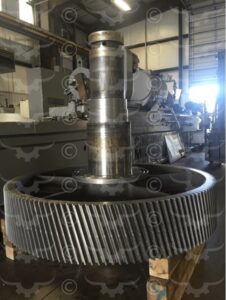
Next, let’s check the main steps that our specialists at Houston Pump and Gear follow during the gearbox overhaul process.
The Industrial Gearbox Overhaul Process in 14 Steps
This procedure at Houston Pump and Gear usually includes:
Step 1: Identify the gearbox make and model and disassemble the unit.
Step 2: Evaluate the gearbox condition and repairs needed.
Step 3: Share the gearbox health analysis, preliminary custom quote, and overhaul timeframe estimates with yourself and your team.
Step 4: Clean the gearbox components to remove any remaining oils and lubricants from them.
Step 5: Perform failure analysis and evaluate the components’ wear and tear.
Step 6: Identify which parts can be repaired and which need to be rebuilt or remanufactured.
Step 7: Check and inspect all bearings, shafts, and gears.
Step 8: Replace all parts that have worn out friction surfaces, such as bearing seals and gaskets.
Step 9: Repair and rebuild all damaged gears, shafts, and other components.
Step 10: Reverse engineer new parts if needed.
Step 11: Assemble the repaired gearbox according to the O.E.M instructions.
Step 12: Run industrial gearbox performance tests to ensure the repaired unit performs according to the standards.
Step 13: Repaint the gearbox external casing.
Step 14: Prepare gearbox for shipment.

Factors to Consider Before Deciding on a Gearbox Overhaul
If your gearbox is severely damaged, you can either replace it with a new one or opt for an industrial gearbox overhaul.
If you’re still not sure whether you need an overhaul or a unit replacement, consider these factors when evaluating your options:
Gearbox Rebuild Price and Other Costs
If you want to repair an old piece of equipment, it is important to consider the cost of the overhaul as well as the impact on the unit’s remaining service life. Overhauls are often substantially more cost effective than purchasing replacement equipment. Repairs costs can often save 40-50% on costs when compared to purchasing new.
On the other hand, buying a new unit includes its purchase and operating costs, the potential revenue increase it might result in, and its salvage and market value.
Once you have all the numbers, you can easily determine the annual cost for each and compare them.
Equipment’s Age
If you have a relatively new gearbox unit, performing an extensive repair procedure will make more sense than replacing it.
However, if you’re dealing with old machinery, it will likely have higher maintenance costs and will need more extensive repairs, which will decrease your return on investment. In this case, you can consider replacing the gearbox with a functioning, identical unit, unless the piece of equipment is obsolete, in which case replacement is not feasible.
Downtime
While an overhaul involves an extensive repair procedure, it is a much faster option than buying a new piece of equipment. It also helps to identify and eliminate other existing problems that could eventually cause the unit to fail and result in additional downtime. A regular preventative maintenance plan and gearbox overhaul program will help ensure your operations won’t be disrupted unexpectedly.
On the other hand, the delivery of new equipment can take several months (in some cases years) and result in extra downtime for installation and training. Current supply chain and labor constraints have only exacerbated excessively long lead times from OEMs. An overhaul is often more effective at minimizing downtime than a gearbox replacement, but only when repair is a viable option.
Efficiency
Think about whether your overhauled equipment will sustain its efficiency in the long run. Realistically, will it carry you through another few years or is it likely to fail again in a matter of months? Additionally, try to understand whether replacing it with a newer and more advanced unit will significantly improve your operating and cost efficiency. Think about the trade off between the up front costs and long term gains.
Safety
Even after a thorough gearbox overhaul procedure has been completed, it is important to do regular safety and maintenance checks. If your equipment operates according to all safety standards, replacing it is not needed.
Minimize the Cost of Your Industrial Gearbox Overhaul
Now that you know the basics of the industrial gearbox overhaul process, including the steps and factors such as gearbox rebuild price, you can consider if an overhaul or replacement is what fits your specific circumstances.
If you’re in need of a professional gearbox repair service, you can reach out to Houston Pump and Gear’s expert technicians. We provide gearbox overhaul in Texas as well as a wide range of services, including Flender gearbox repair, Falk gearbox repair, and pump overhaul across the US, Canada, and Mexico.