
Over time, heavy loads, misalignment, contamination, or skipped lubrication schedules wear these components down. Left unchecked, a failing bull gear can shut down an entire production line.
This guide covers the most common bull gear problems, a step-by-step repair process, how to decide between fixing and replacing, and when it's time to call a professional gear shop like Houston Pump & Gear.
TL;DR
- Tooth wear, pitting, cracking, misalignment, and scoring cause most bull gear failures
- Catch wear early: machining or welding often restores the gear without full replacement
- Confirm the root cause before any repair so the same failure does not return
- Experienced shops can finish critical repairs in days, not weeks
What Is a Bull Gear?
A bull gear is the larger of two meshing gears in an industrial gearbox. It pairs with a smaller, faster-spinning pinion gear to transmit high torque at low rotational speeds.
You'll find bull gears in:
- Centrifugal compressors, where a central bull gear drives surrounding pinion shafts and impellers
- Power generation turbines and gearboxes that step torque for continuous duty
- Industrial mills and heavy processing equipment under sustained load
In Horsburgh & Scott gear terminology, the larger gear in any pair is the "bull," while the smaller one with fewer teeth is the pinion. Because bull gears run under continuous, heavy load, they degrade gradually and require periodic inspection.

Common Problems With Bull Gears
Bull gear failures follow predictable patterns tied to load and lubrication. Catching the right symptoms early speeds diagnosis, limits secondary damage, and keeps repair costs down.
Tooth Wear and Pitting
Symptoms:
- Surface pitting
- Metal flaking
- Rough gear mesh
Likely cause: Inadequate lubrication or contamination. Early pitting can be normal, but destructive pitting spreads and worsens over time.
Cracked or Broken Teeth
Symptoms:
- Sudden vibration
- Knocking noise
- Visible fractures
Likely cause: Overload, fatigue, or material defects. A single shock load can break one or more teeth.
Misalignment
Symptoms:
- Uneven wear pattern
- Excessive noise
- Heat buildup
Likely cause: Improper installation, or worn shafts and bearings that create radial play.
Scoring or Galling
Symptoms:
- Scratched tooth surfaces
- Visible metal transfer marks
Likely cause: Lubricant breakdown that allows metal-to-metal contact under high load.

Why Bull Gears Fail
Most bull gear failures trace back to a handful of real-world operating conditions:
- Continuous heavy load and torque cycling
- Contaminants like dust, moisture, or debris entering the gear mesh
- Improper installation or pinion and shaft misalignment
- Skipped lubrication or missed inspection intervals
Left unaddressed, these conditions rarely stay isolated. Damage spreads through the drive train:
- Reduced drive efficiency and power loss
- Inconsistent output that hurts production quality
- Safety risks from sudden, unplanned gear failure
- Extended downtime and higher repair costs
How to Fix a Bull Gear: Step-by-Step
Repairing without diagnosing the exact failure mode almost guarantees a repeat breakdown. A structured process isolates the true cause before any repair work begins.
Step 1: Identify the Exact Problem
- Inspect visually for wear, pitting, cracks, or discoloration on the teeth
- Listen and feel for abnormal noise, vibration, or heat during operation
- Review any gearbox monitoring data or alarm history
- Note whether the issue shows up at startup, under load, or continuously
Step 2: Confirm the Root Cause Category
Determine whether the failure is mechanical (wear or alignment), lubrication-related, or load-related. Rule out external contributors like motor imbalance or coupling problems. Don't replace the gear before checking whether the housing, bearings, or shaft are also compromised.
Document every bearing, seal, and gear measurement before you commit to a repair path. Houston Pump & Gear follows this full inspection sequence before writing an estimate so related damage is not missed.
Step 3: Repair Based on the Diagnosis
Surface wear or pitting:
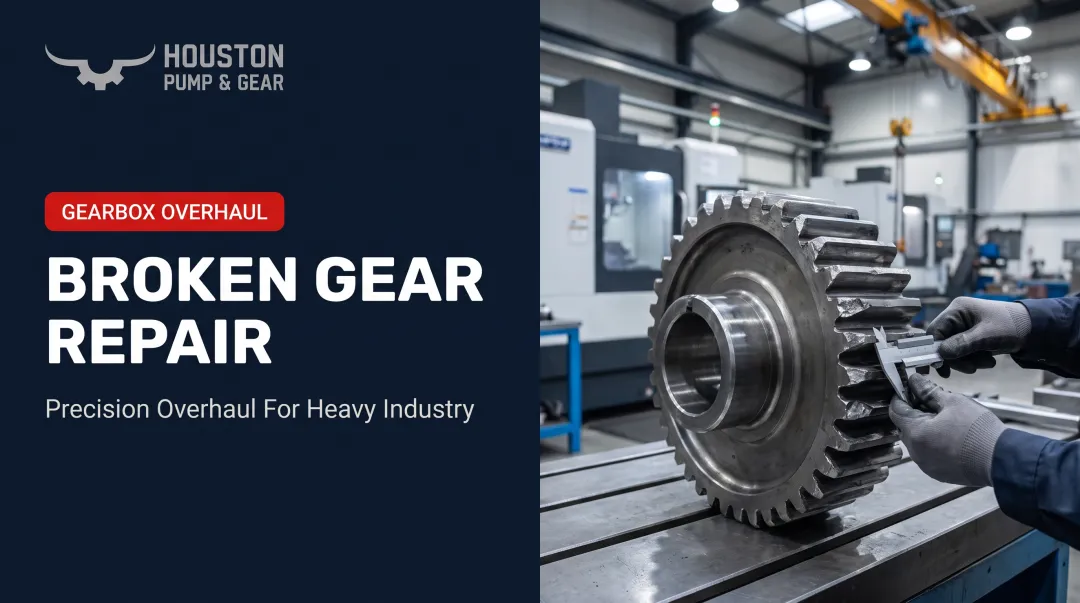
- Machine or re-cut affected teeth if wear falls within tolerance
- Polish and inspect the tooth profile for consistency
- Check backlash and mesh before reassembly
Cracked or broken teeth:
- Assess whether localized weld repair or full tooth replacement is viable
- Perform hardness and stress testing before returning the gear to service
- Check surrounding bearings and housing for related damage
Misalignment issues:
- Realign shafts and confirm proper bearing seating
- Recheck the gear mesh pattern using dye or contact testing
- Adjust mounting to prevent the problem from recurring
On complex legacy equipment, shops often use x-ray and magnetic particle inspection (magnaflux) on gears and shafts to decide reuse versus replacement.
Step 4: Test and Validate the Repair

- Run the gearbox under normal and peak load conditions
- Monitor for abnormal noise, vibration, and heat
- Confirm gear mesh and output match manufacturer specifications
Specialized shops such as Houston Pump & Gear validate repairs on complex industrial models like the Lufkin S2212C before return to service. That final check matters most when a second failure would shut down the plant.
When Should You Fix vs Replace a Bull Gear?
Weigh repair cost, downtime, and long-term reliability before you choose:
| Scenario | Fix | Replace |
|---|---|---|
| Minor surface pitting on a sound gear | Re-machine and re-lubricate | Only if wear exceeds tolerance |
| Cracked tooth on a critical power plant unit | Weld repair if structurally sound | If crack compromises load capacity |
| Recurring failures on an aging gear | Temporary patch for short-term operation | Long-term cost savings with a replacement unit |
| Emergency shutdown | Rapid repair to restore operations | When no repairable option meets the timeline safely |
That last row isn't hypothetical. When Jerry Storm's plant hit an emergency shutdown on a Lufkin S2212C, Houston Pump & Gear sent a truck the same day and had the unit back in service within 72 hours. That plant has since had more than 15 units serviced there.
Common Mistakes to Avoid When Fixing a Bull Gear
A careful bull gear repair still fails when these shortcuts slip through:
- Treating symptoms, not causes: repairing tooth damage without checking for underlying misalignment or bearing wear
- Skipping load testing: returning the gear to service before verifying the repair under load
- Using non-matching replacement teeth: fitting incompatible materials that will not hold up in operation
- Ignoring lockout/tagout protocols: handling heavy gears without LOTO controls, a serious safety risk
Preventive Measures to Avoid Future Bull Gear Issues
Preventive care costs a fraction of emergency repair and unplanned downtime. Focus on:
- Scheduled lubrication and oil analysis: Track ISO VG, AGMA, or API grading and stick to a consistent replacement schedule
- Routine vibration and wear inspections: Catch problems before they escalate
- Proper alignment: Verify with laser alignment tools or dial indicators, and check the foundation
- Contamination controls: Use desiccant breathers or magnetic plugs
- Overload protection: Install torque limiters or soft-start systems
- 24/7 emergency repair partnership: Secure rapid response when something does go wrong

Houston Pump & Gear offers round-the-clock emergency service across Texas and Louisiana—critical when a bull gear fails after hours and the plant cannot wait.
Conclusion
Most bull gear issues are fixable when caught early and diagnosed correctly. The key is identifying the true root cause, whether it's lubrication, contamination, misalignment, or load, before any repair work starts. Guess at the cause, and you'll likely be back to square one within months.
Knowing when to fix versus replace is only half the decision. Pair it with a repair partner that can respond around the clock, and you cut both cost and downtime.
Houston Pump & Gear provides 24/7 emergency bull gear and gearbox repair for power plants and heavy industry, with rapid pickup and turnaround when an outage cannot wait.
Frequently Asked Questions
What are bull gears?
Bull gears are the large primary gears in industrial gearboxes that mesh with pinion gears to transmit high torque at low rotational speeds. They're the workhorse component in compressors, mills, and turbine drives.
What is the difference between a pinion gear and a bull gear?
The pinion is smaller and rotates faster. The bull gear is larger, rotates slower, and carries the higher torque load in the pair.
Why is it called a bull gear?
The name reflects the gear's size and torque-carrying role. It is large and powerful, like a bull, next to the smaller, faster pinion it meshes with.
Can a bull gear be repaired instead of replaced?
Yes, in many cases. Wear and pitting can often be repaired by machining or welding if caught early, and reverse engineering can restore gears when replacements are unavailable.
How long does bull gear repair typically take?
Turnaround varies with damage severity. Experienced shops can complete emergency repairs, including full gearbox turnaround, within days.
How often should bull gears be inspected?
Follow your manufacturer's recommended schedule, generally every few months for critical equipment. Daily temperature and noise checks, combined with periodic oil analysis, catch problems before they become failures.