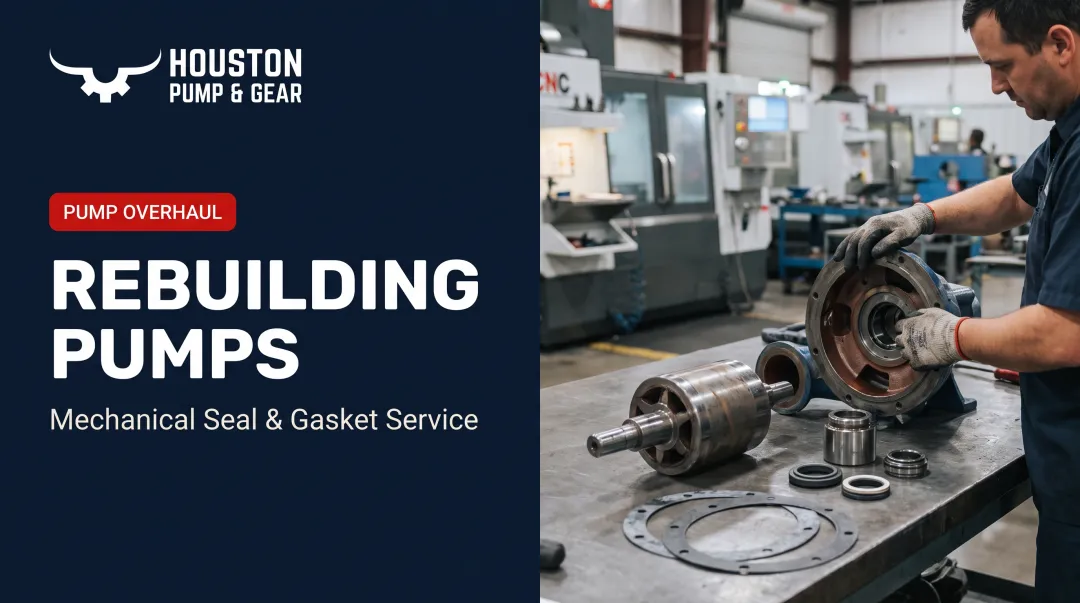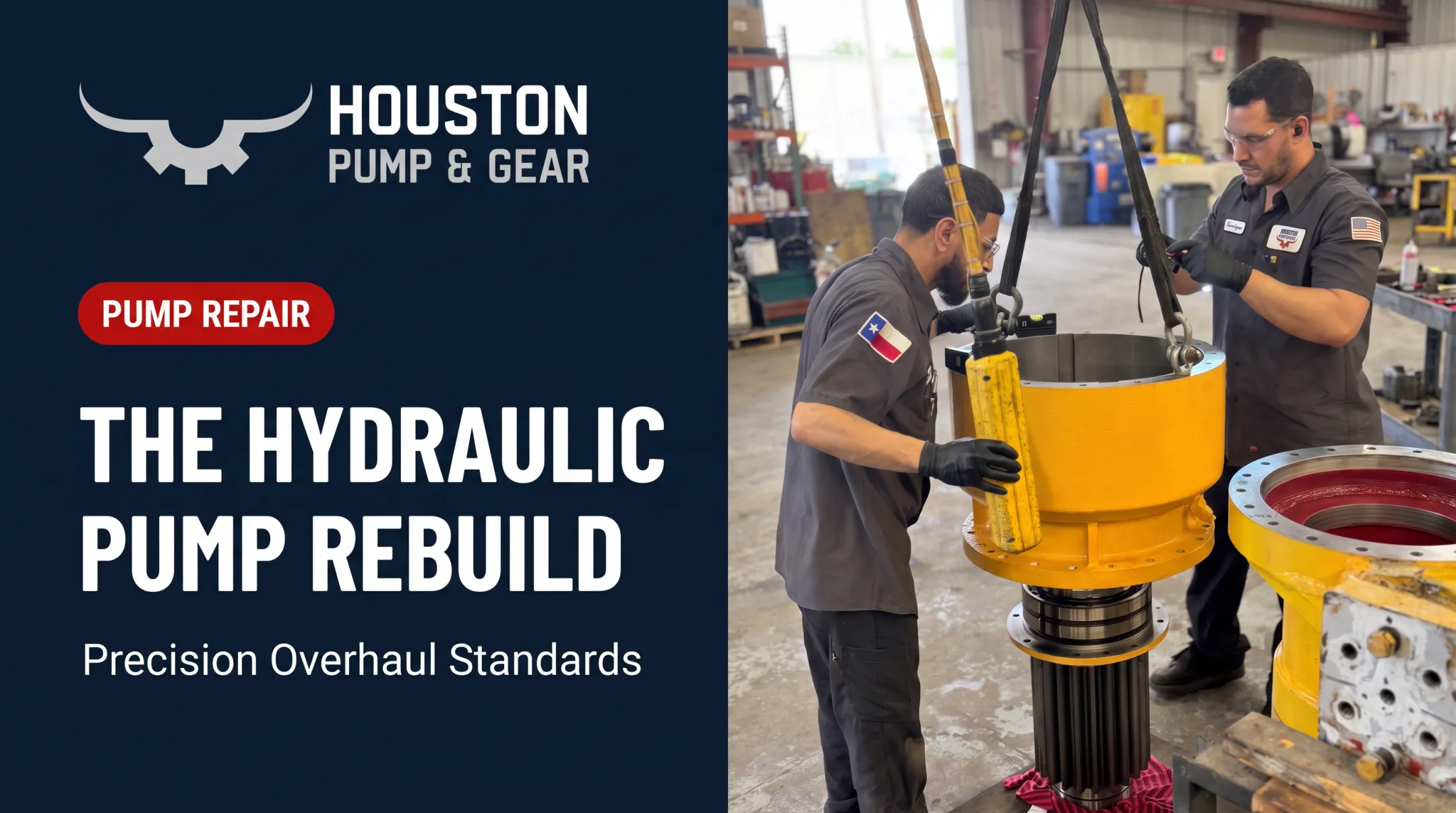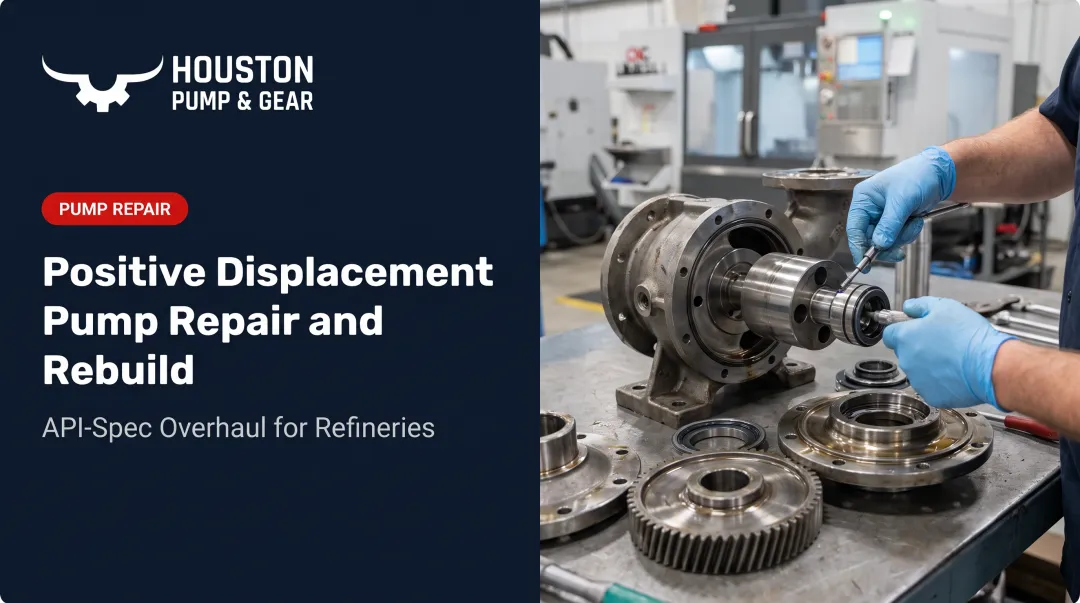

Rebuild and repair kits give facilities a cost-effective alternative to buying a new pump every time seals, bearings, or internal wear components fail. This guide covers what's actually in these kits, how to tell when a kit-based rebuild makes sense versus calling in a professional, the step-by-step rebuild process, and how to decide who should do the work.
Key Takeaways
- Rebuild kits restore worn pumps to near-original performance at a fraction of replacement cost
- Match the kit to pump type—seals, gaskets, diaphragms, bearings, and wear parts differ by design
- Cracked housings and broken shafts usually mean replacement, not a kit repair
- Professional evaluation prevents misdiagnosing a simple fix as a full rebuild—or vice versa
- Facilities running complex industrial pumps benefit from having a 24/7 emergency repair partner on call
What's Included in a Pump Rebuild and Repair Kit
Kit contents depend heavily on pump type. There's no universal parts list, and treating kit names as interchangeable is how facilities end up with the wrong parts on the bench.
Centrifugal Pump Kits
Centrifugal pump kits typically address the rotating assembly and hydraulic wear points:
- Mechanical seal assemblies
- Vent and drain O-rings, casing or sleeve O-rings
- Wear rings and impeller hardware
- Bearings (in more comprehensive kits)
OEM documentation from manufacturers like Xylem and Grundfos shows that a basic seal/O-ring kit is a different product from a full wear-parts kit that includes bearing chambers, neck rings, and retainers. Ordering the wrong one delays the job.

AODD/Diaphragm Pump Kits
Air-operated double diaphragm pump kits focus on the fluid section and air valve:
- Diaphragms and diaphragm backers
- Balls and seats for check valves
- O-rings and diaphragm bolts
- Center-section components (pilot valves, bearings, U-cups) in comprehensive kits
Graco's service documentation separates fluid-section kits, air-valve kits, and center-rebuild kits. Confirm which section actually failed before ordering; buying a full kit when you only need diaphragms wastes budget.
Soft-Parts Kits vs. Comprehensive Kits
Some kits include just seals and gaskets for a quick refresh. Comprehensive kits add bearings, wear rings, and other rotating components for a full overhaul. Match the kit scope to the pump's condition before you order.
Cost Considerations
There's no reliable universal price range for kits versus full OEM pump replacement. Costs vary too much by pump size, kit scope, and material specification.
OEM service documentation shows vendors quote the specific job rather than publishing flat rates. Treat any generic dollar figure with suspicion.
Critical warning: Match kit specifications exactly to the pump's model and serial number. Elastomer material, seal face compatibility, and dimensional fit all vary by configuration. A kit that "should fit" often doesn't.

How to Know If a Kit-Based Rebuild Is the Right Fix
Signs Your Pump Needs a Rebuild
Watch for these early indicators before the failure becomes catastrophic:
- Flow or pressure drop below rated specification, often the first sign of internal wear
- Mechanical seal leakage or sweating, paired with increased power draw
- Unusual noise, cavitation, or vibration during operation
Insufficient delivery can stem from wear, leakage, or clogged impellers and diffusers, but it can also come from suction problems or wrong rotation. Don't assume it's the pump internals without checking the system first.
Rebuild vs. Replace: Making the Call
A kit-based rebuild makes sense when damage is confined to wearable internal parts, and the housing and shaft remain structurally sound.
Replacement becomes the smarter option when:
- Repair cost approaches the price of a new pump
- Structural damage is present (cracked casing, broken impeller)
- Repeated failures continue despite proper rebuilds
Any pump with a damaged impeller almost always needs a replacement impeller, not a repair. That's a straightforward call.
The harder calls, such as shaft concentricity issues and borderline casing wear, are exactly where a professional inspection pays for itself. Attempting a kit rebuild on a pump with underlying structural damage wastes both the kit and the labor.

Houston Pump & Gear technicians inspect pumps to pinpoint the actual failure cause. You receive a free inspection report with a cost estimate before any work begins.
Step-by-Step Pump Rebuild Process Using a Repair Kit
- Disassemble and clean everything. Tear down the pump and industrially clean every component before you inspect. You can't accurately assess wear on dirty parts.
- Inspect against OEM tolerances. Check seals, O-rings, bearings, wear rings, and shaft runout against manufacturer specifications. This step determines exactly what the kit needs to replace, not just what looks worn.
- Cross-reference the parts checklist. Compare your kit's contents against what the manual calls for. Order any additional components the kit doesn't cover.
- Reassemble to spec. Install new kit parts to OEM torque and clearance specifications. Torque values vary widely by model, so guessing here causes premature repeat failures.
- Run a multi-point performance test. Check pressure, flow, and vibration before returning the pump to service. Skipping this step is how a "successful" rebuild fails again within weeks.

For complex, gearbox-driven pump systems, professional reassembly and testing reduce the risk of repeat failure. Houston Pump & Gear's inspection process follows this same disassemble-inspect-repair-test sequence, comparing components against a specification, CAD drawing, or original-part sample to hold OEM tolerances throughout.
DIY Kit Installation vs. Professional Rebuild Services
Simple seal or gasket swaps on accessible pumps can often be handled in-house by trained maintenance staff. With the right tools, a straightforward seal replacement can be completed in an afternoon. But not every seal issue is that simple. Some seals sit deep inside the pump, and a failure can exist even when the visible seal looks fine. That's where in-house attempts stall out. Choose DIY for accessible seals with clear failure points and trained staff on hand. Call a professional when:
- Seals sit deep inside the pump housing
- The pump supports a critical process in a power plant, refinery, or heavy manufacturing line
- You need guaranteed tolerances and preserved warranty coverage When the stakes include a full production line shutdown, the labor savings of DIY rarely justify the risk. This is where Houston Pump & Gear's 24/7 emergency response and mobile pickup service fits in. When an in-house rebuild stalls, or a facility simply needs faster turnaround than its own maintenance team can deliver, a dedicated truck can pick up the equipment the same day. In one case involving a Lufkin S2212C gearbox, a unit was collected the same day it failed and the plant was back online 72 hours later. That kind of turnaround matters when a shutdown is costing real money every hour it continues.
Preventing Future Failures After a Rebuild
A rebuild only pays off if it prevents a repeat failure. A few habits make the difference:
- Establish a vibration and temperature baseline immediately after rebuild. Run the pump a few hours, then compare multi-point readings to the manual’s rated values so you catch the next problem early.
- Keep a spare kit or backup unit on hand for critical pumps. Extended downtime waiting on parts is often worse than the original failure.
- Fix the root cause, not just the symptom. Misalignment, poor suction, and contamination drive repeat wear. Cavitation is a system pressure issue, not a parts issue—skip the cause and the same failure returns.

Pump failures almost always have a traceable root cause. Finding it is what separates a rebuild that lasts years from one that fails again in months.
Frequently Asked Questions
How much does it cost to rebuild a hydraulic pump?
Cost depends on pump size, kit scope, and labor, so there's no reliable flat figure. Get a quote that separates parts, labor, and testing so you can compare it directly against full replacement.
Can a pump be rebuilt?
Most pumps with worn seals, bearings, and wear rings can be rebuilt using repair kits, provided the housing and shaft remain structurally intact. Structural damage changes that calculation entirely.
What's the difference between a repair kit and a full rebuild?
A kit is the parts: seals, gaskets, bearings, and similar wear components. A rebuild is the complete labor process (disassembly, inspection, reassembly, and testing) that puts those parts to use correctly.
How long does a pump rebuild take?
Turnaround depends on kit availability, inspection findings, and whether machining is needed. For critical shutdowns, emergency service can compress the timeline to a matter of days.
Do rebuild kits work for any pump brand or model?
No. Kits must match your pump's exact model and serial specifications. For hard-to-find or obsolete models, a professional shop can source or fabricate the necessary parts.
When should I choose replacement over a rebuild kit?
Choose replacement when repair costs approach the price of a new pump, or when damage is structural (cracked casings, broken shafts) rather than confined to wear parts. A professional inspection removes the guesswork from that decision.