
Introduction
A gearbox failure at a power plant doesn't just break a machine. It stops production, triggers overtime labor, and can cost thousands of dollars for every hour the line stays down.
ABB's 2023 survey of over 3,200 plant maintenance decision-makers found the typical business loses close to $125,000 per hour during unplanned outages, and more than two-thirds of facilities experience an unplanned outage at least monthly.
Gearbox check services exist to prevent that scenario. Regular inspections catch wear, misalignment, and contamination while they're still cheap fixes, not emergencies.
This article covers what a gearbox check inspects, the warning signs that mean you need one now, how the process works, and how to choose a provider that won't leave you stranded when something breaks.
Key Takeaways
- Routine gearbox checks catch overheating, misalignment, and contamination before they cause emergency shutdowns
- Unusual noise, vibration, oil leaks, and metal debris in the oil are red flags demanding immediate inspection
- Complete diagnostics—visual checks, thermal imaging, vibration measurement, and lubricant analysis—catch failure modes a single test can miss
- A provider with 24/7 emergency response and multi-brand gearbox experience cuts your downtime risk
What Is a Gearbox Check and Why It Matters
A gearbox check is a systematic evaluation of gears, bearings, seals, lubricant, and housing condition. The goal is simple: catch early-stage wear before it forces an unplanned shutdown.
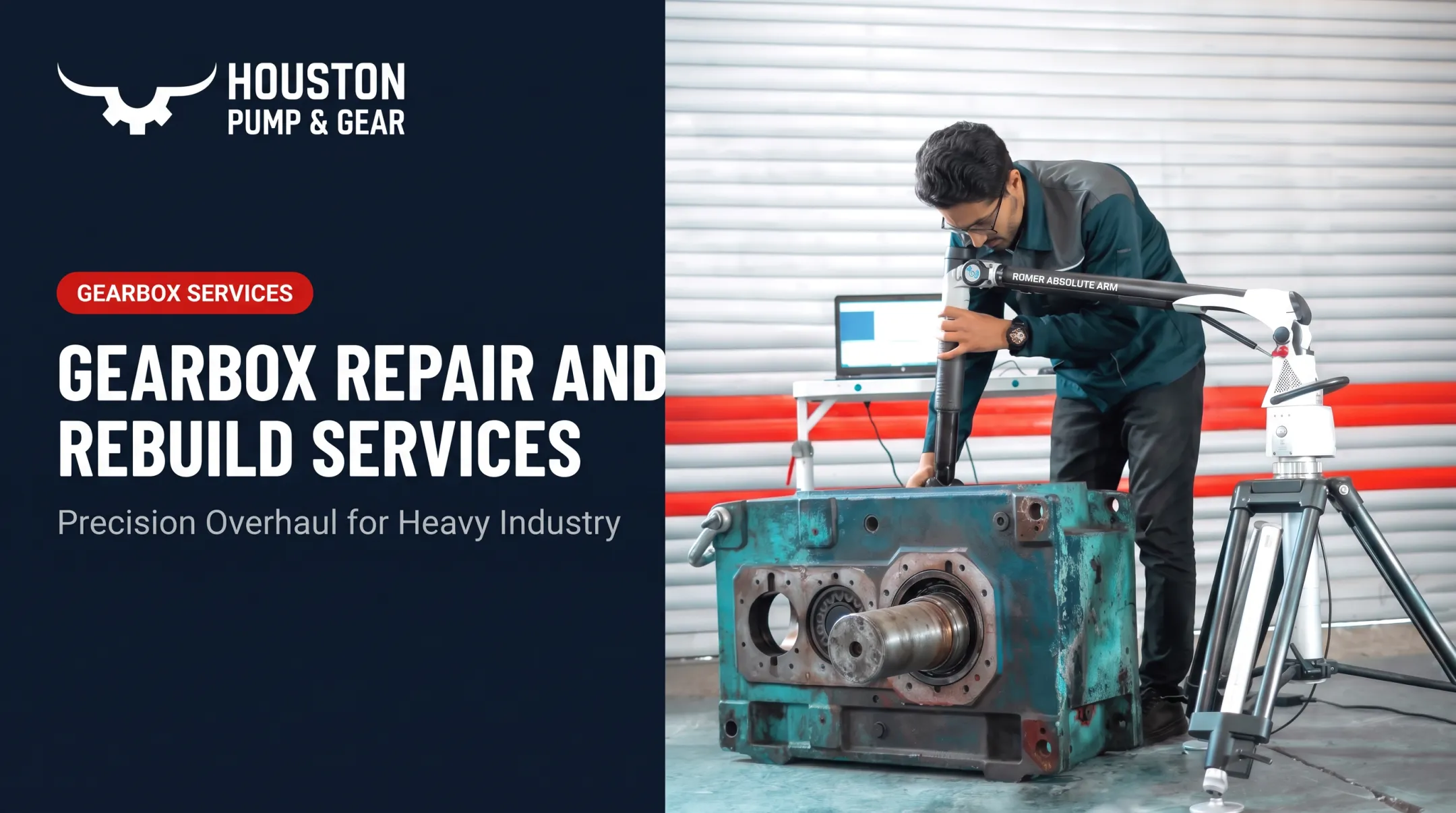
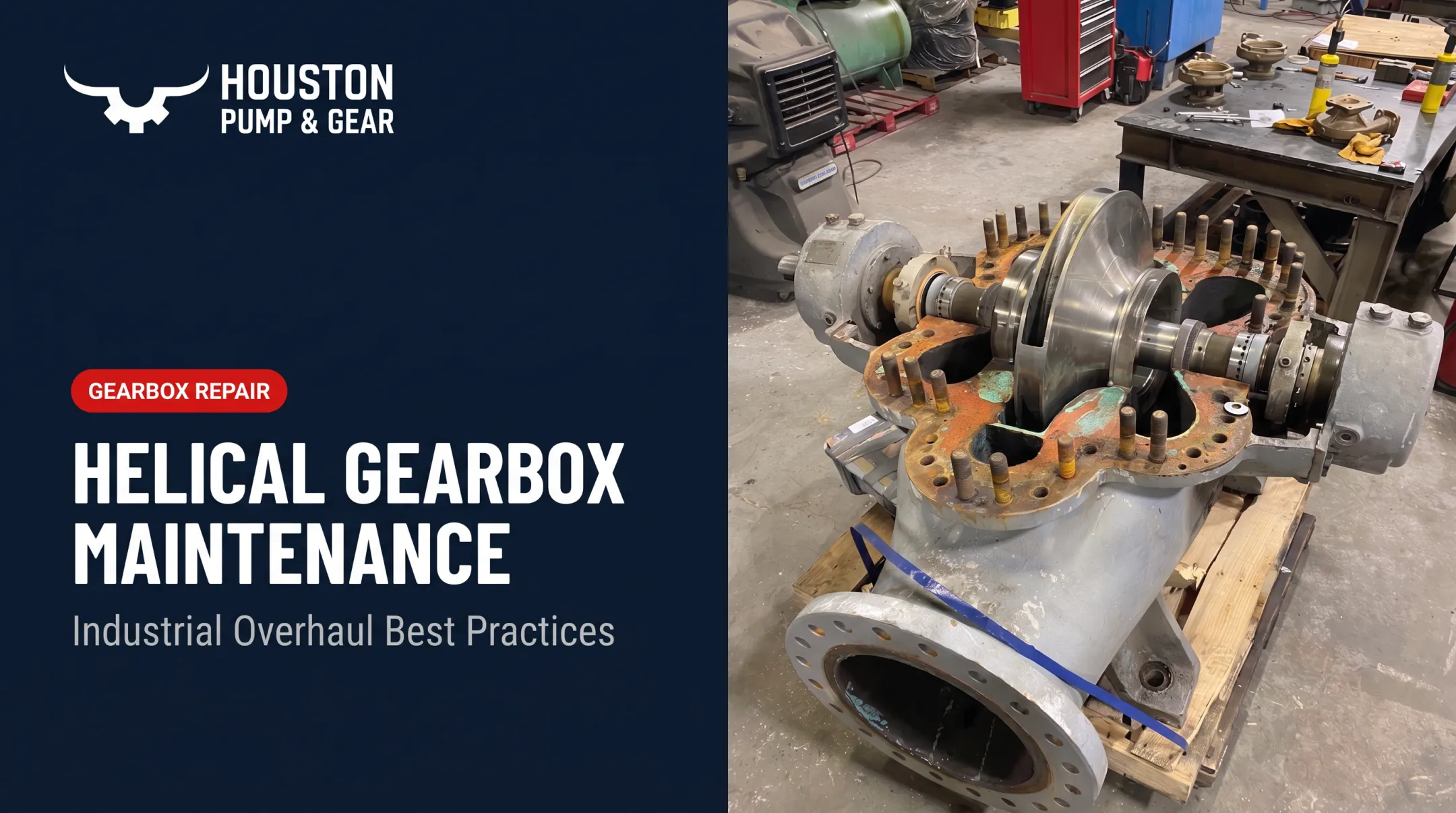
Houston Pump & Gear's inspection and failure analysis process examines gears, shafts, bearings, housings, and seals, then documents the failure mechanism, required repairs, and recommended scope of work. That documentation matters because it turns "something feels off" into a specific, actionable plan.
Facilities that run gearboxes continuously under heavy load, dust, or high heat put more stress on internal components than lighter-duty applications. That accelerated wear is exactly why routine checks matter more in these environments.
Common Causes of Gearbox Failure
Most gearbox failures trace back to a few recurring causes:
- Lubrication problems — low oil, wrong lubricant, contamination, or foaming
- Contamination — particle ingress and water contamination degrade bearing surfaces and accelerate fatigue
- Overload and fatigue — tooth breakage and pitting often trace back to load conditions exceeding design intent
- Misalignment — shaft or coupling misalignment creates vibration, heat, and uneven wear patterns
Oil oxidation and contamination are especially worth catching early—scheduled inspections often spot them before gear or bearing damage sets in, which is why lubricant condition sits at the center of most professional check protocols.

Warning Signs Your Gearbox Needs a Professional Check
Don't wait for a full stoppage. These signs mean it's time to schedule a professional inspection:
- Unusual sounds — howling, humming, grinding, or buzzing usually points to developing gear or bearing damage
- Discolored or leaking oil — brown or black oil signals contamination or oxidation; seal leaks suggest internal pressure or wear
- Vibration or excessive heat — abnormal vibration or a housing hot to the touch (check with an infrared thermometer) often means bearings or gears are under stress
- Metal debris in the oil — chips or fine metal particles on magnetic plugs or filters indicate active internal wear
- Slower speeds or slipping under load — reduced power or inconsistent performance signals wear affecting mechanical function
Any one of these on its own deserves attention. Two or more together mean you should schedule an inspection immediately, not next quarter.

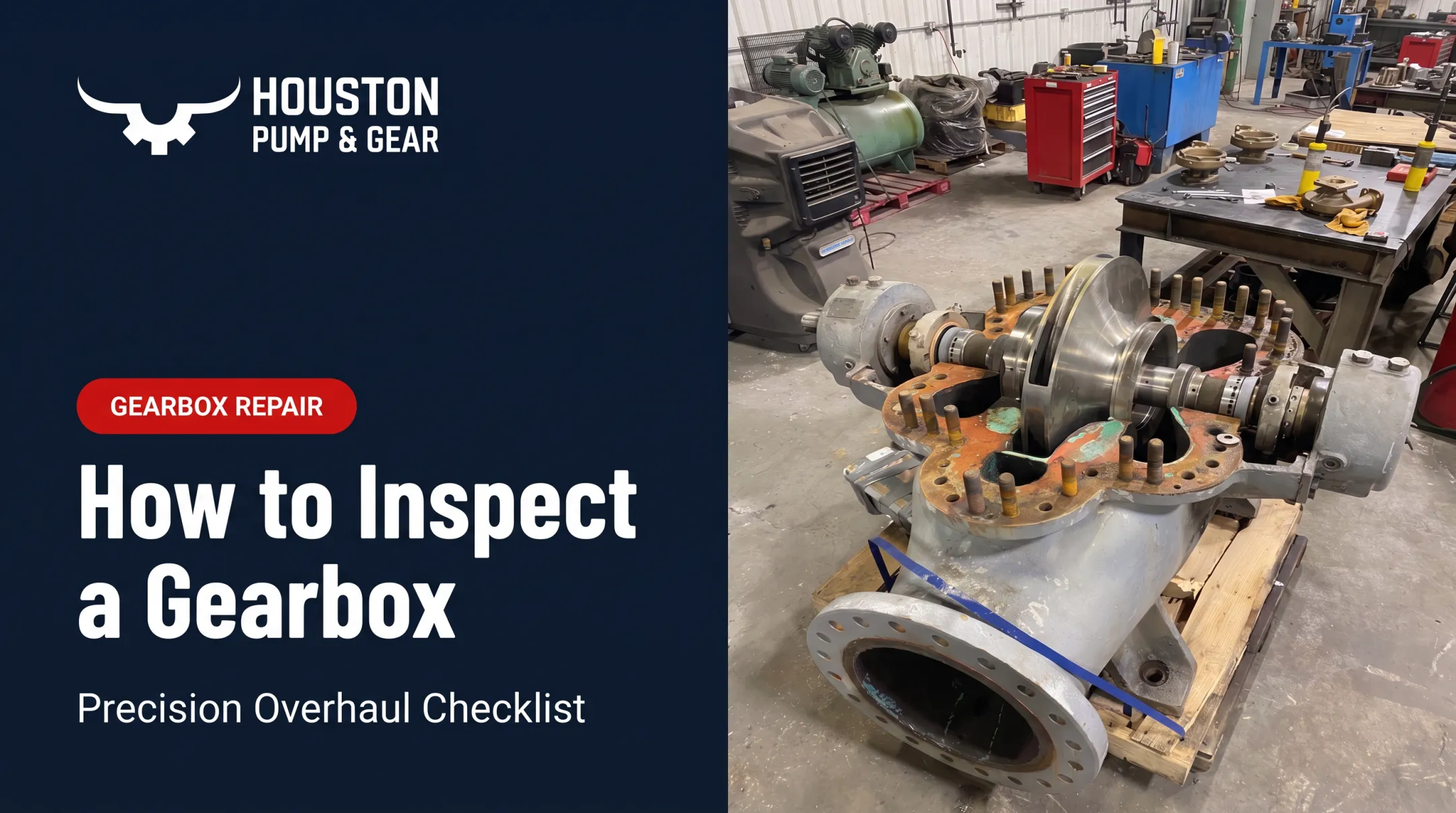
What a Professional Gearbox Inspection Process Involves
A thorough check follows a repeatable sequence, not a quick look and a verbal OK.
- Walkaround visual inspection: check housing, fasteners, and structural interfaces for corrosion, cracked paint, or movement before opening any ports
- Internal inspection: examine gear teeth, bearings, and contact patterns through access ports or a borescope, looking for misalignment or pitting
- Lubricant sampling and analysis: test for particle counts, water content, and wear metals; oil analysis can reveal problems before vibration readings change at all
- Vibration and sound measurement: compare readings against OEM limits and historical baselines to catch developing mechanical issues early
- Temperature checks: use RTDs, thermometers, or thermal imaging to spot overheating before it causes damage
- Documentation: record photos, contact patterns, and written findings so condition can be tracked over time
When those checks point to deeper wear or damage, Houston Pump & Gear technicians move to full disassembly, cleaning, and root-cause analysis. They measure critical components—gears, shafts, and housing—so the report reflects measured condition, not an estimate.

Emergency vs. Scheduled Gearbox Services
There's a real difference between planning ahead and reacting to a crisis.
Scheduled preventive checks happen during planned downtime:
- Cost less than run-to-fail repairs
- Limit disruption to planned outages
- Let you budget work instead of scrambling
DOE's Federal Energy Management Program estimates preventive maintenance programs deliver 12%–18% cost savings over reactive approaches.
Emergency response kicks in after an unexpected failure:
- 24/7 call-out when a unit goes down
- Same-day pickup so the gearbox is not left idle
- Fast turnaround to stop compounding production losses
Houston Pump & Gear handles both. When Jerry Storm's Lufkin S2212C gearbox failed at a power plant, a truck picked it up the same day. The plant was back online 72 hours later. Mobile field response with dedicated transport is what keeps an emergency from becoming a week-long shutdown.

Why Choose Houston Pump & Gear for Gearbox Check Services
Houston Pump & Gear provides gearbox inspection and repair services around the clock across Texas and Louisiana, covering both scheduled maintenance and emergency response.
What sets the team apart:
- Proven rapid turnaround: 72-hour emergency repair of a Lufkin S2212C gearbox restored a power plant from full shutdown
- Broad equipment experience: technicians service major brands including Falk, Flender, Lufkin, and Philadelphia Gear
- Long-term client relationships: Jerry Storm has had over 15 units serviced since first connecting with the team in 2014
- Client-facing coordination: Project Manager Vince Parker manages rapid-response repairs and ongoing service engagements
That combination of speed, brand coverage, and repeat business is why facilities keep coming back after their first emergency call.
Frequently Asked Questions
How much will it cost to fix a gearbox?
Repair costs vary widely based on gearbox size, damage severity, and whether you need emergency service. Contact Houston Pump & Gear for a quote based on inspection findings.
How often should an industrial gearbox be inspected?
Frequency depends on duty cycle, operating conditions, and how critical the unit is to your process. At minimum, schedule routine visual and lubricant checks, plus periodic in-depth inspections for high-duty gearboxes.
What are the signs of a failing gearbox?
Unusual noise, excessive vibration, oil leaks, discolored oil, and overheating are the main red flags. Any combination of these should trigger an inspection right away.
Can a damaged gearbox continue running safely?
Minor wear may allow continued operation with close monitoring. However, cracks, severe pitting, or significant metal debris in the oil require prompt repair to avoid catastrophic failure.
What's the difference between gearbox inspection and gearbox repair?
Inspection diagnoses the gearbox's current condition through visual, thermal, vibration, and oil analysis. Repair addresses whatever issues that inspection uncovers, from bearing replacement to full overhaul.
How quickly can an emergency gearbox repair be completed?
Turnaround depends on the extent of the damage and part availability. Houston Pump & Gear has completed a 72-hour emergency repair and return to service on a Lufkin S2212C gearbox.