
In 2014, a gearbox failure sent one power plant into an emergency shutdown. The difference between a scheduled repair and a full-blown crisis often comes down to whether operators caught the warning signs early enough.
This guide walks through the warning signs of gearbox malfunction, the causes behind them, and what to do the moment you suspect trouble. Catching a problem at the whining-bearing stage costs far less, in time and money, than catching it after a tooth shears off.
Key Takeaways
- Watch for unusual noise, vibration, fluid leaks, and overheating as early gearbox failure signals
- Lubrication issues, misalignment, overload, and worn bearings cause most gearbox failures
- Catching warning signs early prevents cascading damage and cuts repair costs
- Fast emergency repair can return critical equipment to service in days, not weeks or months
Top Warning Signs of a Gearbox Malfunction
Gearboxes rarely fail without warning. They telegraph distress through sound, heat, vibration, and fluid condition long before a catastrophic breakdown.
Unusual Noises
Every noise tells a different story:
- Whining - usually points to bearing wear
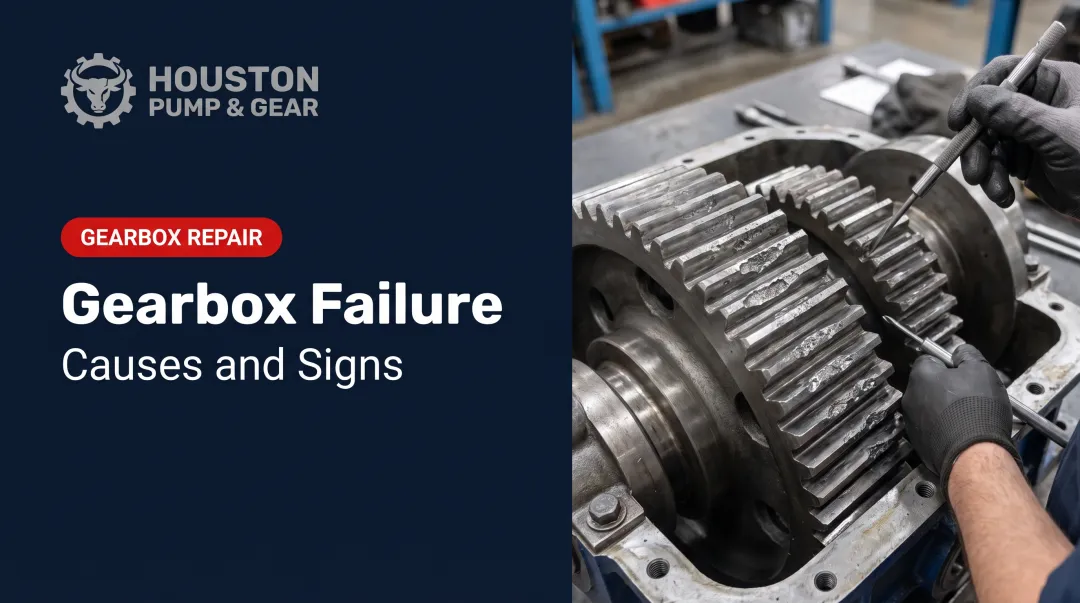
- Grinding - signals gear tooth damage
- Knocking - suggests loose components or misalignment
- Squealing - often traces back to failing seals

Bearing issues deserve special attention. A U.S. Department of Energy study of 750 confirmed wind-turbine gearbox damage records found bearing problems caused 76% of reported failures (DOE, 2015).
That figure is wind-turbine specific, but it still shows why a whining sound should never be ignored in any heavy-duty gearbox.
Vibration, Heat, and Fluid Changes
Other physical cues often show up alongside noise:
- Vibration — smooth running turning choppy or shaky signals internal wear or misalignment; left alone, it accelerates damage downstream
- Overheating — heat at bearing housings or elevated oil temperature usually means internal damage is already underway
Watch fluid condition closely:
- Visible oil leaks around seals or housing joints
- Dark or cloudy fluid, indicating oxidation or overheating
- Metal shavings in the oil or on magnetic plugs
- A milky appearance, which points to water ingress

Performance Drop-Offs
Watch how the unit behaves under load:
- Reduced power output with steady input
- Gear slippage under load
- Delayed or rough engagement
Any of these points to internal mechanical breakdown and warrants a professional inspection before the unit fails in service.
Common Causes Behind These Malfunction Signs
Spotting the symptom is only half the job — these four causes drive most gearbox failures.
Lubrication breakdown. Wrong fluid type, low levels, or contamination accelerate wear fast. Lost oil pressure, poor flow, or temperature control is one of the most common paths to failure.
Misalignment and installation errors. Improper mounting or coupling problems put stress on gears and bearings that were never designed to take it. A 2021 vibration-analysis study linked misalignment to accelerated wear in the drive-end bearing region (Kumar et al., 2021).
Overload and shock loading. Exceeding rated torque — or a sudden load spike — can crack gear teeth or warp the housing. Gearboxes like the Falk Ultramite series span 13 models rated from 795 to 39,100 inch-pounds of maximum torque. Those limits exist for a reason; push past them and something gives.
Environmental degradation. Heat, dust, and corrosive conditions common in refineries, mills, and cement plants speed up fatigue over years of continuous operation.

How those causes surface depends on the equipment. Automotive and industrial gearboxes fail for similar reasons, but the warning systems look nothing alike.
How These Signs Show Up Differently in Industrial vs. Automotive Gearboxes
A passenger vehicle transmission flags trouble with a dashboard warning light and a diagnostic trouble code.
Industrial gearboxes have no dashboard. Operators have to trend vibration, oil temperature, sound levels, and oil condition over time, then read those trends against the specific gearbox and application.
Sustained vibration or heat buildup during continuous operation is the industrial equivalent of that warning light — just without a single convenient indicator.
What to Do When You Notice a Gearbox Malfunction
The instinct to keep running equipment until a scheduled outage is understandable. It's also usually a mistake.
- Reduce or halt operation. Continuing to run a gearbox with warning signs turns a repairable problem into a total loss. A cracked tooth or seized bearing costs far more to fix than the same issue caught early.
- Document the pattern. Note noise type, vibration behavior, temperature readings, and any recent operating or maintenance changes.
- Arrange a professional inspection. Get a diagnostic before damage spreads—don't wait for the next scheduled outage.

A proper diagnostic confirms root cause before repair work begins. That typically includes visual inspection, oil analysis, and vibration monitoring. Guessing at the cause risks fixing the wrong thing.
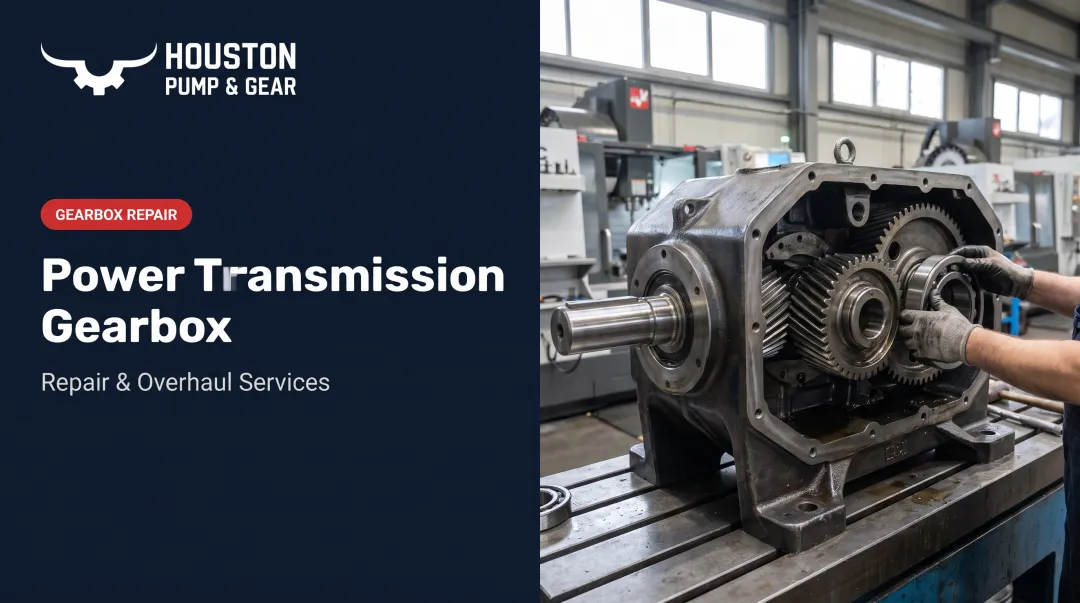
Houston Pump & Gear's technicians disassemble the gearbox and inspect the bearings, seals, and gear drives, then run failure analysis to pinpoint exactly what went wrong before any repair estimate goes out.
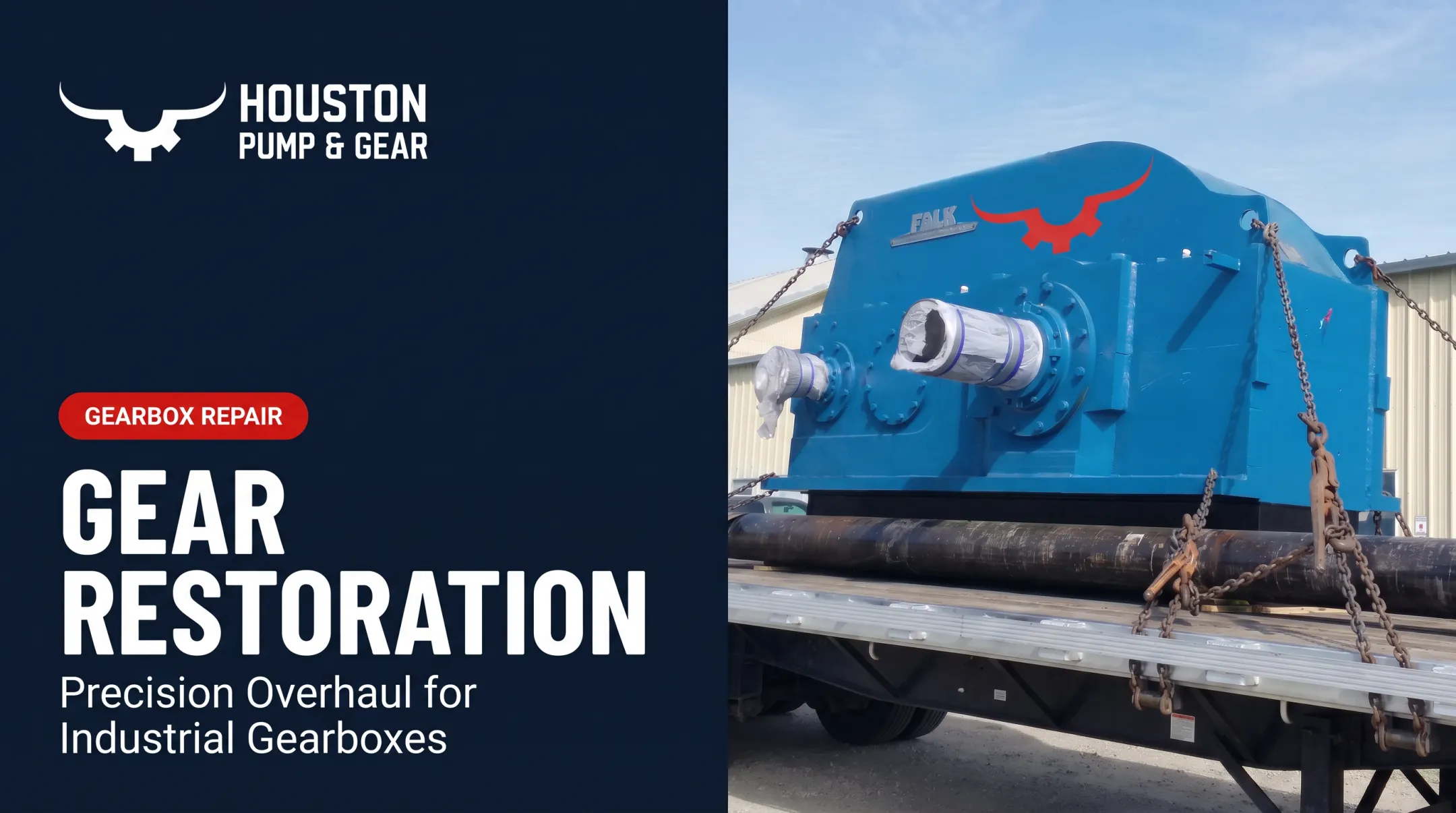
Real-world example: When a power plant's Lufkin S2212C gearbox triggered an emergency shutdown, Houston Pump & Gear sent a dedicated transport truck the same day to pick up the unit. The plant was back online 72 hours later, a dramatic contrast to the manufacturer-direct route, which often runs 16-18 weeks for maintenance repairs or 8-10 months for a new unit.
When a gearbox goes down, most facilities can't wait weeks. 24/7 emergency response is what keeps downtime measured in hours, not months.
Repair Costs and Repair vs. Replace Decisions
How much does gearbox repair cost? It depends on the extent of damage, parts availability, and the gearbox's size and complexity. A worn seal costs far less to address than a cracked housing or scored gear train.
That said, a rebuild often makes financial sense. In many cases, an overhaul saves 40-50% compared with buying a new gearbox. Once a repair estimate climbs above roughly 75% of replacement cost, a new unit usually makes more sense.
Beyond cost, consistency matters. One long-term Houston Pump & Gear client has had over 15 units serviced over the years. That track record builds confidence in repair reliability rather than defaulting to replacement every time something breaks.
Repair tends to make the most sense when:
- The housing and major shafts remain serviceable
- Parts are available or can be reverse-engineered
- The root cause can be corrected during the rebuild
- Turnaround time fits the facility's operational needs
Preventing Future Gearbox Malfunctions
A disciplined maintenance program prevents most gearbox failures and keeps unplanned downtime off the schedule.
Build a maintenance schedule around three pillars:
- Regular fluid checks and analysis
- Filter changes at manufacturer-recommended intervals
- Vibration monitoring to catch developing issues before they cascade
Verify alignment during initial installation and again after any equipment changes, coupling replacements, or foundation work. Misalignment introduced during a routine swap can undo months of good maintenance practice.
Consider a long-term service partnership. Facilities that keep multiple gearboxes reliable usually stay with one repair provider. Partners such as Houston Pump & Gear build institutional knowledge of each unit’s history, quirks, and maintenance needs, so teams are not starting from scratch after every incident.
Frequently Asked Questions
How much does it cost to fix a gearbox?
Cost depends on damage severity, gearbox type, and whether the job requires a partial repair or full rebuild. Industrial gearbox repairs vary widely based on inspection findings, but overhauls often run 40-50% less than a new unit.
Is it worth repairing a gearbox malfunction?
Usually, yes, especially when caught early and the repair stays well below replacement cost. Once estimates climb past roughly 75% of a new unit's price, replacement typically becomes the smarter option.
Can I operate equipment with a gearbox malfunction?
No. Running equipment with slipping, grinding, or overheating symptoms can turn a repairable issue into total failure. It also creates real safety hazards for nearby personnel.
What is the most common cause of a gearbox malfunction?
Lubrication issues and bearing wear lead the list, often traced back to inadequate maintenance practices like infrequent fluid checks or using the wrong lubricant type.
What sounds indicate a gearbox is failing?
Whining usually points to bearing wear, while grinding indicates gear damage. Knocking suggests loose components or misalignment, and squealing often means a failing seal.