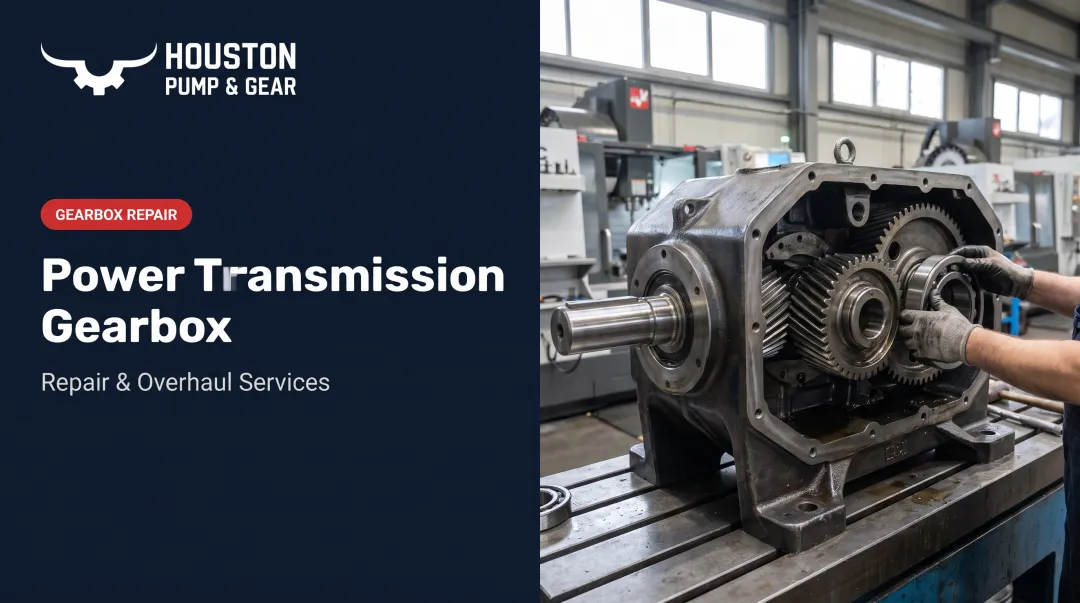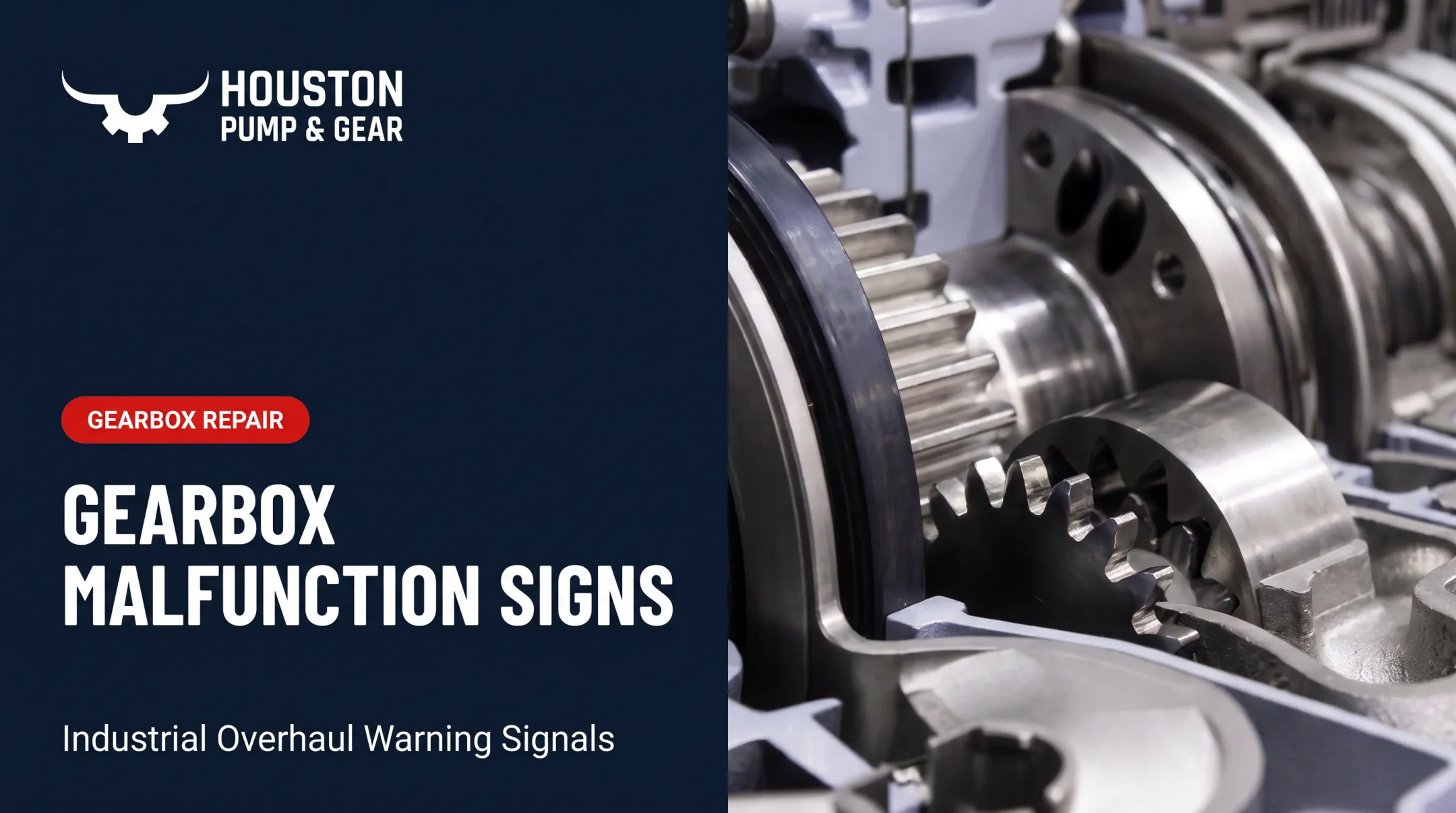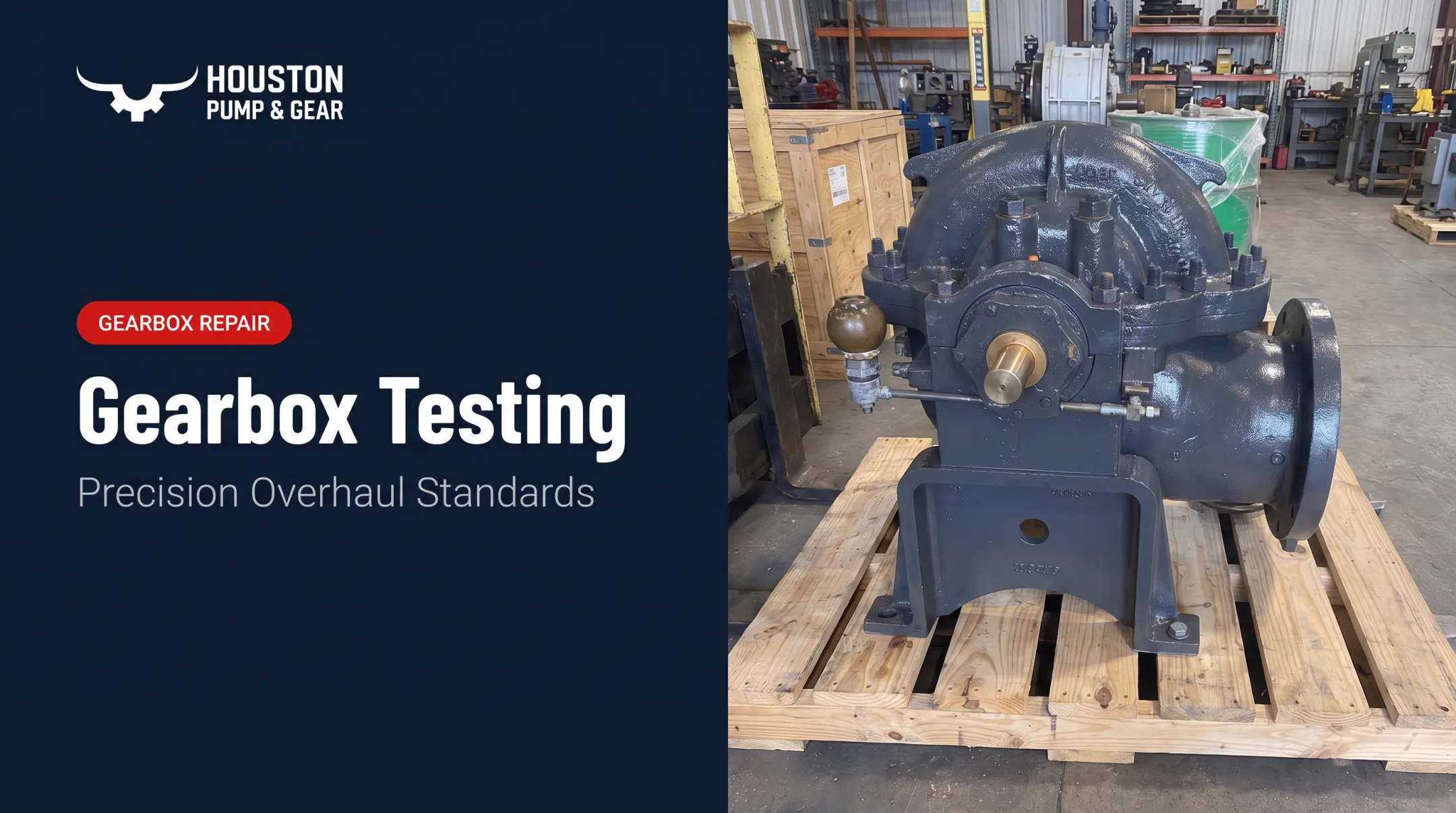

For power plants, refineries, and heavy manufacturing operations, that quiet buildup turns into a very loud problem. Unplanned gearbox failure means production stops, schedules slip, and maintenance teams scramble to find emergency repair support fast.
This guide breaks down what actually causes gearbox failure, the early warning signs worth watching for, and what to do when a failure turns into a genuine emergency.
Key Takeaways
- Most gearbox failures trace back to lubrication problems, misalignment, or overload
- Unusual noise, heat, or oil changes are early signals that appear weeks before a full breakdown
- Unplanned industrial downtime averages roughly $125,000 per hour, making fast diagnosis critical
- Catching issues early limits repair spend far below full replacement cost
- Emergency response providers can restore failed units to service in days, not weeks
Understanding Gearbox Failure: Common Failure Modes
A gearbox "fails" when it can no longer transmit torque and speed reliably without excessive heat, noise, vibration, or wear. That failure can show up in a few distinct ways, and knowing which one you're dealing with shapes the whole repair conversation.
The core failure modes industrial teams run into include:
- Bearing failure — spalling (subsurface cracks that surface as pits) or brinelling (indentation from static overload or impact)
- Gear tooth failure — pitting from contact fatigue, or scuffing from a breakdown in lubricating film
- Seal and breather failure — allows water, dust, or debris into the housing
- Shaft and coupling issues — often tied to misalignment or overhung load
- Lubrication breakdown — the root cause behind a huge share of the failures above
Failure can be sudden, like a shock-loaded tooth cracking mid-cycle, or progressive, where surface distress slowly escalates into vibration, heat, and eventual shutdown.
Different Gearbox Types Carry Different Risk Profiles
Not every gearbox fails the same way. Risk concentrates in different places depending on the design:
- Helical units — axial forces load bearings and housings directly
- Planetary designs — uneven load across planet bearings when opposing axial forces aren't managed
- Worm gears — sliding contact makes lubricant film strength critical
- Right-angle and bevel units — shaft deflection under load shifts tooth contact and accelerates wear

What Causes Gearbox Failure? Top Culprits
Here's the part maintenance teams often miss: the component that finally fails usually isn't the actual root cause. A bearing seizes, but the real story started months earlier with overload, contamination, or an installation shortcut nobody flagged at the time.
Lubrication Breakdown & Contamination
Oil has three jobs: separate metal surfaces, control temperature, and flush away debris. Wrong viscosity, underfilling, or stretched-out service intervals all undermine that job.
Lubrication issues aren't a minor factor, either. A widely cited industry benchmark found that approximately 60% of equipment failures at one major steel plant were lubrication-related, according to Tata Steel's quality-assurance findings reported by STLE.
That's a plant-wide figure rather than a gearbox-only statistic, but it makes the point clearly: lubrication is where most preventable failures start.
Contamination typically enters through:
- Worn seals that let water and dirt seep in
- Damaged or clogged breathers that fail to vent moisture properly
- Washdown exposure in food, chemical, or paper processing environments
Once water or solid particles get into the oil, damage to gears and bearings multiplies fast — abrasive particles score surfaces while water strips away the protective film.
Misalignment & Overhung Loads
Even small misalignment concentrates stress on one edge of a gear tooth or bearing, rather than spreading load evenly. That shows up as abnormal heat, unusual noise, or a seal that keeps leaking no matter how many times it gets replaced.
Overhung loads add another layer of risk. Belts, chains, or rigid couplings that exceed a shaft's design limits shorten bearing life and can misalign the gears themselves. Installation errors compound the problem:
- Soft foot — uneven mounting that flexes the housing under bolt-down torque
- Improper torque — incorrect bolt torque that leaves the housing free to shift under vibration
- Ignored thermal growth — failing to account for how components shift as they heat up during operation
Overload & Shock Loading
Gearboxes are rated for a torque spectrum and duty cycle, not just the number stamped on the nameplate. Sustained overload quietly eats into bearing life. Shock loading, like a jam or a sudden reversing load, causes torque spikes that can crack teeth or brinell bearings on the spot.
System changes create hidden overload risk more often than teams expect. Watch for:
- Motor upgrades that push more torque through the same gearbox
- VFD parameter changes that widen the operating speed range
- Higher cycle rates that weren't part of the original duty-cycle calculation
Any of these can push a properly specified gearbox past its rated limits without an obvious warning at first.
Wear, Material Fatigue & Harsh Environments
Even a correctly specified gearbox eventually hits its fatigue limit. Harsh conditions just get there faster. Washdown exposure, dust, and temperature extremes all shrink the expected service life.
Specific wear patterns tell their own story:
- Micropitting — microscopic surface pits, often linked to inadequate lubricant film under heavy load
- Uniform pitting — repeated contact stress exceeding the gear surface's fatigue strength, often a sign of sustained overload
- Tooth root cracks — classic bending-fatigue damage, frequently traced back to misalignment or excess torque
Reading these patterns correctly during teardown is often the fastest way to identify what actually caused a failure, rather than just replacing the damaged part and waiting for it to happen again.

Warning Signs of Gearbox Failure You Shouldn't Ignore
Gearboxes rarely fail silently. The signals are there. The question is whether anyone catches them in time.
Unusual sounds are often the first clue:
- Whining usually points to worn bearings
- Grinding suggests gear tooth damage
- Clunking hints at excessive internal play or a failing mount
Vibration and heat changes matter just as much. A shifted vibration signature or a steady climb in operating temperature signals developing bearing or gear issues. Vibration analysis tools can catch these changes weeks before a visible failure occurs.
Oil condition tells its own story. Darkened oil, a burnt smell, visible metal fines, or a milky emulsion all point to lubrication failure or contamination that's already underway.
Other signs worth acting on immediately:
- Recurring leaks around seals or breathers often signal an alignment or installation issue, not a simple seal defect
- Increased backlash or slipping under load is a clear sign of internal wear that needs attention now, not next quarter
The urgency here isn't abstract. A 2023 ABB survey of over 3,200 plant-maintenance decision-makers found that unplanned downtime costs typical industrial businesses roughly $125,000 per hour, with more than two-thirds reporting outages at least monthly. Catching these signs early is the difference between a scheduled repair and an emergency one.
The Real Cost of Ignoring Gearbox Problems
A small leak or a slight new noise feels easy to put off. It rarely stays small.
Left unaddressed, minor symptoms escalate into internal component failure, then a full rebuild, then sometimes a complete replacement. Plant Engineering's long-standing industry guideline treats repair costs exceeding 60% of a new unit's price as the point where replacement starts making more financial sense. That figure is a screening rule, not a fixed threshold. Every case differs.
Waiting also widens the scope of damage. A failing gearbox can cascade into:
- Damaged couplings and connected shafts
- Motor strain from irregular load transmission
- Wear on driven machinery downstream
For power plants and heavy industry running continuous operations, even a few hours offline disrupts production schedules and can trigger contractual penalties. A repair that could have been a same-week fix turns into a multi-week rebuild and a much bigger invoice.

How to Prevent Gearbox Failure
Prevention comes down to three disciplines, applied consistently rather than occasionally.
Build a lubrication management plan:
- Schedule regular oil analysis to track viscosity, oxidation, and water content
- Confirm the correct fluid type and viscosity for the specific gearbox and duty cycle
- Monitor particle counts to catch contamination before it damages internal components
Enforce alignment and installation discipline:
- Verify alignment routinely, not just during initial installation
- Check overhung load limits against the manufacturer's rated capacity
- Confirm proper mounting and torque values during any reinstall
- Account for thermal growth once the unit is running hot
Implement proactive monitoring:
- Use vibration analysis to catch bearing and gear issues before they become audible
- Evaluate real duty-cycle data rather than assuming nameplate torque tells the full story
- Install torque-limiting devices where shock loading is a realistic risk
Oil analysis tends to flag problems weeks or months before vibration data shifts. Vibration monitoring is better at pinpointing which component is degrading. Used together, they catch far more than either method alone.
When Gearbox Failure Becomes an Emergency: Fast, Reliable Repair from Houston Pump & Gear
Even with a solid preventive maintenance program, emergency failures still happen. Power plants and heavy industry facilities that run continuously can't afford extended downtime while a replacement gets sourced.
Houston Pump & Gear covers that need with 24/7 emergency response built for continuous operations:
- Mobile field service ready when equipment fails
- Dedicated transport for same-day pickup across Texas and Louisiana
- Rapid in-shop repair so plants get critical units back online fast
When a gearbox goes down at 9 p.m. on a Sunday, our team is ready to move.
One example from our service history: power plant client Jerry Storm faced a gearbox failure that triggered an emergency shutdown. He had met Project Manager Vince Parker at an industrial convention earlier that year and remembered Parker mentioning our 24/7 capabilities.
He called. We sent a truck the same day, picked up the failed Lufkin S2212C gearbox, and had the plant back online within 72 hours.
That relationship didn't end with one repair. Parker continued coordinating with Storm's team directly, and Houston Pump & Gear has since serviced more than 15 units for that same client — a track record built on consistent turnaround and clear communication.

If your facility is facing a gearbox emergency, call (832) 603-9663 for 24/7 support, or reach out for a standard inspection before a small issue becomes a shutdown.
Frequently Asked Questions
How do you tell if your gearbox is broken?
Watch for unusual noises, vibration changes, overheating, oil leaks or discoloration, and slipping under load. Any combination of these signs warrants a prompt professional inspection before the damage spreads.
Can you operate equipment with a known gearbox fault?
No. Running with a known fault can turn a minor, repairable issue into catastrophic internal damage and an unplanned shutdown.
Is it expensive to fix a gearbox?
Costs vary widely based on failure severity, gearbox size and model, and whether repair or full replacement is needed. Early intervention keeps repair costs far lower than waiting for a complete failure.
How long does industrial gearbox repair take?
Timelines depend on the extent of damage, but rapid-response providers can complete emergency repairs in days rather than weeks. Houston Pump & Gear's 72-hour Lufkin S2212C turnaround is a real-world example of what's possible under pressure.
What's the difference between repairing and replacing a gearbox?
Repair targets specific damaged components like bearings, seals, or gears, while replacement swaps the entire unit. Repair generally makes sense unless costs approach 75% or more of a new unit's price, or the unit is at end of service life.
How often should industrial gearboxes be inspected?
Follow the manufacturer's recommended schedule, with quarterly visual inspections and a more thorough annual service as a baseline. Oil analysis and vibration checks should supplement — not replace — those scheduled visual inspections.