
Seals start seeping. Flow drops off. A knock develops in the casing that wasn't there last month. These symptoms build slowly through wear, contamination, or a missed lubrication cycle until the pump stops delivering the volume your process needs, or seizes outright. Ignoring the early signs is how a scheduled repair turns into an unplanned shutdown.
This guide covers the most common PD pump problems, the root causes behind them, a step-by-step repair process, and how to decide between repairing, rebuilding, or replacing a unit — plus when it makes sense to call in a 24/7 emergency repair specialist.
Key Takeaways
- Seal leakage, lost prime/flow, cavitation noise, and overheating account for most positive displacement pump failures
- Intact housings, rotors, and shafts usually make repair or rebuild the better choice than full replacement
- Diagnose the symptom, isolate the root cause, replace the worn part, then test under load
- Critical equipment and unclear root causes need a shop with 24/7 emergency response
Common Problems With Positive Displacement Pumps
Most PD pump failures fall into a handful of repeatable patterns tied to seals, suction conditions, and internal wear. Once you know what to look for, diagnosis moves a lot faster.
No Flow or Irregular Pumping
The pump runs, but output pulses, drops, or stops delivering fluid altogether. Common culprits include:
- Air-bound casing or a closed discharge valve
- Blocked or leaking suction line
- Worn rotors or gears that have opened up internal clearances beyond spec
Leakage at the Shaft Seal
Fluid appears around the seal area, sometimes contaminating nearby equipment, sometimes announcing itself with a dry-running screech at startup. On rotary-vane and similar PD pumps, Blackmer's service documentation points to these usual culprits:
- Incompatible or damaged O-rings
- Worn or dirty shafts
- Over-greased bearings
- Pitted or scratched seal faces
- Excessive suction head
- Dry-running without flush media
Cavitation and Excessive Noise/Vibration
A knocking, whining, or gravel-like rumble usually means the pump isn't getting the net positive suction head it needs. According to Viking Pump, NPSH available has to stay above NPSH required, or vapor cavities form at the inlet and collapse violently once they hit the discharge side. Watch for:
- Fluctuating discharge pressure
- Vibration felt at the pump body
- Reduced flow despite otherwise normal-sounding operation
Common causes that push NPSHa below what the pump requires:
- Restricted suction lines
- High fluid viscosity
- Low tank levels
- Excessive pump speed
Overheating or Excessive Wear on Bearings/Gears
A hot housing, discolored lubricant, and metallic noise usually point to:
- Insufficient lubrication
- Misalignment
- Foreign material working through the internals
Left unchecked, these signs shorten seal and bearing life fast, and often end in a seized pump rather than a simple part swap.

Why Positive Displacement Pumps Fail (Root Causes)
Most failures don't happen randomly. They trace back to a small set of real-world conditions:
- Operational stress — running outside rated speed, pressure, or viscosity specifications wears rotors, gears, and vanes faster than the design life predicts
- Environmental exposure — contaminated fluid, temperature extremes, or corrosive media attack seals and internal surfaces over time
- Improper installation — misalignment, incorrect rotation direction, or undersized suction piping create stress the pump was never built to absorb
- Skipped preventive maintenance — delayed seal inspections, overdue bearing checks, or ignored lubricant changes let small wear issues become major ones
These conditions show up clearly on specific pump designs. On Blackmer rotary-vane pumps, extended dry running and hydraulic hammer cause vane damage and shaft breakage. Misalignment between the pump, motor, and coupling usually appears first as noise, then as motor overload or a broken shaft.
A 2023 Pumps & Systems case study found a pump with recurring seal failures wasn't dealing with a bad seal design at all. Excessive system pressure was destroying every replacement seal within weeks. Swapping seals without fixing the pressure issue would have meant repeating that repair indefinitely.
Ignoring these root causes carries real consequences:
- Reduced pumping efficiency and inconsistent output
- Product quality or contamination issues in the process fluid
- Safety and compliance risks from leaks or a catastrophic seizure
- Costly unplanned downtime, particularly in continuous-run facilities like power plants
How to Repair a Positive Displacement Pump (Step-by-Step)
Fixing the symptom before understanding the problem is how shops burn through parts and still end up with a pump that fails again in three weeks. A disciplined sequence gets it right the first time.
Step 1: Identify the Exact Problem
- Note visible symptoms: leaks, unusual noise, vibration, or lost output
- Compare current flow, pressure, and temperature readings against the pump's normal baseline
- Check any installed gauges, alarms, or thermocouples for abnormal readings
- Document when the issue shows up — at startup, under load, or during continuous run — since timing narrows the cause considerably
Step 2: Confirm the Root Cause Category
Before anything gets opened up, sort the problem into one of three categories:
- Mechanical — wear, seals, bearings
- Operational — suction, viscosity, speed
- System-related — piping, valves
Rule out external factors first: suction line restrictions, incorrect motor rotation, and upstream process changes. Replacing parts before confirming the cause often masks the real problem instead of fixing it.
Step 3: Apply the Right Repair Based on the Problem Type
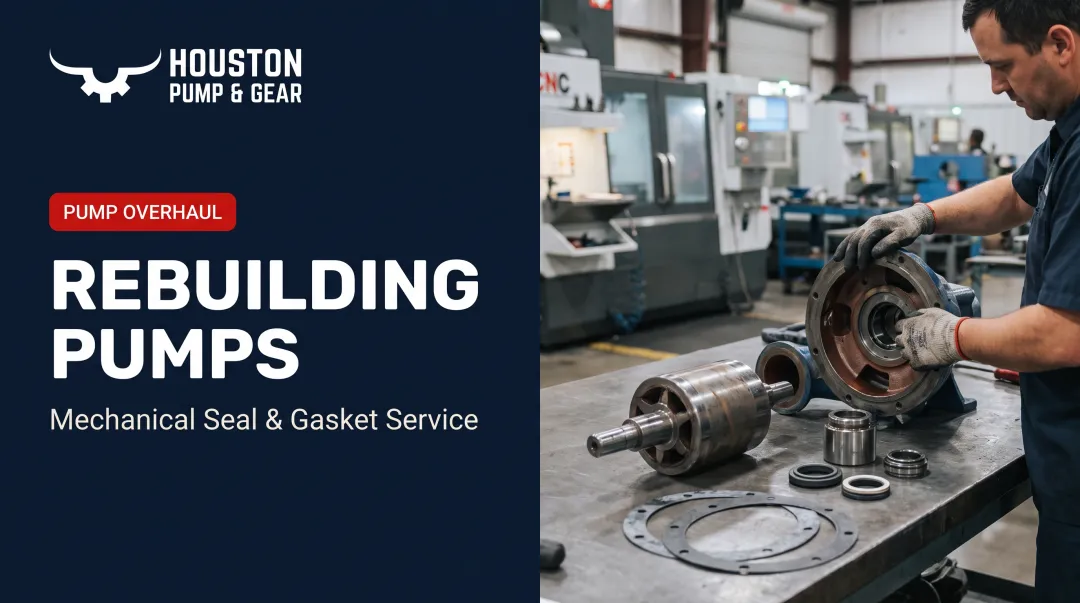
Mechanical issues: Replace worn seals, gaskets, or rotors and gears that exceed manufacturer clearance tolerances. Correct shaft misalignment and check bearing play before reassembly.
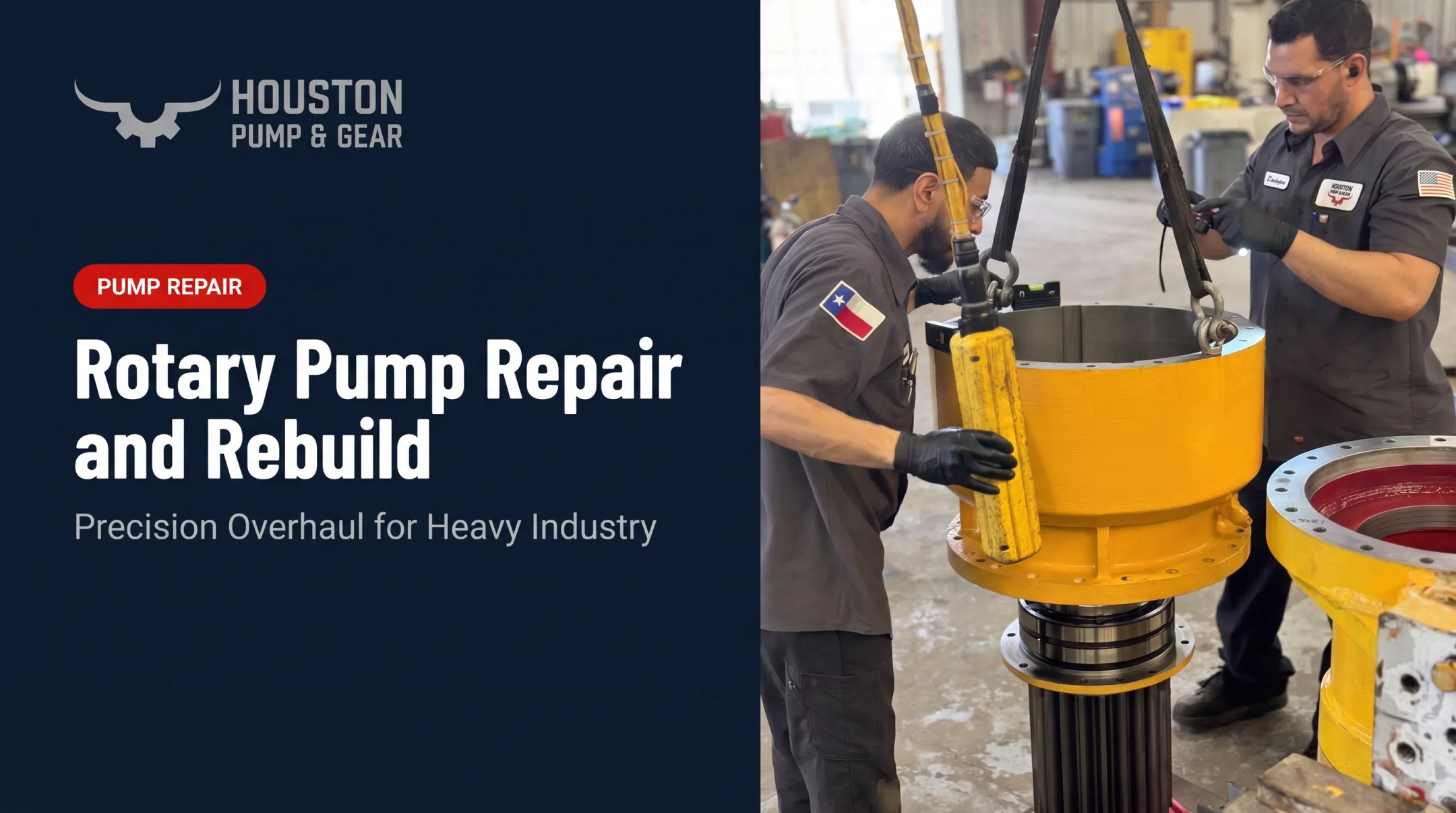
Restoring a housing bore or shaft to original tolerance isn't something you eyeball. Houston Pump & Gear's shop runs CNC machining centers and turning equipment that hold those tolerances on components most facilities can't source or remachine locally.
Suction/operational issues: Correct suction line sizing or blockages, adjust fluid temperature or viscosity, verify pump speed matches design specs.
Seal/lubrication issues: Restore flush media supply, correct barrier fluid pressure, and re-lubricate bearings and gear faces per manufacturer spec.
Step 4: Test and Validate the Repair
- Run the pump at no-load, then under normal operating conditions, checking for leaks, noise, or vibration
- Monitor flow rate, discharge pressure, and temperature against original design benchmarks
- Confirm stable performance over an extended run before returning the unit to full production duty
Skipping this step is how a repair that looked fine on the bench fails during the first week back in service.

Repair, Rebuild, or Replace: Making the Right Call
The right decision comes down to three factors: how severe the wear is, whether parts are available, and how much downtime the operation can tolerate.
| Scenario | Condition | Recommended Path |
|---|---|---|
| Minor wear | Seals/gaskets failing, housing intact | Repair — swap seals, O-rings, gaskets; verify clearances still in spec |
| Moderate wear | Rotors/gears worn, parts available | Rebuild — machine or replace rotors, bearings, and shafts to restore original clearances |
| Severe wear | Scored housing, chipped gears, near end-of-life | Replace — new or rebuilt-exchange unit offers better long-term reliability |
| Critical uptime requirement | Power plant or continuous process can't tolerate delay | Repair only with a partner offering rapid turnaround; replace only if no repair partner can meet the timeline |
Minor wear rarely justifies anything beyond a seal and gasket swap. If housing and rotor clearances check out, there's no reason to spend more.
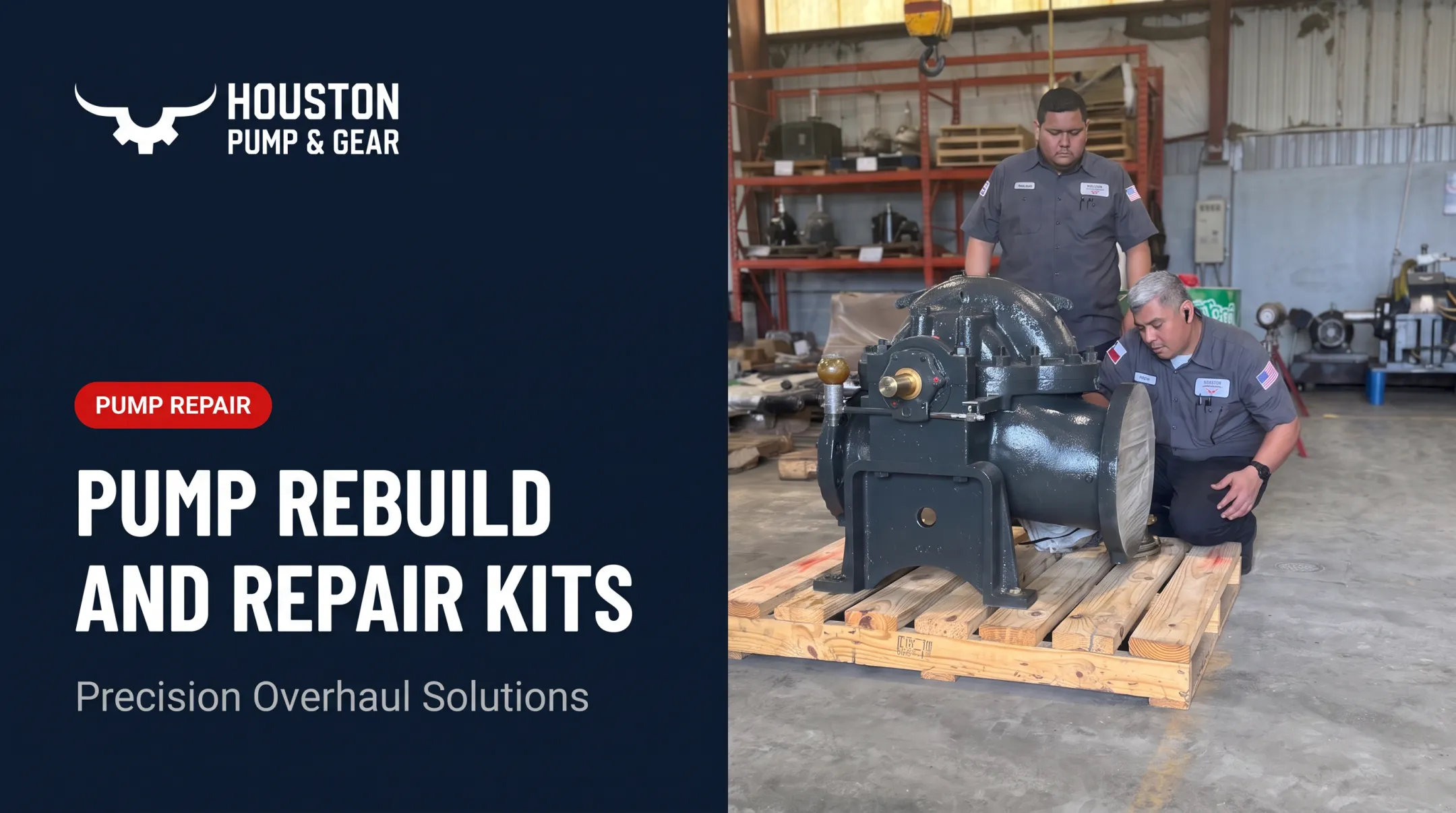
Moderate wear is where rebuilding earns its keep. Machining rotors and shafts back to original tolerance is almost always cheaper than replacing the whole pump—provided parts aren't obsolete or priced out of reach.
Severe wear changes the math. Once housings are scored or gears are chipped, repair becomes a short-term patch. A new or rebuilt-exchange unit typically costs less over its service life than repeated fixes on a pump already past design tolerance.
Critical uptime scenarios shift the deciding factor from wear severity to speed. Power plants and continuous processes need a partner who can pick up, repair, and return equipment before a standard queue becomes the bottleneck.
Houston Pump & Gear applies that standard on emergency industrial work—including a Lufkin S2212C gearbox pulled from a power plant shutdown, picked up the same day, and returned to service within 72 hours. Ask for that same turnaround commitment when a PD pump can't wait.
Avoiding Mistakes and Building a Preventive Maintenance Routine
Mistakes That Cause Repeat Failures
- Treating surface symptoms, like swapping a seal, without confirming the underlying root cause
- Skipping post-repair testing under real operating load
- Using non-spec or incompatible replacement seals, gaskets, or rotors
- Ignoring lockout/tagout and pressure-relief procedures during teardown
Preventive Habits That Extend Pump Life
- Schedule seal, bearing, and clearance inspections based on running hours, not calendar guesses
- Control fluid cleanliness through filtration and contamination monitoring
- Maintain correct suction conditions, shaft alignment, and rated operating speed/pressure
- Keep maintenance logs and train staff to spot early warning signs (noise, heat, vibration) before they become failures
General industrial guidance points to checks about every 8 hours of run time and a fuller inspection around every 250 operating hours. Manufacturer-specific intervals should always take priority. For idle pumps, rotating the shaft manually every 30 days keeps seals and bearings from seizing while the unit sits.

Wear still happens. What changes is that failures become predictable and scheduled instead of sudden and expensive—especially when taking the pump offline means shutting down a plant.
Frequently Asked Questions
What are common positive displacement pump problems?
The most frequent issues are no or irregular flow, seal leakage, cavitation noise, and overheating. Nearly all trace back to wear, contamination, or suction problems.
Can industrial positive displacement pumps be rebuilt?
Yes. Most PD pumps, including gear, piston, and screw pumps, can be rebuilt by replacing seals, valves, pistons, or rotors, provided the housing and shaft remain within tolerance.
Can you run a positive displacement pump dry?
Avoid it whenever possible. Dry running removes the lubrication and cooling film at seals and rotors, which quickly causes overheating and premature failure.
How much does it cost to repair vs. rebuild a positive displacement pump?
Repair costs depend on what's worn — seals cost far less than rotors or bearings. A full rebuild costs more upfront but restores near-original performance and extends service life.
How long does a positive displacement pump rebuild take?
Turnaround depends on pump size, condition, and part availability. Shops with 24/7 emergency capability can complete critical rebuilds in as little as 72 hours when conditions allow.
How often should a positive displacement pump be serviced?
Follow the manufacturer's running-hour intervals for seal and bearing inspections. Inspect immediately if you notice abnormal noise, heat, or leakage.