
Contamination, overheating, wear, and constant operating stress all take their toll over time. Most failures aren't random. They follow patterns that trained technicians recognize immediately.
This guide covers the common problems, a step-by-step troubleshooting process, how to decide between repair and replacement, and when it's time to call in an emergency repair specialist like Houston Pump & Gear.
TL;DR
- Most common issues: shaft seal leaks, cam ring/cartridge wear, burned pressure plates, hardened seals, cavitation
- Repairable? Most failures need a cartridge kit—not a full pump swap
- Fix process: diagnose symptoms, confirm root cause, repair the right part, then test
- Call for help: power plant or refinery failures need 24/7 emergency response, not wait-and-see
What Is a Hydraulic Vane Pump?
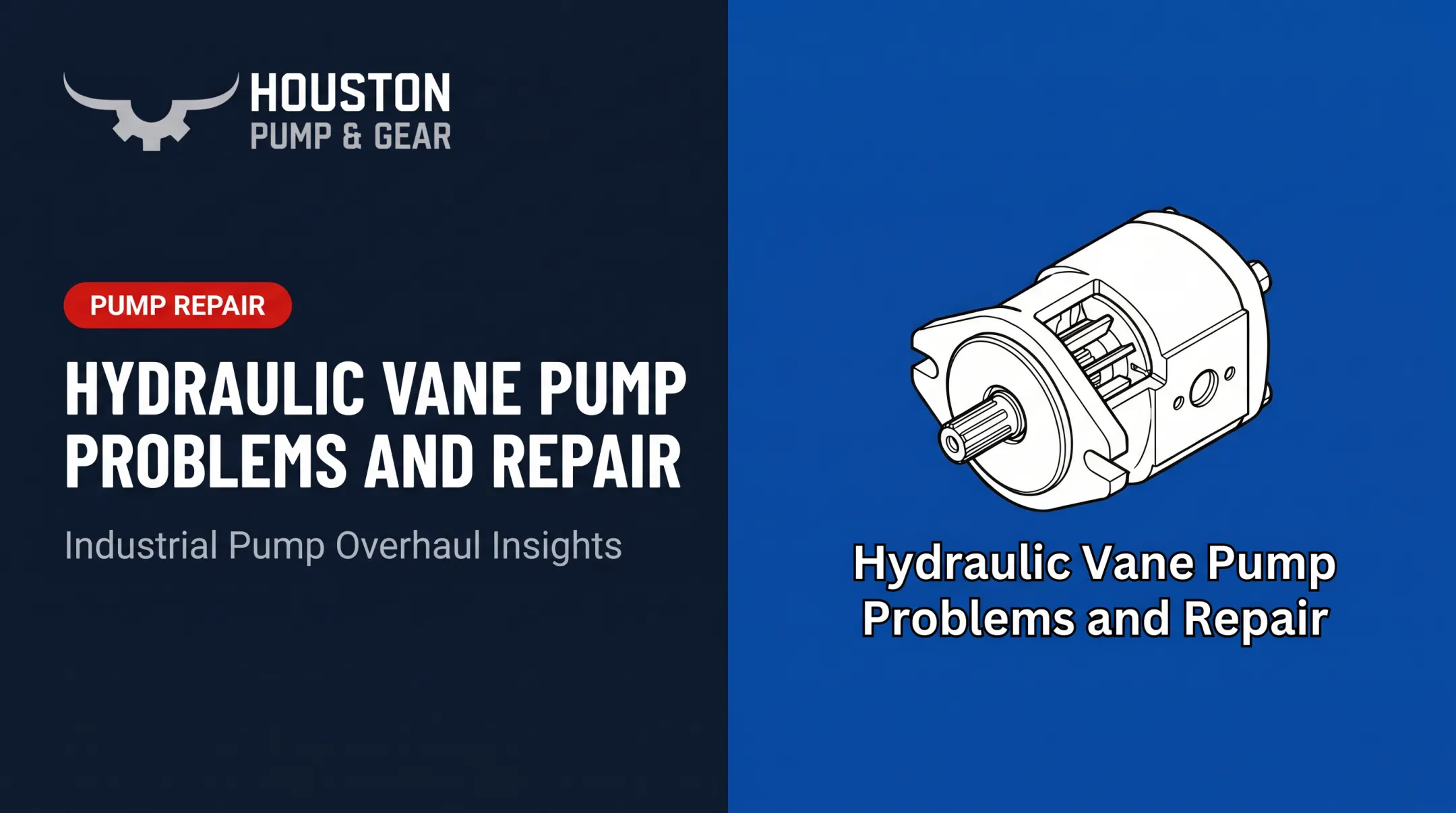
A hydraulic vane pump is a positive displacement device. Spring-loaded or pressure-balanced vanes ride against an oval cam ring, sealing against it as the rotor spins.
That rotation creates chambers that expand and collapse. Expanding chambers pull fluid in; collapsing chambers push it out under pressure. That simple mechanism moves fluid under pressure in industrial and power generation hydraulic systems.
Main Components of a Vane Pump
Every vane pump shares a few core parts:
- Rotor – holds the vanes and spins with the drive shaft
- Vanes – slide in and out of rotor slots, sealing against the cam ring
- Cam ring – the oval track that forces vanes to extend and retract
- Side plates (port plates) – close off the pumping chambers on each end
Variable displacement models add a pressure compensator, which shifts the cam ring to change output volume based on system demand.

Like any mechanical assembly under constant load, vane pumps wear over time. Skipping maintenance or repair invites unplanned downtime.
Common Problems With Hydraulic Vane Pumps
Most vane pump failures follow recognizable patterns. If you know what to look for, you can catch a problem before it takes down the whole system.
Shaft Seal Leak
- Symptoms: Fluid dripping or an oily film building up near the shaft
- Likely cause: Bearing failure, seal hardening from sustained heat, or contamination scoring the shaft surface
Once the shaft is grooved, even a new seal will not hold.
Cam Ring Rippling / Cartridge Kit Failure
- Symptoms: Loud grinding noise under pressure, paired with reduced flow output
- Likely cause: A worn cam ring, abrasive contamination in the system, or inlet vacuum beyond the pump's rated limit
Burned or Scored Pressure Plates/Rotor
- Symptoms: Severe pressure and flow loss, with discolored or visibly scored metal surfaces
- Likely cause: Dry-running conditions or contamination-driven heat buildup
Damage escalates quickly once scoring starts, so early inspection matters.
Hardened Seals
- Symptoms: Multiple external leaks; seals that feel stiff or show cracking
- Likely cause: Sustained overheating above safe thresholds
Prolonged operation above 140°F is enough to start the clock on seal degradation.
Cavitation
- Symptoms: Growling noise, aerated fluid, and erratic pressure readings
- Likely cause: Restricted inlet, low fluid level, or high viscosity that lets vapor bubbles form and collapse inside the pump
Match the symptom pattern to the failure mode before you pull the cartridge—guesswork rebuilds cost more downtime than a focused inspection.

Why Vane Pumps Fail (Root Causes)
Strip away the symptoms and most vane pump failures trace back to five conditions:
- Fluid contamination – abrasive particles score internal surfaces
- Thermal stress – sustained heat hardens seals and thins fluid film
- Cavitation – vapor bubbles collapsing inside the pump body
- Misalignment – uneven loading on bearings and shaft
- Skipped preventive maintenance – small issues left to compound
Ignore these long enough, and the consequences stack up fast:
- Reduced efficiency and pump output
- Secondary damage to downstream system components
- Safety risks in critical power plant operations
- Costly, unplanned downtime and production losses
None of this is theoretical. A single ignored seal leak can escalate into a full shutdown within weeks.

How to Fix a Hydraulic Vane Pump (Step-by-Step)
Skipping root-cause confirmation is how you replace the same vane pump part twice. This process identifies the fault, isolates the cause, completes the repair, and validates performance before the unit returns to service.
Step 1: Identify the Exact Problem
Document symptoms before you touch the pump:
- Leaks, noise type, vibration, and overheating
- When symptoms appear: startup, under load, or continuous run
- Flow and pressure readings versus baseline specs
Step 2: Confirm the Root Cause
Determine whether the issue is internal (cartridge, seal, cam ring) or system-level (contamination, restricted inlet, overheating). Before any disassembly, rule out the easy stuff: fluid level, fluid condition, and filter status.
Step 3: Fix Based on the Identified Problem
- Cartridge or cam ring worn: Replace the cartridge kit using OEM tolerances, correct torque specs, and a full assembly swap rather than mixing old and new parts.
- Shaft seal leaking: Remove the seal, inspect the shaft for grooves, and correct the root thermal cause before reinstalling. A new seal on a scored shaft won't last.
- Burned plates or scored rotor: This usually needs a full professional rebuild, not a simple kit swap. When a shutdown is on the line, a shop with emergency pump repair capacity—such as Houston Pump & Gear—can turn the unit around quickly.
- Cavitation: Address the suction strainer, inlet restrictions, and fluid viscosity first. Only inspect internal wear after the suction-side issue is resolved.
Step 4: Test and Validate the Fix
Prime the pump correctly before startup. Skipping this step causes dry-running damage almost immediately. Run at low pressure first, then raise load gradually while monitoring flow, temperature, and noise. Sign off only when readings stay stable under operating conditions.

Fix vs Replace: How to Decide
Weighing cost, risk, and uptime matters more when a hydraulic vane pump supports critical production than it does for a spare parts closet.
| Scenario | Fix | Replace |
|---|---|---|
| Isolated cartridge or seal failure | Fast, inexpensive fix | Rarely needed |
| Cracked housing or grooved shaft | Only if housing is genuinely repairable | Usually more practical |
| Repeated failures in a short period | Only if the root cause is isolated | Strongly consider if failures keep recurring |
| Emergency shutdown at a power plant | Rapid emergency repair minimizes downtime | Only if a rebuilt unit ships faster than repair |
Houston Pump & Gear's rapid-response work for power plant clients makes the tradeoff concrete. Same-day pickup and focused diagnosis often get a plant back online faster than waiting weeks for a replacement unit.
Preventive Measures and Common Mistakes to Avoid
A few consistent habits extend vane pump life and cut unplanned downtime:
- Schedule fluid and filter changes on a fixed interval, not "when it looks dirty"
- Monitor operating temperature and flag anything trending upward
- Inspect the cartridge regularly rather than waiting for symptoms
- Train operators to recognize early noise and vibration changes
Common mistakes that shorten pump life:
- Fixing symptoms instead of chasing the root cause
- Skipping post-repair testing and just putting the pump back online
- Using non-OEM parts that don't hold tolerances
- Dry-starting the pump right after reassembly
Frequently Asked Questions
What are the main components of a vane pump?
A vane pump consists of a rotor, vanes, a cam ring, and sideplates. Variable displacement models add a pressure compensator to adjust output based on demand.
What is the life expectancy of a hydraulic vane pump?
There's no fixed number of hours you can count on. Fluid cleanliness, operating temperature, and consistent maintenance are the biggest factors determining how long a pump lasts.
Can a hydraulic vane pump be repaired, or does it always need replacing?
Most failures are repairable through cartridge kit replacement rather than a full pump swap. Replacement usually only makes sense with cracked housings or repeated, unresolved failures.
What are the symptoms of a failing hydraulic vane pump?
Watch for shaft leaks, grinding or growling noises, reduced flow or pressure, and rising operating temperatures. Any of these on their own is worth investigating before it compounds.
How quickly can an emergency vane pump repair be completed for a power plant?
Houston Pump & Gear offers 24/7 emergency service with same-day pickup for critical failures. Turnaround depends on the damage, but rapid diagnosis and repair planning start immediately.
Does a variable displacement vane pump fail differently than a fixed displacement one?
Both share the same core failure modes: seal leaks, cam ring wear, cavitation, and heat damage. Variable pumps add one extra risk point: the pressure compensator mechanism itself.