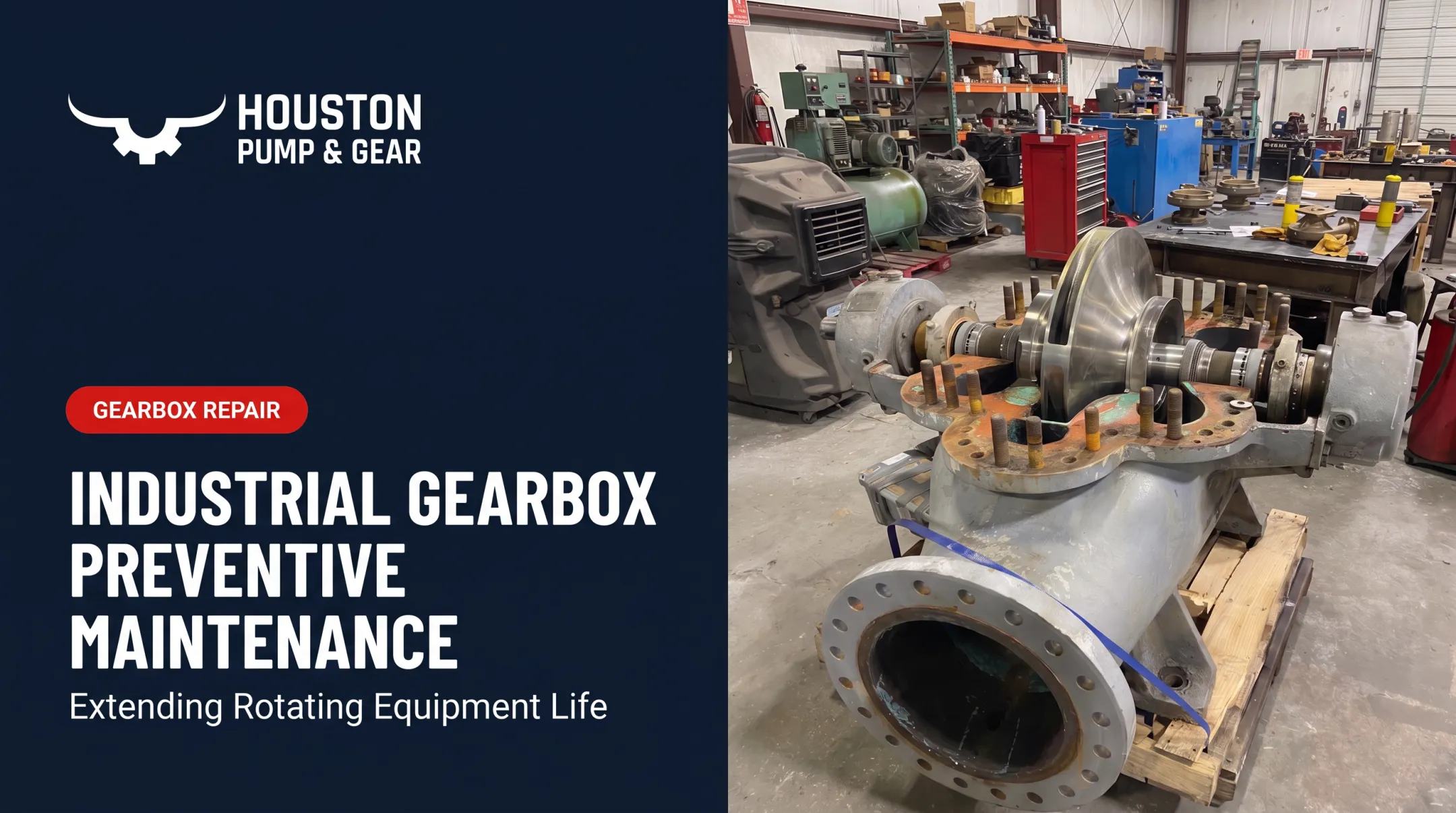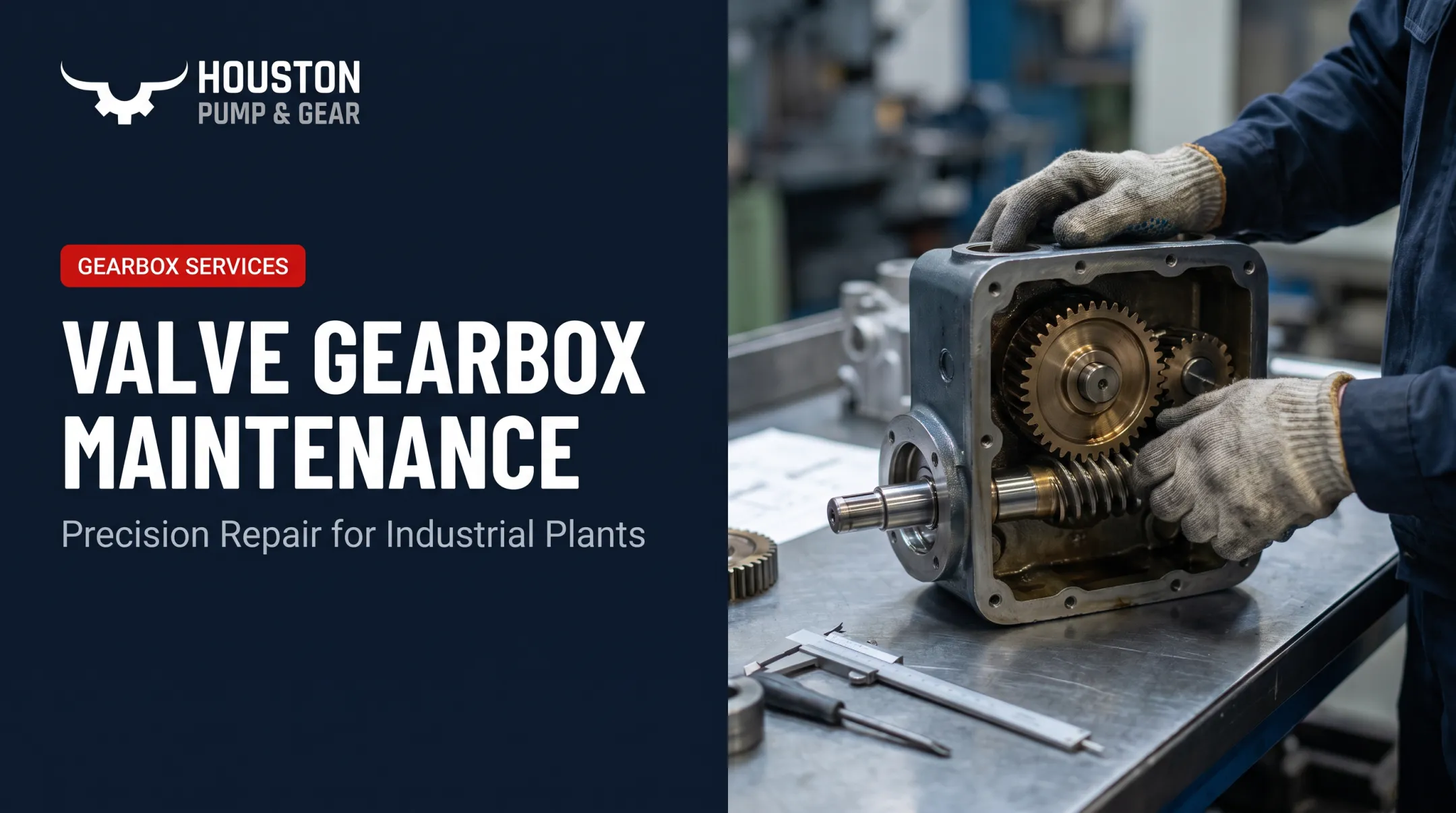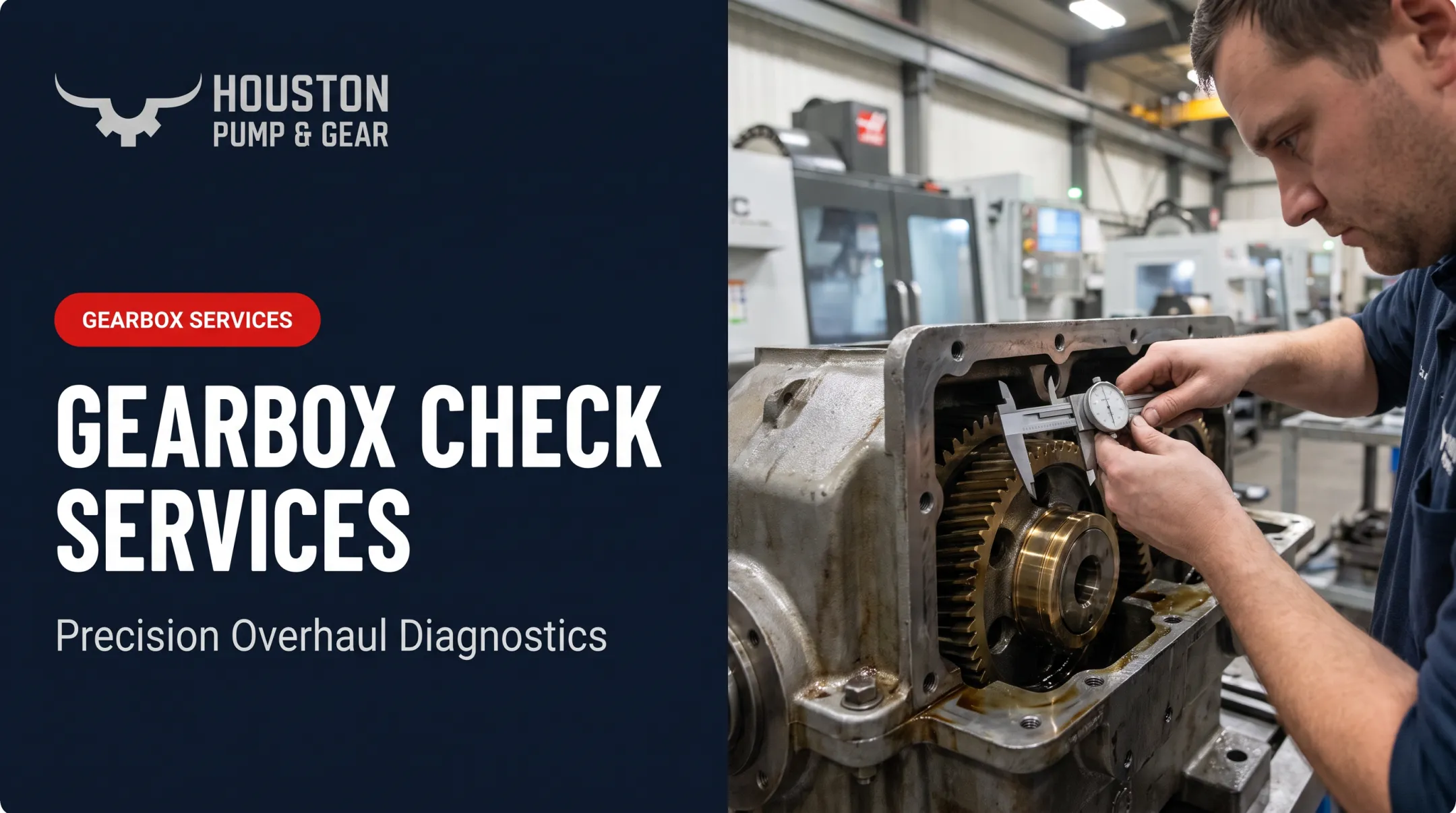

Helical gearboxes handle continuous torque transmission in some of the harshest industrial environments around. When maintenance slips, the result isn't just a broken part. It's unplanned downtime, emergency repair bills, safety hazards from oil leaks or gear seizure, and degraded output right when you need reliability most.
This guide covers the maintenance types, warning signs, schedules, and best practices that keep helical gearboxes running, plus when it's time to call in emergency repair support.
TL;DR
- Preventive maintenance (inspection, lubrication, alignment) is the foundation of helical gearbox reliability
- Noise, vibration, or oil contamination signal early failure and need immediate attention
- Maintenance schedules should flex based on load severity and operating environment
- Emergency repair access limits downtime when failures still occur
Why Maintenance of Helical Gearboxes Is Important
Consistent maintenance protects the long-term value of equipment power plants and heavy industry can't afford to lose. Skip it, and the costs show up in performance, lifespan, safety, and budget all at once.
Performance and efficiency
Helical gear meshes lose power through speed-dependent losses (windage, churning, seals) and load-dependent losses (sliding friction, rolling friction, bearing drag). Proper lubrication cuts those losses, improves efficiency, and lowers operating costs, according to a Gear Technology study.
Poor alignment makes the problem worse. Excessive angular or axial misalignment drives premature wear and material damage that compounds over time.
Lifespan
Gear-set service life hinges on a handful of controllable factors:
- Adequate lubrication
- Correct tooth-contact pattern
- Minimum backlash
- Operation within design load limits
- Cleanliness and rigid, well-aligned mounting

Get these right consistently, and the gearbox lasts. Ignore them, and you accelerate wear on parts that are expensive and slow to replace.
Safety and compliance
A gearbox failure in a power plant doesn't just stop one machine. It can halt an entire process line, with cascading risks from fluid leaks, overheating, and gear seizure that endanger personnel on the floor.
Cost
Those same failures hit the budget hard. Repair cost scales with damage extent, gearbox size, required parts, and turnaround time.
Catch issues early and the estimate stays small. Wait until failure, and you pay for emergency mobilization, expedited parts, and lost production on top of the repair itself.
Types of Maintenance for Helical Gearboxes
Helical gearbox upkeep isn't one-size-fits-all. The right mix of maintenance types depends on duty cycle, load severity, and how critical the equipment is to your operation.
Routine / Preventive Maintenance
This is scheduled, predictable work:
- Visual inspections and fastener torque checks
- Oil level and cleanliness checks
- Breather inspection and case cleaning
- Temperature and pressure logging
Houston Pump & Gear recommends following the manufacturer's suggested schedule, with visual inspections quarterly and a more thorough service annually. Routine maintenance alone works well for light-to-moderate, steady-load applications where conditions don't swing much.
Corrective / Reactive Maintenance
This kicks in when something's already wrong: unexpected noise, a sudden leak, or a performance drop that wasn't there yesterday. It's necessary, but relying on it as your primary strategy is risky. Reactive-only maintenance lets small problems cascade into bearing damage, gear-tooth destruction, and full seizure before anyone notices.
Predictive / Condition-Based Maintenance
This approach tracks trends instead of waiting for symptoms. Online sensors, portable data collectors, and lab-based oil analysis capture vibration signatures, temperature trends, and contamination levels.
Analytics turn that data into early warnings before a failure event. For large industrial fleets, this layer is what keeps maintenance budgets predictable instead of emergency-driven.
Major / Overhaul Maintenance
Overhaul means deep servicing: full disassembly, gear or bearing replacement, sometimes a complete rebuild. The decision to overhaul rather than repair comes from inspection findings — not a fixed calendar date:
- Tooth contact patterns
- Backlash and end float
- Bearing clearance
- Pitting severity
Houston Pump & Gear's mobile field response and dedicated transport trucks support pickup for exactly these situations, including complex models like the Lufkin S2212C. When a unit needs to come off-site for a full rebuild, having a same-day pickup option matters.

How to Check If a Helical Gearbox Needs Maintenance
Recognizing early indicators before failure occurs is the whole point of a maintenance program. Here's what to watch for.
Performance or Output Changes
- Reduced efficiency or slower speed under a normal, unchanged load
- Inconsistent torque delivery compared to baseline performance
- Higher energy draw for the same workload
- Frequent manual resets just to keep the unit running
Unusual Behavior or Operation
- Abnormal noise, such as whining, rumbling, or knocking during acceleration
- Clunking or grinding sounds that suggest internal damage
- Unexpected shutdowns or irregular operation cycles
Visible Wear or Lubricant Issues
- Oil leaks, discoloration, or metallic particles in the lubricant
- Housing discoloration or melted seals, both signs of overheating
- Noticeable drops in lubricant level between checks
Repeated minor issues that return more often, over shorter intervals, are a red flag:
- Temporary fixes that stop holding between checks
- Rising downtime from the same fault pattern
When those patterns show up, bring in professional support before the next failure becomes a full shutdown.

Helical Gearbox Maintenance Schedule (General Guidelines)
Schedules vary based on usage intensity, load type, and environmental exposure. There's no single calendar that fits every gearbox, but here's a general framework.
| Frequency | Tasks |
|---|---|
| Daily | Visual leak checks, noise and vibration observation, temperature readings |
| Weekly/Monthly | Oil level, sight glass, breather condition, case cleaning |
| Quarterly | Fastener torque, coupling condition, alignment verification, visual inspection |
| Annual | Full internal gear-wear inspection, mounting review, thorough performance service |
Key caveats:
- High-usage or continuous-duty units (common in power plants) need tighter intervals than the table above—don't treat a unit that never stops like one that idles half the day.
- Harsh environments (dust, humidity, extreme heat) accelerate wear and call for more frequent oil analysis and seal checks.
- Manufacturer guidance always takes precedence over generic schedules when it is available.
When to Call in Professional Emergency Gearbox Repair
Some problems exceed what an in-house maintenance team can handle. Call in a specialist when you face:
- Advanced gear wear beyond routine inspection limits
- Bearing failure or vibration that will not clear
- Cracked housings or other structural damage
Waiting too long turns a repair job into a full replacement.
Houston Pump & Gear runs 24/7 emergency repair capability with same-day pickup and mobile field response trucks. When a power plant's Lufkin S2212C gearbox failed unexpectedly, the team picked it up the same day and had it repaired and back in service within 72 hours, restoring the plant from a full shutdown.

That kind of response builds lasting relationships. One client first connected with project manager Vince Parker in 2014 and has since had over 15 units serviced. Consistent quality work is why facilities keep calling the same partner.
Conclusion
Helical gearbox maintenance isn't optional for any operation where uptime matters. The right approach blends routine checks, predictive monitoring, and major overhaul work based on cost, reliability needs, and how hard the equipment actually runs.
Schedules matter, but so does having a rapid-response partner ready when something breaks. A structured maintenance plan, backed by 24/7 emergency support from Houston Pump & Gear, protects the long-term value of gearbox assets and keeps critical operations running.
Frequently Asked Questions
Is it worth repairing a helical gearbox?
Yes, in most cases. If damage is caught early and core components like the housing and shafts remain sound, repair is typically far more cost-effective than full replacement. Severe, advanced-stage failures are usually when replacement makes more sense.
What is the purpose of a helical gearbox?
Helical gearboxes transmit torque and reduce speed using angled gear teeth instead of straight-cut ones. That angled design spreads contact gradually across each tooth, which minimizes vibration and noise compared to other gear types.
How often should a helical gearbox be inspected?
Daily visual checks for leaks, noise, and vibration are the baseline. Beyond that, quarterly visual inspections and a more thorough annual service are recommended, adjusted for duty severity and manufacturer guidance.
What causes helical gearbox overheating?
Common causes include inadequate or contaminated lubrication, excessive load beyond design specs, poor ventilation around the housing, and misalignment. Any of these can push operating temperatures past safe limits.
How long does emergency gearbox repair typically take?
It depends on damage severity, but rapid-response providers can move fast. Houston Pump & Gear completed a full emergency repair of a Lufkin S2212C gearbox in 72 hours, restoring a power plant from complete shutdown.
What are signs a helical gearbox needs urgent attention?
Abnormal noise, overheating, oil leaks or contaminated lubricant, and sudden performance drops are all urgent red flags. If temporary fixes stop working, it's time to call in professional repair support.