
Introduction
A leaking seal gets patched. A bearing gets swapped. The pump runs for another few weeks, then something else fails. Sound familiar?
That cycle is exactly what a proper pump rebuild is designed to break. Rebuilding means fully disassembling a pump, inspecting every internal component, and restoring it to like-new condition—not just fixing whatever failed first.
This guide is for maintenance managers, reliability engineers, and operators at power plants and heavy industrial facilities across Texas and Louisiana. In these environments, unplanned pump downtime threatens production schedules, worker safety, and regulatory compliance.
"Rebuild," "repair," and "overhaul" often get used interchangeably. That muddies expectations around cost, scope, and results before work even begins.
Below: what a rebuild actually involves, why it matters for continuous-duty operations, how the process works step by step, and when to rebuild versus repair or replace.
Key Takeaways
- A rebuild replaces worn internals (bearings, seals, impellers, shafts) instead of patching one failure point
- Rebuild when wear spans multiple components but the casing is still structurally sound
- Five stages: teardown, inspection, replacement, reassembly, and testing
- Turnaround ranges from same-day to multi-week, based on size and parts availability
- Choose rebuild, repair, or replace based on damage severity and downtime cost—not habit
What Is a Pump Rebuild?
A pump rebuild is the complete disassembly, inspection, and restoration of a pump using new or reconditioned parts to bring it back to its original operating specifications. Rather than patching only the symptom that triggered the failure, a rebuild resets the entire internal system.
The goal is straightforward: eliminate internal leakage and wear-driven inefficiency so flow rate, pressure, and reliability return to near-original performance. A pump that "runs" isn't the same as a pump that runs correctly, and that distinction matters when you're relying on it for continuous industrial duty.
How a Rebuild Differs From a Repair
A repair addresses one failed component, such as a leaking seal, while leaving other aging parts in place. It's targeted and often faster, but it leaves the clock running on whatever fails next.
A rebuild takes a proactive approach:
- Every part nearing end-of-life gets replaced, not just the one that failed
- Clearances and tolerances are measured against OEM specs across the whole unit
- The pump leaves the shop with a full service record, not just a repaired symptom
How a Rebuild Differs From Replacement
Replacement swaps the entire pump unit. A rebuild preserves the casing and major castings and renews only the internals, usually at a fraction of the cost of a new unit.
Components most commonly addressed in a rebuild include:
- Impeller
- Wear rings
- Bearings
- Mechanical seals or packing
- Shaft or sleeve
- Gaskets
If those parts are worn but the casing is sound, a rebuild typically makes more sense than starting over with a new pump.

Why Rebuilding Matters for Power Plants and Heavy Industry
Pumps in power generation and heavy industrial settings rarely get a break. They run continuously under high loads, and internal wear that goes undetected compounds fast. Rebuilding at the right interval interrupts that chain before it turns into a cascading equipment failure.
Operating a pump away from its best efficiency point is a major driver of that wear. According to Hydraulic Institute guidance on preferred operating ranges, running outside the optimal zone can trigger recirculation, added loading, vibration, and cavitation. Those conditions erode impellers and stress bearings well before a scheduled maintenance window arrives.
Three realities show up most often on the plant floor:
- Cavitation is one of the most common failure mechanisms—loud operation or elevated temperature are easy to miss on a busy shift.
- Corrosion and contamination degrade materials gradually, so several components are often compromised by the time performance drops.
- Rebuild timing is an operational best practice, not a regulatory mandate—most facilities schedule it around planned outages or turnarounds rather than waiting for failure.
If your facility has a turnaround coming up, use that window to get ahead of wear that's already accumulating quietly.
How the Pump Rebuild Process Works (Step-by-Step)
A rebuild moves through a defined sequence: diagnosis, teardown, inspection, component replacement, reassembly, and testing. Nothing gets skipped, and nothing goes back into service until it's been verified.
The inputs are the worn pump itself plus new or OEM-equivalent replacement parts: bearings, seals, wear rings, and whatever else the inspection flags. Technicians measure critical clearances against OEM specifications to decide what gets replaced and what can be reused.
They follow documented torque and assembly procedures with precision tools throughout. What comes out is a pump with restored flow, pressure, and efficiency, plus a documented service record for future reference.
Step 1: Diagnosis and Teardown
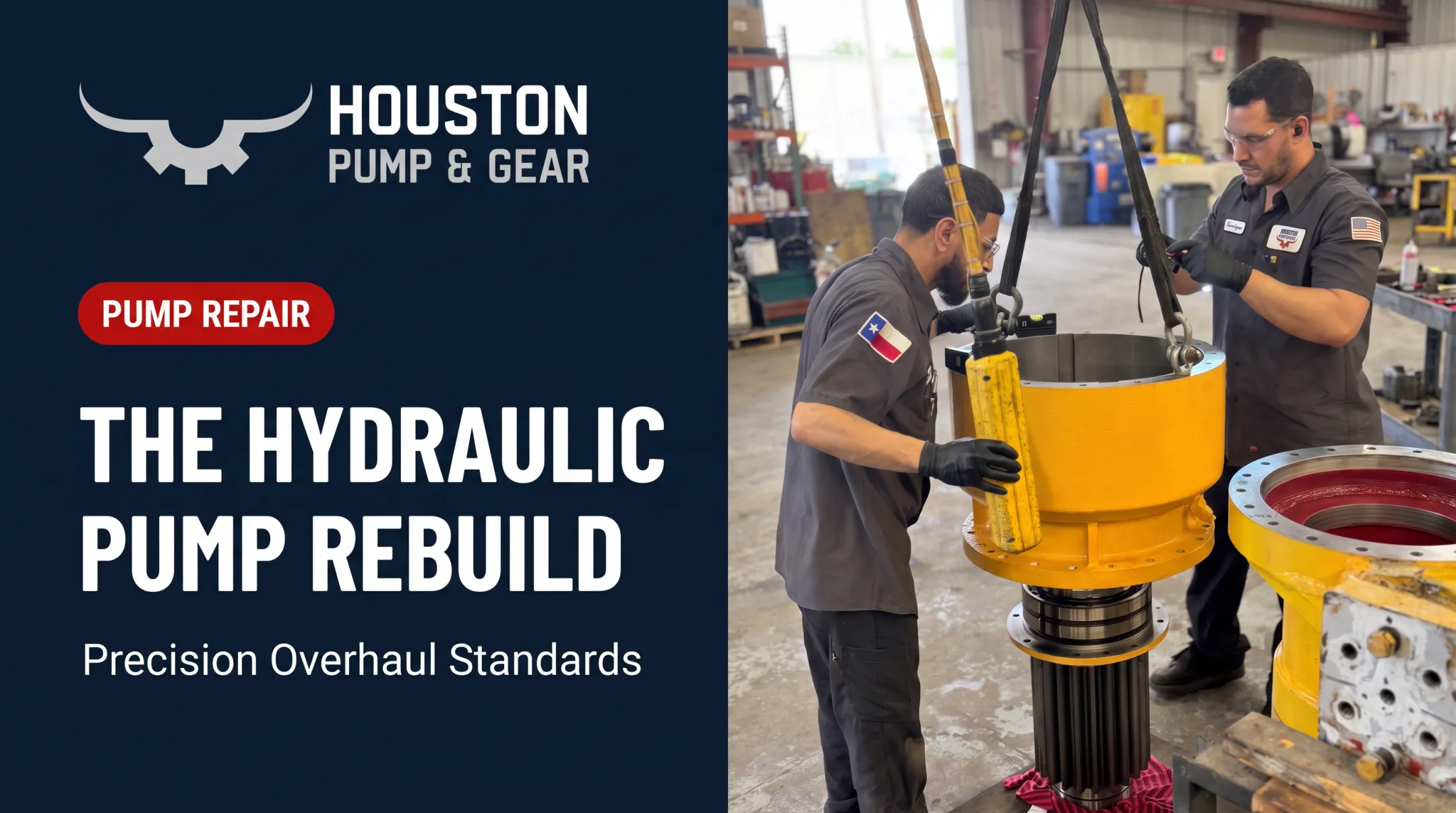
Technicians pull the pump from service, fully disassemble it, and clean every component so residue or buildup can't mask underlying wear. Skipping a thorough cleaning at this stage is how hairline cracks and early pitting get missed.
Step 2: Inspection and Measurement
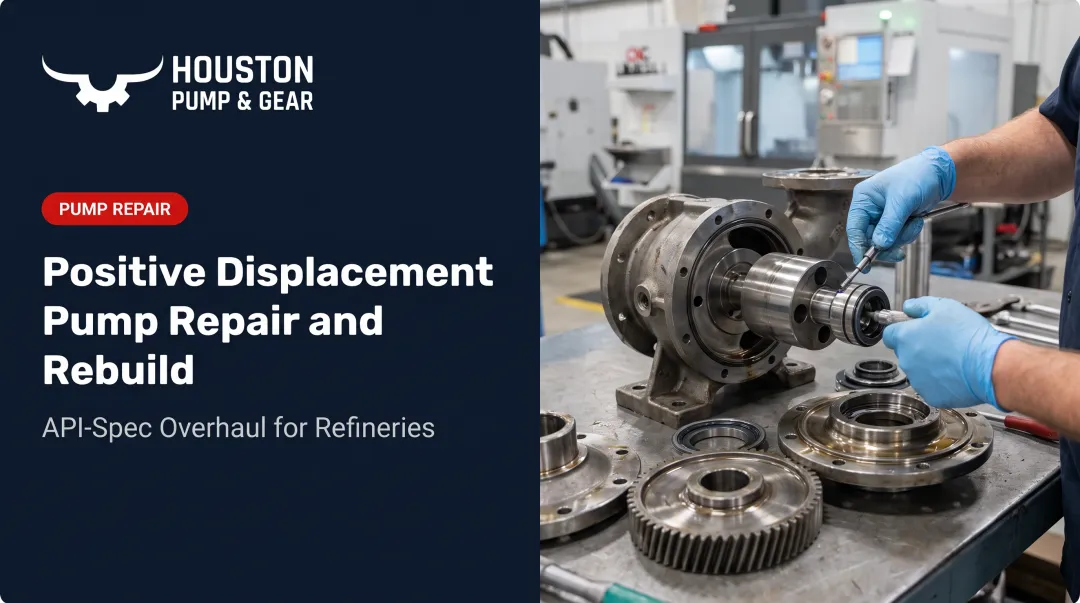
Technicians examine impellers, shafts, wear rings, and bearings for scoring, pitting, and corrosion. They measure clearances against OEM tolerances to flag exactly which parts need replacement and which still have life left.
Abrasive wear, in particular, tends to enlarge wear-ring clearances over time, which is why this measurement step catches problems a visual check alone would miss.
Step 3: Component Replacement
Worn or out-of-spec parts are replaced with new or OEM-equivalent components. Any machining needed to restore shaft or casing surfaces, including metal spray for worn or corroded shafts, happens before reassembly begins.
Step 4: Precision Reassembly
Technicians reassemble the pump to exact torque, alignment, and clearance specifications so rotating and stationary components stay balanced and properly sealed. This is where in-house capability matters most, since tight tolerances leave little room for guesswork.
Step 5: Performance Testing
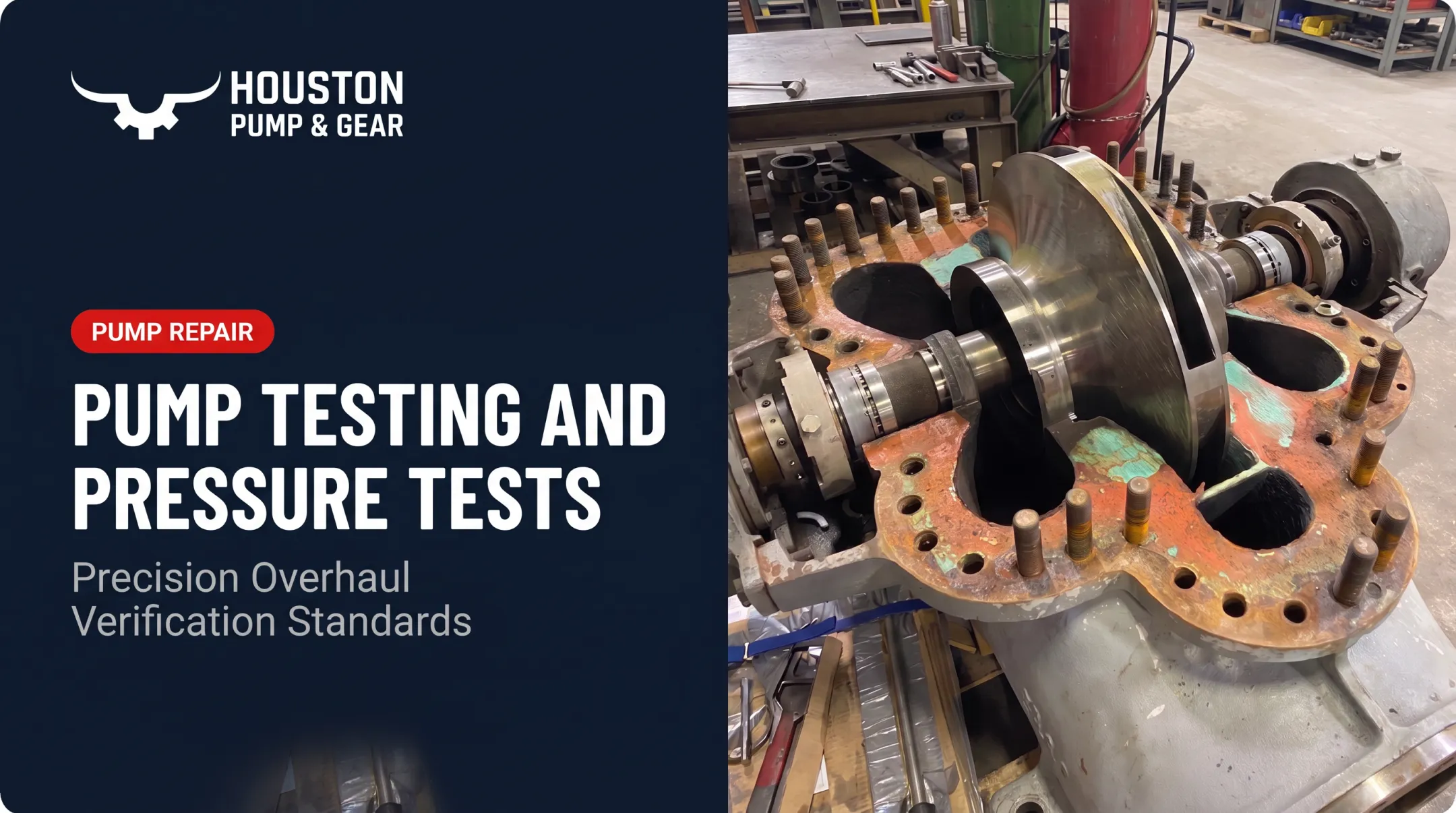
Technicians test the rebuilt pump for flow, pressure, vibration, and leak-free operation before clearing it for return to service. This step confirms the unit performs to spec, not just that it turns on.

Key Factors That Affect Pump Rebuild Outcomes
Not every rebuild delivers the same results, even on similar pump models. These factors typically make the biggest difference:
- Parts quality – OEM versus generic aftermarket parts affect how long the rebuild lasts; a poorly reverse-engineered part can repeat the tolerances that caused the original failure
- Operating conditions – Fluid type, temperature, and contamination history drive which parts need replacement and how fast wear returns
- Equipment access – In-house measuring tools and machining restore tight tolerances without third-party lead times
- Pump scale – Large industrial and power plant pumps need more extensive teardown and longer lead times than small process pumps
- Regulatory constraints – Hazardous or high-temperature service may need extra testing or certification before return to service
Facilities with in-house CNC machining, boring mills, and balance equipment avoid long waits from external part sourcing, especially on older or hard-to-find pump models.
Rebuild vs. Repair vs. Replace: Making the Right Call
Here's where a lot of facilities get tripped up: treating "rebuild" and "repair" as the same decision. A repair is targeted. A rebuild is comprehensive. Mixing the two up leads directly to mismatched cost and scope expectations, and to unpleasant surprises on the invoice.
Another common misstep is assuming a rebuild is automatically cheaper than replacement. That assumption ignores downtime cost, freight, and labor, especially on large or increasingly obsolete pump models where sourcing parts eats up more time than the rebuild itself.
Rebuilding isn't always the right answer. Consider replacement or a deeper evaluation when:
- The casing is cracked or structurally compromised
- Contamination damage is catastrophic, not localized
- Replacement parts are no longer economical or available for that specific model
Watch for one more warning sign: a facility that rebuilds every underperforming pump by default, without inspection, risks masking a system-level issue like cavitation or misalignment. That pump will fail again, and the next diagnosis will take longer because the real cause was never addressed.
A Real-World Example of Decisive Assessment
The same rebuild-versus-repair call applies across critical rotating equipment, not only pumps. When a Lufkin S2212C gearbox failure caused an emergency shutdown at a power plant, Houston Pump & Gear dispatched a truck the same day, moved the unit to its Houston facility, and had the plant back online within 72 hours. Fast triage—full restoration versus targeted repair—is what keeps that equipment from sitting idle longer than necessary.
Life cycle cost, not just purchase price, is the right lens for this decision. Comparing procurement, downtime, energy, and maintenance costs over the full service life of the equipment gives a clearer picture than sticker price alone.
For Texas and Louisiana facilities, Houston Pump & Gear's 24/7 availability and dedicated field transport trucks support that call under real downtime pressure. On-site pickup and rapid shop assessment reduce the guesswork that drives repeat failures and unplanned outages.

Frequently Asked Questions
What is a pump rebuild?
A pump rebuild is the full disassembly, inspection, and replacement of worn internal components to restore original performance. It's distinct from a single-point repair that addresses only one failed part.
How long does it take to rebuild a pump?
Timelines depend on pump size, damage extent, and parts availability. Smaller units can sometimes turn around same-day. Large industrial pumps may take several weeks if parts must be sourced or manufactured.
Is it possible to rebuild a water pump?
Most water pumps—from small circulation units to large industrial models—can be rebuilt if the casing and major castings are still structurally sound. Severe corrosion or cracking usually rules a rebuild out.
What's the difference between rebuilding and repairing a pump?
A repair addresses one failed part while leaving other aging components in place. A rebuild proactively replaces everything nearing end-of-life to restore full original performance.
How much does it typically cost to rebuild a pump compared to buying new?
Rebuilding generally costs a fraction of a new unit, but exact savings depend on pump size, parts cost, and labor required. Get a specific quote rather than relying on a general rule of thumb.
How do you know if a pump should be rebuilt, repaired, or replaced?
The decision depends on damage severity, contamination or heat history, downtime cost, and whether critical tolerances can still be restored reliably. A thorough inspection, not a guess, should drive that call.