
Industrial pumps in power plants and heavy industry run around the clock. A packing failure doesn't just mean a leak — it means contaminated bearings, scored sleeves, and potentially a full pump teardown. Many operators struggle with knowing when a drip is normal and when it's a warning sign.
This article breaks down how pump packing works, which materials fit which applications, how to spot failure before it costs you, and when a mechanical seal makes more sense than packing.
Key Takeaways
- Pump packing controls leakage by compressing braided rings around the shaft — it doesn't eliminate leaks entirely
- A small, steady drip is normal; it's what keeps the packing cool and lubricated
- Material choice depends on the fluid, temperature, pressure, and shaft speed
- Packing costs less and installs faster; mechanical seals leak far less but cost more upfront
- Regular inspection and gradual gland adjustment protect your shaft and sleeve from costly damage
What Is a Pump Packing Seal and How Does It Work?
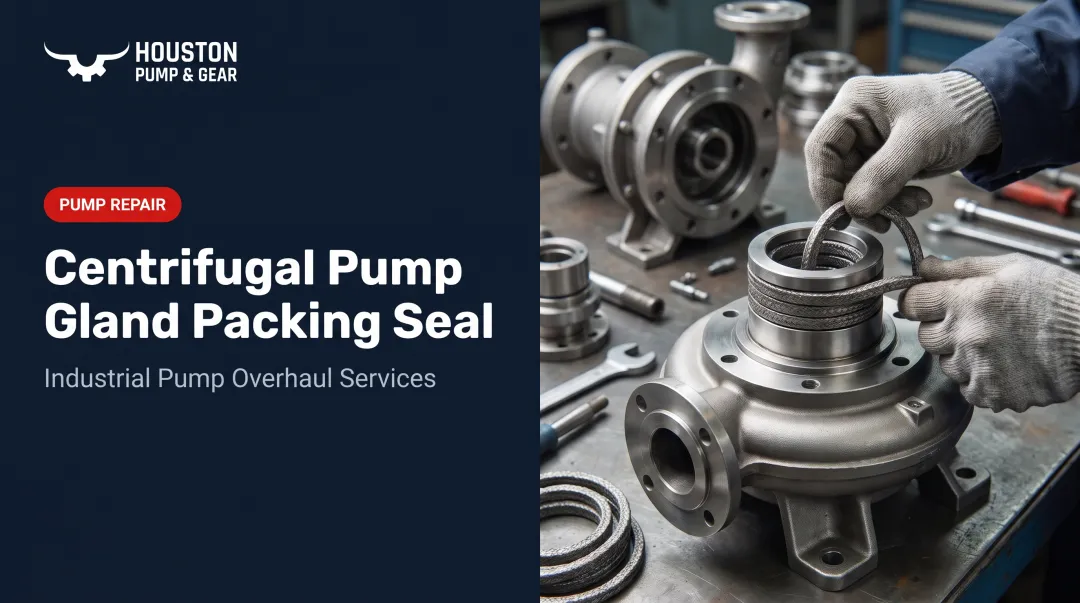
A pump packing seal is a set of braided fiber rings installed inside the stuffing box, the cavity surrounding the pump shaft. A gland follower compresses these rings, converting axial (lengthwise) pressure into radial (inward) sealing force against the shaft or sleeve.
Unlike a mechanical seal, packing is designed to leak. That controlled drip lubricates the interface and carries away frictional heat. Stop the leak completely, and you'll cook the packing.
How Gland Compression Creates the Seal
Tightening the gland follower squeezes the rings tighter against the shaft. This happens gradually:
- The gland nut is tightened in small increments
- Each ring compresses and expands slightly against the shaft
- Leakage is monitored after each adjustment
- Tightening stops once the target drip rate is reached
Tighten too fast, and you risk overheating the packing before you notice. A common field approach is adjusting gland followers by about half a rotation every 10 minutes, rechecking leakage each time.
Why This Matters in Centrifugal Pumps
In centrifugal pumps, packing keeps pressurized fluid from escaping along the rotating shaft. Without it, that fluid reaches the bearings and drive components, contaminating grease and wearing parts that cost far more to replace than packing.
Beyond basic sealing, some designs add cooling and flush capability:
- Packing rings block process fluid from migrating toward bearings and drives
- Lantern ring (a perforated ring set between packing rings) introduces flush water for extra cooling and lubrication
- Flush service helps most in abrasive or high-temperature applications

Common Pump Packing Materials
Material selection isn't guesswork. It depends on chemical compatibility with the pumped fluid, shaft speed, and operating temperature. Get this wrong, and even perfect installation won't save the packing.
Here's a quick-reference comparison of representative material limits:
| Material | Typical Temperature Limit | Typical Speed Limit | Best Suited For |
|---|---|---|---|
| PTFE | Up to 550°F | Up to 4,800 fpm | Broad pH range (0-14), chemical service |
| Graphite/carbon | Up to 850°F (atmosphere) | Up to 4,800 fpm | High heat, acids, caustics, slurries |
| Aramid/PTFE blend | Up to 500°F | Up to 2,500 fpm | Abrasive service, moderate pH range |
| Acrylic | Up to 450°F | ~1,885 fpm | General-purpose, lower-cost service |
| Flax | Up to 220°F | ~1,885 fpm | Cold water, brine, cold oils |
(Figures represent typical manufacturer ratings and vary by product construction — always check the specific packing style's data sheet.)
Combination or dual-fiber packing designs pair a strong outer fiber with a low-friction inner layer, balancing durability against reduced heat buildup. Regardless of material, operating a pump outside its packing's rated conditions — even briefly — undermines both performance and service life.

Pump Packing vs. Mechanical Seal: Which Is Better?
This is the question most maintenance teams eventually face. There's no universal answer. It depends on your fluid, equipment condition, and tolerance for leakage.
Leakage and Reliability
- Packing allows a controlled drip by design — leak-free operation isn't the goal
- Mechanical seals use two flat ring faces to create a barrier meant to prevent virtually all leakage
- For hazardous, toxic, or environmentally regulated fluids, mechanical seals are usually the safer bet
Cost and Installation
- Packing wins on upfront cost and simplicity — ring replacement is faster than a full seal swap
- Less downtime for routine service, especially on large pumps
- Cost gap widens further where packing material is inexpensive
Long-Term Maintenance
- Packing needs regular gland adjustment, leakage monitoring, and periodic repacking
- Mechanical seals need less routine attention once properly installed, but a failure often means a full seal replacement, not a quick tweak
When Each Option Makes Sense
Choose packing when:
- You're running large slurry or abrasive-fluid pumps
- Shaft movement or misalignment is a known issue
- Quick, low-cost servicing matters more than zero leakage
Choose a mechanical seal when:
- The fluid is hazardous, flammable, or environmentally regulated
- Shaft finish, alignment, and vibration are well-controlled
- Near-zero leakage is a safety or compliance requirement
Equipment condition tips the scale. A worn shaft or vibrating bearing housing shortens mechanical seal life quickly, while packing tolerates those imperfections reasonably well — so match the sealing method to both the fluid and the real condition of the pump.

Signs of Gland Packing Failure and When to Replace It
Packing doesn't fail silently. The warning signs show up early if you know what to look for.
Watch for:
- Excessive drip rate: leakage beyond 20 drops per minute means replace the packing
- A dry or burnt smell coming from the stuffing box
- Visible scoring or grooves on the shaft or sleeve
- Leakage that's inconsistent or suddenly changes rate
Over-Tightening vs. Under-Tightening
Both extremes cause damage, just differently:
- Over-tightened (no drip): heat builds up fast, and the packing burns or hardens within hours
- Under-tightened (excessive leak): fluid washes lubrication away, accelerates shaft and sleeve wear, and can flood bearing housings
Hard water mineral buildup and heat spikes from dry running both shorten packing life significantly.
Once you've removed failed packing, inspect the shaft closely. If it shows wear or scoring, don't reassemble with new packing. Restore the shaft first through metal spray repair or a reverse-engineered sleeve replacement.
Never stack fresh packing on top of old, degraded material. That shortcut usually fails again within one to two months, and you end up with a bigger mess and often worse shaft damage.

Replacing packing proactively, before total failure, protects sleeves, bearings, and the shaft.
Maintenance Best Practices for Pump Packing
Good packing maintenance isn't complicated, but it does require consistency.
Getting the Drip Rate Right
Observe leakage directly at the packing gland, not further down the shaft where it can be misleading. A steady, moderate drip is the goal. Too little means overheating risk; too much wastes fluid and wears the shaft.
Adjustment Procedure
- Loosen the gland nuts slightly and let the packing relax for a few seconds
- Tighten gradually, roughly half a turn every 10 minutes
- Recheck leakage after each adjustment
- Stop once the drip rate stabilizes at an acceptable level
Never crank the gland down all at once. Gradual tightening prevents the shaft-damaging heat spikes that come from overcompression.

Inspection Schedules
Base your inspection frequency on operating hours and fluid conditions, not a fixed calendar. Pumps running abrasive slurries or high temperatures need more frequent checks than those handling clean water at moderate speeds.
For power plants and heavy industry, packing failures rarely happen at a convenient time. Professional inspection and repacking during scheduled maintenance windows pay off: you catch wear before it forces an emergency shutdown.
Houston Pump & Gear services centrifugal and positive displacement pumps for facilities across Texas and Louisiana, with 24/7 support when packing problems turn into unplanned downtime.
That same rapid-response model is built for critical rotating equipment. In one case, the team picked up a failed Lufkin gearbox the same day a power plant client called and had the facility back online in 72 hours—the turnaround that matters when a line is at risk.
Frequently Asked Questions
How does a packing seal work?
Braided fiber rings are compressed by a gland follower against the pump shaft, creating radial sealing pressure. A small amount of leakage passes through by design, lubricating the packing and carrying away friction heat.
How much should a pump packing leak?
A small, steady drip is normal and necessary. As a general guide, leakage exceeding about 20 drops per minute usually signals it's time to replace the packing, though exact rates vary by application.
When should pump packing be replaced?
Replace it when leakage becomes excessive or erratic, when you notice a burnt smell, or when the shaft shows visible scoring. Waiting for complete failure risks damaging costlier components like sleeves and bearings.
Which is better for a pump, a mechanical seal or a packing seal?
Packing costs less and installs faster, making it practical for abrasive or large-scale applications. Mechanical seals cost more upfront but leak far less, making them the better choice for hazardous or regulated fluids.
What are the signs of gland packing failure?
Excessive or inconsistent leakage, a dry or burnt smell, and visible shaft or sleeve scoring are the main warning signs. Any of these should trigger an inspection before the problem worsens.
What materials are used for gland packing?
Common materials include PTFE, graphite, carbon, aramid blends, acrylic, and flax. Each suits different temperature ranges, pH levels, and shaft speeds, so material choice should match your specific pumped fluid.