
For power plants and heavy industry, a failed seal isn't a minor maintenance item. It can mean unplanned downtime, contaminated product, and repair bills that climb fast if the problem isn't caught early. Vacuum reduces lubricity at the sealing interface, which makes these seals more prone to blistering, leakage, and heat buildup than seals in standard pressurized applications.
This article covers how oil seals work, the warning signs of failure, what replacement involves, and what it typically costs to fix.
Key Takeaways
- Healthy oil seals stop air leakage and keep lubrication at the rotor-stator interface
- Spot failure early: oil leaks, weak vacuum, unusual noise, or dark/contaminated oil
- Replacement cost tracks pump size, seal type, and any damage to related components
- Emergency repair services can restore critical equipment in days, not weeks
What Is a Vacuum Pump Oil Seal?
Oil-sealed rotary vane pumps work through a simple mechanism: an eccentric, slotted rotor spins inside a housing, with sliding vanes trapping and compressing gas as it moves through the chamber. Oil serves two purposes: it fills the microscopic clearances between rotor and housing to seal them, and it lubricates the moving vanes.
Two different seals often get lumped together:
- Internal oil film: seals the rotor-to-housing pumping interface
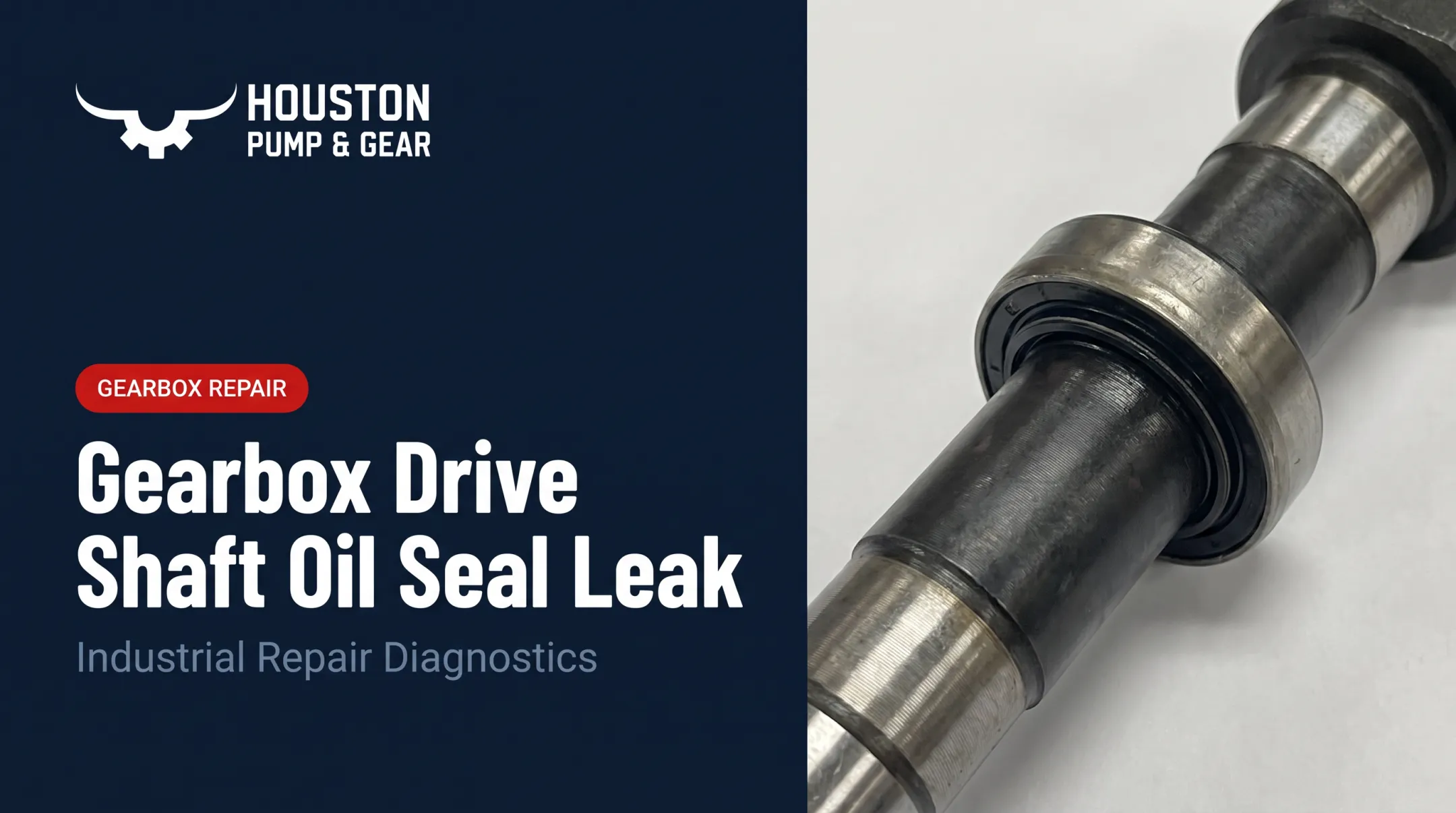
- Shaft seal: keeps oil from escaping along the drive shaft into the surrounding environment
When people say "oil seal failed," they usually mean the shaft seal. That's the one that leaks visibly and gets replaced during maintenance.
Types of Vacuum Pump Seals
Not all seals are built the same way:
| Seal Type | Construction | Typical Use |
|---|---|---|
| Lip seal | Elastomeric lip contacting the shaft, often spring-assisted | Standard rotary vane pumps |
| Mechanical face seal | Two polished faces, one stationary, one rotating with the shaft | Higher-duty or vacuum-specific applications |
| Packing seal | Braided material compressed in a stuffing box | Older or simpler pump designs |

Dry-running mechanical seals show up in oil-free and dry screw pump applications where there's little or no oil present to begin with. These are a different animal from the oil-sealed rotary vane pumps most facilities run.
Why Vacuum Applications Are Harder to Seal
Sealing under vacuum is genuinely tougher than sealing pressurized liquid systems. Vacuum reduces lubricity right at the sealing interface, which drives up the risk of:
- Blistering on seal surfaces
- Leakage past the sealing lip or faces
- Heat generation and face deflection
- Shortened overall seal life
A seal designed for a medium-to-high pressure liquid application can't just be swapped into a vacuum pump and expected to perform. The engineering requirements are different enough that this mismatch is a documented cause of premature seal failure.
Signs Your Vacuum Pump Oil Seal Is Failing
The most obvious symptom is visible oil leakage around the shaft or housing. Check connections, gaskets, and the oil level regularly. Loose fittings and damaged gaskets can mimic seal failure, so don't assume the seal is guilty until you've ruled those out.
Beyond leakage, watch for:
- Loss of vacuum pressure: slower pump-down times and inconsistent performance
- Overheating: often tied to congealed or contaminated oil that's no longer lubricating properly
- Unusual noise: clicking or clattering suggests vanes running dry
- Discolored oil: a shift from light brown to dark brown or black signals aging; cloudy oil suggests liquid contamination from air or moisture ingress
There's no universally agreed lifespan for shaft seals; condition and duty cycle matter more than a calendar date. Some facilities get years out of a seal in clean service; others see failure much sooner under dirty or high-cycle conditions. Treat oil color, leakage, and inspection findings as your real signals, not a fixed replacement schedule.
Ignore those signals and the damage compounds fast. A leaking seal lets air into the system and starves the pump of proper lubrication. The remaining oil can polymerize (turning gummy), and vanes start sticking in the rotor slots. Left unaddressed, this progresses to full pump seizure. What started as a $100 part can turn into a full rebuild.

Replacing and Maintaining Vacuum Pump Oil Seals
A typical seal replacement follows this sequence:
- Drain the oil completely and isolate the equipment
- Disassemble the pump housing to access the shaft and seal cavity
- Remove the worn seal, inspecting the shaft for rough edges or grooves that could damage the new one
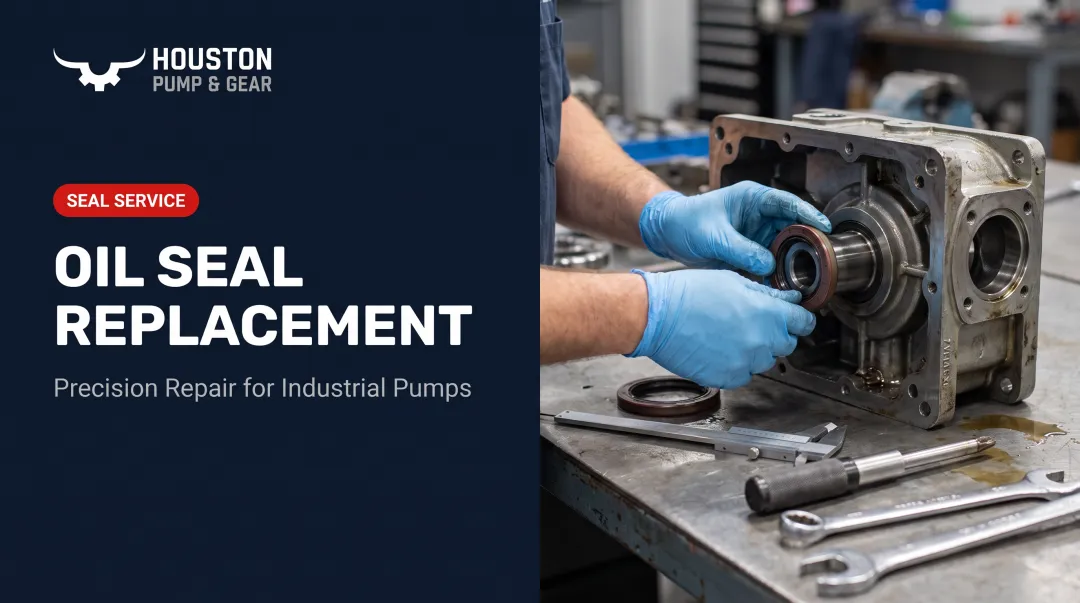
- Install the new seal with correct orientation, lubricating both the shaft and seal surfaces with the appropriate vacuum oil before pressing it into place

Matching seal material and size exactly to OEM specifications matters more than most people expect. A close-enough generic seal often fails prematurely, costing you the labor twice.
Maintenance That Extends Seal Life
- Start oil changes monthly, then adjust based on how the oil looks and performs—clean service stretches intervals; dirty conditions need them far more often
- Use cold traps and filters so corrosive process vapors do not degrade the oil or eat away at seal material
- Run gas ballast to expel process vapor before it condenses inside the pump, but not so long that oil leaves the system
Even with disciplined maintenance, seals still fail. When they do, response speed decides whether you lose a shift or the rest of the week.
Emergency Response When a Seal Takes You Down
Houston Pump & Gear runs 24/7 mobile field response with dedicated transport trucks for equipment pickup—a model built around minimizing downtime rather than waiting weeks for OEM turnaround. The same rapid-response approach that picked up a failed Lufkin S2212C gearbox the same day and had the facility running again 72 hours later is how the team handles urgent industrial pump and seal work. That kind of turnaround is the difference between a bad day and a shutdown that bleeds into the following week.
What Does It Cost to Replace a Vacuum Pump Oil Seal?
Costs swing widely based on a few factors:
- Pump size — larger industrial units need more oil, bigger seals, and more labor time
- Seal type — lip seals generally cost less than mechanical face seals
- Service model — parts-only replacement versus a full professional service call
As a rough reference, standard gaskets and seals often run $50 to $150 per piece, while vacuum oil can cost $80 to $150 per gallon.
A simple seal swap might run around $200. A full overhaul with bearing or rotor damage can push toward $1,200 or more. These figures vary by pump model, so treat them as ballpark examples rather than quotes.

Custom-engineered seals cost more upfront but often lower long-term spend. Fewer premature failures mean fewer repeat repairs and less unplanned downtime.
Get a professional inspection before replacing anything. Vacuum loss or oil leakage does not always mean the seal failed: worn bearings, damaged shafts, or rotor issues can show the same symptoms. Houston Pump & Gear's pump inspection service identifies whether the seal—or another component—is the root cause before parts are ordered.
When to Call a Professional for Seal Repair
Some situations call for expert hands rather than a DIY attempt:
- Severe leakage that won't stop after basic checks
- Vacuum levels that won't stabilize after an oil change
- Mission-critical equipment where downtime isn't an option
For unexpected failures, emergency crews with mobile transport can pick up the unit the same day, run diagnostics overnight, and return it to service fast. Houston Pump & Gear provides 24/7 emergency response with same-day pickup, cutting the delays that often stretch repairs across multiple days.
Frequently Asked Questions
How much does it cost to replace a vacuum pump oil seal?
Costs depend on pump size, seal type, and labor. A seal-only job often runs a few hundred dollars; a full overhaul with related damage can exceed $1,000.
What happens when a vacuum pump is leaking oil?
You'll see reduced vacuum performance, contamination risk from air entering the system, and eventually oil starvation. Left unaddressed, this can cause the pump to seize entirely.
What is an oil-sealed vacuum pump?
It's a rotary vane pump that uses oil to seal clearances between the rotor and housing. That oil film maintains high vacuum levels and lubricates moving parts.
What is a vacuum pump seal?
It's the component that prevents oil from leaking out along the drive shaft, distinct from the internal oil film that seals the pumping chamber itself.
How long do vacuum pump oil seals typically last?
There's no fixed timeline. Seal life depends on operating conditions, oil quality, and duty cycle. Clean service can extend life significantly; dirty or high-cycle applications shorten it.
Can a vacuum pump run with a bad oil seal?
Short-term, yes, but performance degrades quickly. Continued operation risks oil starvation, vane damage, and eventual pump seizure if the seal isn't addressed.