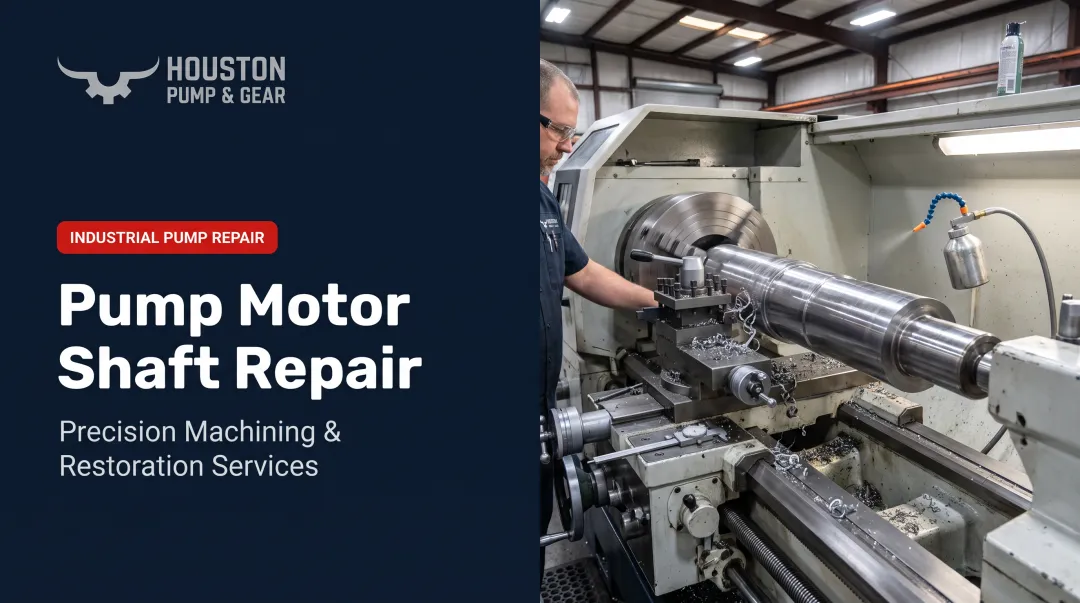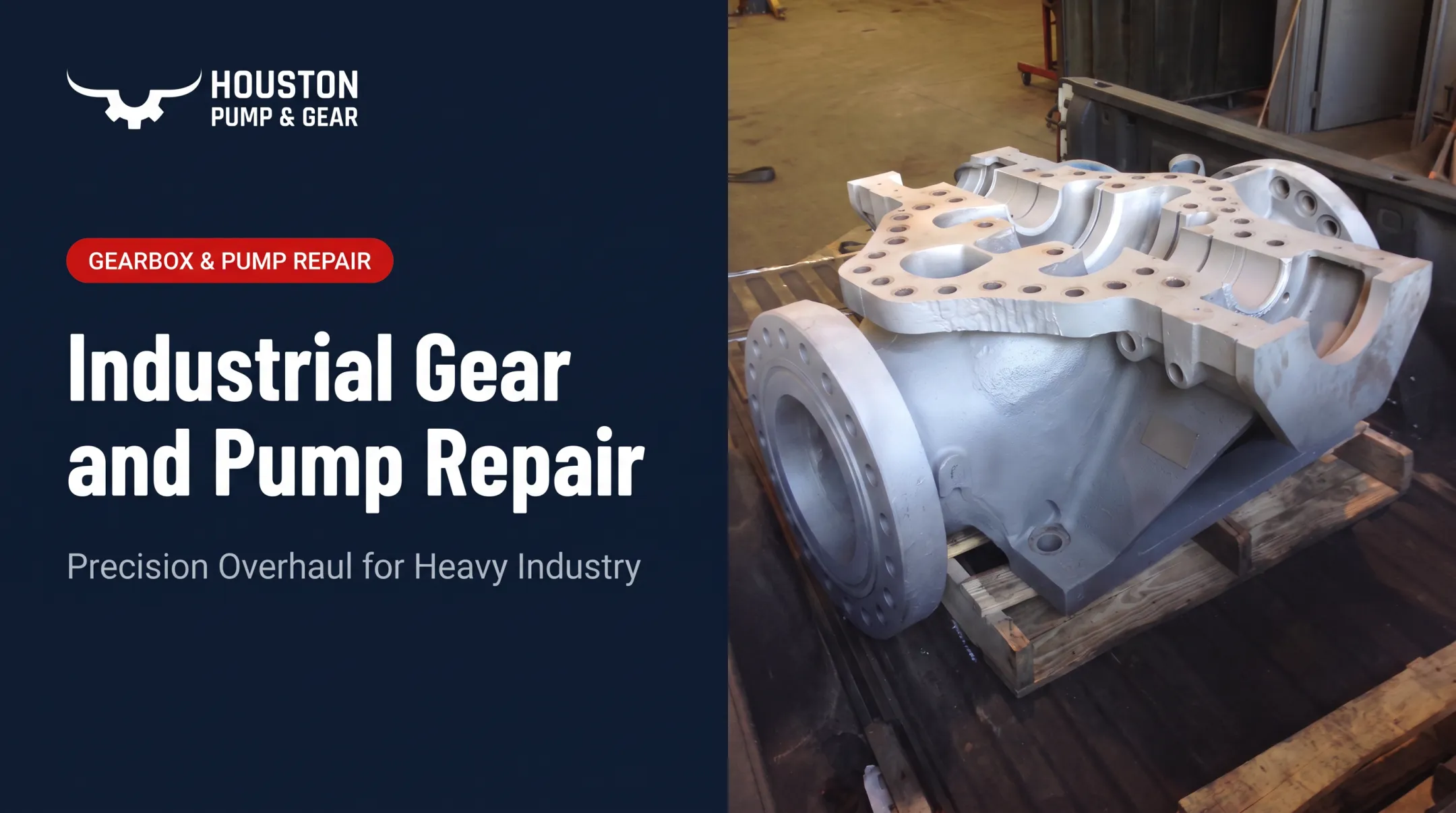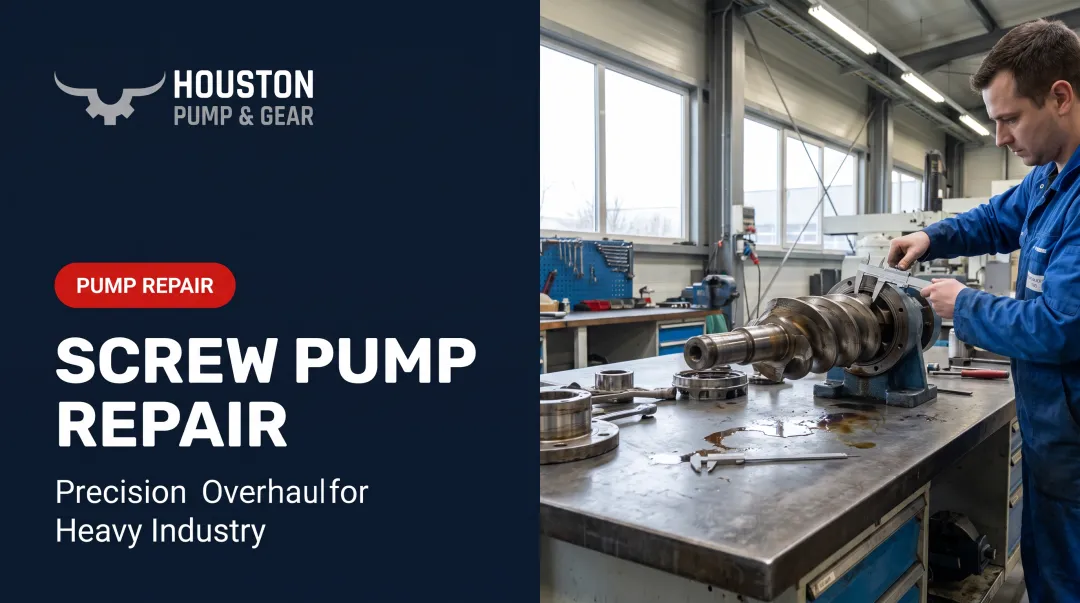

This guide walks through the most common pump motor problems, why they happen, how to fix them step by step, and when repair no longer makes sense. We'll also cover when it's time to call in a specialist like Houston Pump & Gear.
TL;DR
- Most common failures: bearing wear, overheating, electrical faults, and misalignment
- Fix or replace? Weigh damage severity, motor age, and repair cost vs. full replacement
- Repair process: diagnose the symptom, confirm the root cause, repair, then load-test
- Call a pro when: a reassembled motor still runs hot, loud, or weak
What Is an Industrial Pump Motor?
An industrial pump motor is the electromechanical component that drives a pump's impeller or shaft, converting electrical energy into the mechanical rotation that moves fluid through a system. In power plants and heavy industry, that rotation often runs continuously, under high load, for years at a stretch.
That continuous duty comes at a cost. Heat, vibration, and mechanical stress degrade key parts over time:
- Windings
- Bearings
- Seals
A pump motor is a working system that needs scheduled inspection and, eventually, repair.
Common Problems With Industrial Pump Motors
Most pump motor failures follow predictable patterns. If you know what to look for, diagnosis gets much faster.
Overheating
Symptoms: burning smell, thermal shutdown, hot motor casing.
Likely causes: overloading, poor ventilation, or voltage unbalance. A 1% voltage unbalance can produce a 6-10% current unbalance, which drives heat up inside the windings fast. That small electrical problem has a large thermal effect.
Bearing Failure
Symptoms: grinding noise, vibration, noticeable shaft play.
Likely causes: lubrication failure, contamination, or misalignment. Bearings are the single biggest failure point in motors. One widely cited EASA industry benchmark puts bearings at just over 51% of failed components, far ahead of stator windings at under 16%.

Houston Pump & Gear's technicians see this pattern often: once metal shavings show up in a bearing, seal, or coupling, that part needs replacing, not cleaning.
Electrical Faults
Symptoms: tripped breakers, motor won't start, inconsistent power delivery.
Likely causes: winding damage, faulty wiring, or capacitor failure. Overload and voltage outside normal limits accelerate insulation breakdown, which is often the hidden cause behind an electrical fault that looks sudden but was building for months.
Misalignment/Coupling Issues
Symptoms: excessive vibration, uneven wear, unusual noise.
Likely causes: improper installation, foundation shift, or worn couplings. Left unaddressed, misalignment doesn't stay isolated. It stresses bearings and can eventually distort the motor frame itself.
Why Industrial Pump Motors Fail (Root Causes)
Failures rarely come from one factor alone. Real-world industrial conditions stack up:
- Continuous operational stress: high-load cycles with few rest periods
- Environmental exposure: heat, dust, moisture, and chemical atmospheres that often require specially rated motors
- Improper installation or alignment: problems baked in from day one
- Lack of preventive maintenance: small issues that go unchecked until they compound
Ignore these long enough, and the consequences escalate:
- Reduced motor efficiency and higher energy bills
- Downstream process disruptions or quality issues
- Safety and compliance exposure
- Expensive, unplanned downtime
A 2025 ABB survey of 3,600 industrial decision-makers found that sudden industrial disruptions cost most facilities between $10,000 and $500,000 per hour, with 14% reporting weekly stoppages. Replacing or overhauling a single failed pump can run upward of $25,000—before lost production is counted.

How to Fix an Industrial Pump Motor (Step-by-Step)
Fixing symptoms without confirming the root cause is how facilities end up repairing the same motor twice. This process is built to catch the actual problem the first time.
Step 1: Identify the Exact Problem
- Observe visible symptoms: noise, vibration, overheating, loss of output
- Note deviations from the motor's normal baseline performance
- Check alarms, gauges, and any abnormal readings
- Document when the issue shows up — at startup, under load, or during continuous run
Step 2: Confirm the Root Cause Category
- Determine whether the issue is mechanical, electrical, or operational/environmental
- Rule out external factors like power supply quality or ambient conditions
- Don't swap parts before you've confirmed what's actually wrong
Step 3: Fix Based on the Identified Problem
Match the repair path to the diagnosis:
- Mechanical: Replace bearings, realign the shaft, service seals, and lubricate — inspect all related parts before reassembly
- Electrical: Inspect windings and wiring, repair capacitors or connections, test insulation, and recalibrate
- Environmental/operational: Clean the unit, improve ventilation, correct load, and upgrade protective housing
Step 4: Test and Validate the Fix
- Run the motor under normal and peak load conditions
- Monitor vibration, temperature, and amperage draw at multiple points
- Compare readings against OEM benchmarks and the equipment manual
Do not return a motor to service until load-test readings clear OEM benchmarks. Houston Pump & Gear load-tests every repair before release — the same rapid-response discipline that restored a power plant within 72 hours after an emergency shutdown pickup.

When Should You Fix vs Replace a Pump Motor?
Decide based on condition, age, and failure history—not a fixed cost percentage. Weigh repair cost against downtime risk and long-term reliability.
| Scenario | Fix | Replace |
|---|---|---|
| Wear level | Minor bearing/seal wear | Cracked housing or burnt windings |
| Failure history | First-time failure on a newer motor | Repeated failures on an aging unit |
| Electrical damage | Isolated fault | Full winding failure; repair cost near replacement |
Rule of thumb: If the core, rotor, and housing are sound and repair restores full performance, fixing usually wins. Once damage compounds or failures repeat, replacement is the safer path against the next unplanned shutdown.

Common Mistakes to Avoid When Fixing a Pump Motor
Rushing a pump motor job often sets up a second outage. These shortcuts show up most often on industrial units:
- Treating noise or vibration without tracing the root cause, which almost guarantees a repeat failure
- Skipping load testing after reassembly so a motor that looks fixed still fails under real operating load
- Fitting non-OEM parts on complex models, which shortens service life and can void specialty-unit warranties
- Reinstalling without checking shaft alignment and soft foot, recreating bearing and seal damage
Preventive Measures to Avoid Future Pump Motor Issues
Preventive maintenance is cheaper than emergency repair, every time. Build these habits into your maintenance calendar:
- Scheduled inspections: Check bearings, seals, and couplings on a set cadence—don't wait for a symptom
- Vibration and thermal monitoring: Measure at multiple points with a vibration meter and infrared thermometer after a few hours of run time
- Lubrication schedules: Follow OEM intervals; under- and over-lubrication both generate excess heat
- Operator training and documentation: Log unusual sounds or performance changes as soon as they appear
Partnering with a 24/7 responsive repair provider also matters. Houston Pump & Gear serves power plants and heavy industry across Texas and Louisiana. Mobile field response helps catch problems before they turn into full shutdowns.
Conclusion
Most industrial pump motor issues are fixable when they're caught early and diagnosed correctly. Guesswork is what turns a simple bearing repair into a repeat failure three months later. Root-cause diagnosis, proper testing, and knowing when to fix versus replace all protect your uptime.
Having a rapid-response partner like Houston Pump & Gear on call, one who can pick up equipment, diagnose it, and return it tested and running, is what separates a costly outage from a manageable one.
Frequently Asked Questions
What is the most common cause of pump failure?
Bearing failure is the most common cause of industrial pump motor failure, often driven by inadequate lubrication, contamination, or misalignment. Coupling and seal issues are frequent culprits as well.
How long do industrial pump motors typically last?
Typical service life runs 10–15 years for smaller motors and 25–38 years for large units over 125 hp under normal operating conditions. Heat, moisture, contamination, and frequent starts shorten that window significantly.
Can a burnt-out pump motor be repaired?
Minor winding damage can often be repaired successfully. Full winding burnout usually makes replacement more cost-effective once you factor in core damage and labor.
How much does industrial pump motor repair cost?
Costs vary widely based on motor size, damage severity, and how quickly you need it back in service. A diagnostic quote is the only reliable way to determine the exact cost.
How quickly can an emergency pump motor repair be completed?
Experienced providers can turn around emergency repairs in days rather than weeks. Houston Pump & Gear offers 24/7 emergency service and has returned critical equipment—including a full gearbox repair—to service in as little as 72 hours.
Should I repair or replace an old industrial pump motor?
Weigh the motor's age, repair cost relative to replacement, and failure history. A motor with recurring issues and a high repair-to-replacement ratio is usually a better candidate for replacement.