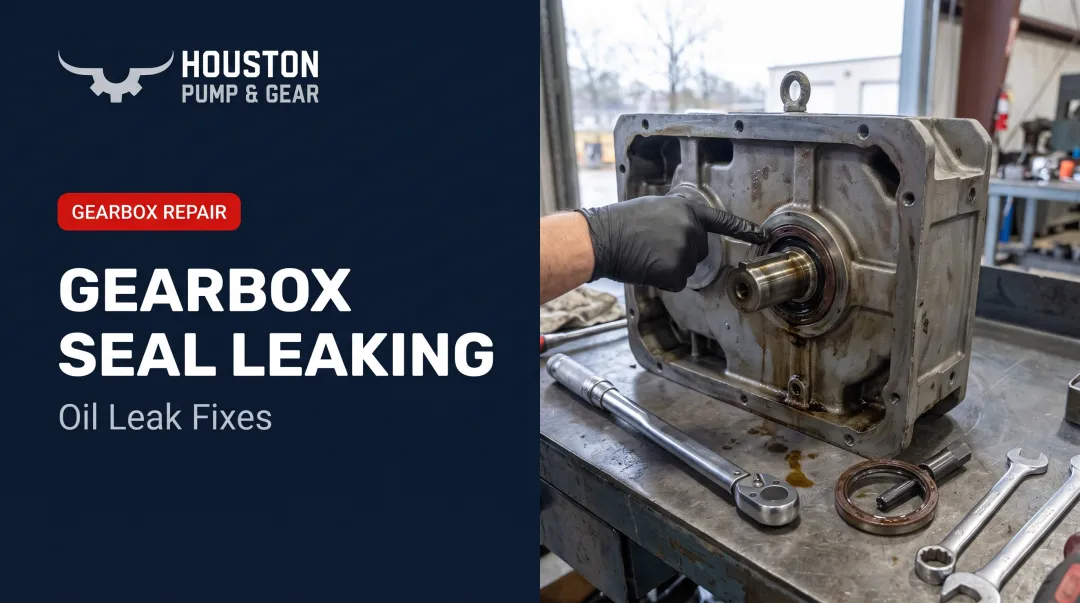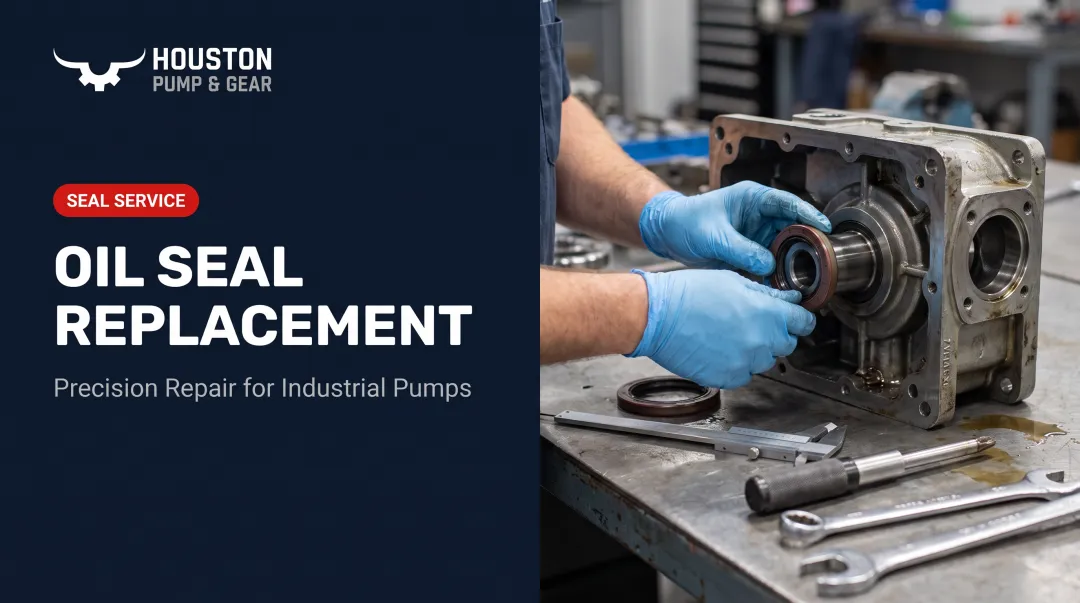

For power plants and heavy industry facilities, understanding root causes matters. A gearbox failure on a deep-sea oil rig can cost companies around $1.5 million per day. Catching a seal leak early protects both equipment and budget.
This guide breaks down why these leaks happen, what happens if you ignore them, and how to stop them before they cost you.
TL;DR
- Worn seals, misalignment, overfilling, or contamination cause most drive shaft oil seal leaks
- Ignored leaks starve lubrication, drive overheating, and can destroy gearbox internals
- Prevent recurrence with correct oil levels, proper seal installation, alignment checks, and routine inspection
- Houston Pump & Gear offers 24/7 emergency repair to restore damaged gearboxes to service fast
Common Causes of Gearbox Drive Shaft Oil Seal Leaks
The drive shaft oil seal has one job: keep gear oil inside the housing while letting the shaft spin freely. When it fails, oil escapes and contaminants get in.
Most leaks trace back to a handful of recurring issues. Houston Pump & Gear's inspection process regularly flags worn seals, misalignment, pressure problems, contamination, and physical damage as the usual root causes.
Worn or Deteriorated Seals
Heat and friction age the rubber lip over time. According to SKF's technical specification on radial shaft seals, inadequate lubrication raises operating temperature and causes the sealing lip to harden and crack.
Nitrile seal life drops by half for every 57°F increase in operating temperature, per Machinery Lubrication's guide to lip seals. That heat-driven wear shows up often on gearboxes run well past their service interval without a seal inspection.
Improper Installation or Misalignment
A seal driven in crooked, or a drive shaft misaligned with the gearbox output shaft, creates uneven wear and premature failure. SKF notes that shaft coaxiality and dynamic runout must stay within tight tolerances to avoid this.
It often follows a prior repair or rebuild that skipped proper alignment tools.
Excess Internal Pressure or Overfilling
Overfilling the gearbox, or a blocked vent breather, builds internal pressure that forces oil past the seal. Oil level errors cut both ways: overfill raises case pressure and pushes oil past the seal, while low oil increases friction and heat that dry out the lip.
A common trigger is topping off without checking manufacturer fill specs, on the assumption that more oil means better protection.
Contamination, Vibration, and Physical Damage
Dirt and debris entering the sealing area abrade both the seal lip and the shaft surface. Vibration from worn bearings or loose couplings accelerates the wear.
Physical damage compounds the problem quickly:
- A bent or nicked shaft from an impact scores the sealing surface
- Rust or scratches on the shaft counterface shorten seal life, per SKF
- Excess radial play from worn bearings shifts the seal contact point

What Happens If a Gearbox Drive Shaft Oil Seal Leak Is Ignored
Continued leakage drops oil levels below what's needed for proper lubrication. That increases metal-to-metal friction on gears and bearings, and wear on those components accelerates fast.
Gear oil doesn't just lubricate; it dissipates heat. Once levels drop, overheating follows. Siemens/Flender's operating manual lists changes in gear noise, rising bearing-point temperature, and leakage at the shaft seal as fault conditions requiring immediate attention.
Financially, this escalates quickly. A simple seal replacement, caught early, is a routine repair. Ignored, it can turn into a full gearbox rebuild or emergency shutdown. Per Houston Pump & Gear's Flender repair experience, some jobs start as bearing and seal swaps and end as complete unit rebuilds.
Early Warning Signs Not to Ignore
Catching these early lets you replace a seal on your schedule, not the gearbox's:
- Visible oil residue or dampness around the drive shaft coupling area
- Gradually dropping oil level on the dipstick or sight glass with no obvious spill
- Unusual heat, noise, or vibration coming from the housing near the shaft

How to Prevent Gearbox Drive Shaft Oil Seal Leaks
Prevention comes down to disciplined oil practices and careful work any time the gearbox is opened.
Maintain Correct Oil Level and Type
Follow the manufacturer-specified oil level and viscosity grade exactly. Overfilling builds internal pressure that pushes oil past the seal lip.
Check the level on every oil check and top-off cycle. Keep oil within the dipstick range — never above it.
Ensure Proper Seal Installation and Alignment
Use correct seal drivers and verify shaft alignment during any seal replacement. Misalignment creates uneven wear that shortens seal life.
Do this any time the gearbox is opened for repair or the drive shaft is disconnected. Houston Pump & Gear builds this step into every rebuild, replacing worn bearing seals and gaskets before reassembling to OEM spec.
Keep Vent Breathers Clear and Housing Ventilated
Inspect and clean vent holes or breathers on a regular schedule. Clear breathers relieve internal pressure that would otherwise force oil past the seal. Fold this check into scheduled preventive maintenance rounds.
Control Contamination and Vibration
Use proper filtration, keep mounting secure, and monitor coupling and bearing condition. That cuts abrasive wear on the seal lip and shaft surface.
Treat it as ongoing work, with extra attention after any nearby impact or mounting disturbance.

Tips for Long-Term Prevention and Control
Beyond the immediate fixes, a few habits pay off over years of operation:
- Schedule visual inspections quarterly, with a more thorough service annually
- Train staff on correct fill procedures and early leak recognition
- Document oil changes, seal replacements, and inspection findings to track wear trends
- Sample oil regularly; particle contamination or water ingress often signals internal wear or a failing seal before it fully fails
When to Call in a Professional Gearbox Repair Team
Once a leak is confirmed, or a gearbox has already tripped into emergency shutdown, call in a professional to stop further internal damage. These signs mean it is time to bring in a repair team:
- Unusual noise or grinding
- Excessive vibration
- Rising operating temperature
- An active oil leak
Houston Pump & Gear runs 24/7 emergency response with mobile pickup for power plants and heavy industry across Texas and Louisiana. When a power plant operator's Lufkin S2212C went into emergency shutdown, the company sent a truck the same day, picked up the unit, and had it back in service within 72 hours.
That same client has since had more than 15 units serviced by the company. A strong repair partner fixes today's leak and builds a maintenance relationship that catches the next problem before it becomes a shutdown.

Conclusion
Gearbox drive shaft oil seal leaks have identifiable, preventable causes: worn seals, misalignment, overfilling, and contamination top the list. Consistent inspection habits and correct maintenance practices keep small issues small.
When a leak has already caused damage, fast professional repair restores operations before downtime compounds. Houston Pump & Gear provides 24/7 emergency gearbox repair to get industrial equipment back online quickly.
Frequently Asked Questions
How much does it cost to replace a gearbox drive shaft oil seal?
Costs vary based on gearbox size, accessibility, and whether full disassembly is required. Contact Houston Pump & Gear for a quote based on your specific unit.
Can I operate equipment with a gearbox drive shaft oil seal leak?
It may not cause immediate failure, but continued operation accelerates wear, risks overheating, and increases the chance of an unplanned shutdown. Plan repair before oil loss or heat forces a shutdown.
What are the common causes of a gearbox drive shaft oil seal leaking?
The primary causes are worn or hardened seals, misalignment or improper installation, overfilling or pressure buildup, and contamination from dirt or vibration.
How often should gearbox oil seals be inspected?
Inspect seals during every scheduled maintenance interval, with quarterly visual checks and a thorough annual service. Also check immediately after any signs of leakage or unusual vibration.
Can a gearbox keep running temporarily with a minor seal leak?
Only with close monitoring of oil level and temperature, and only briefly. Schedule proper seal replacement promptly to avoid bearing damage and unplanned downtime.
What's the difference between a gasket leak and a seal leak on a gearbox?
Gaskets seal stationary joints, like housing covers or flanges. Seals manage the rotating shaft interface. Each requires a different repair approach based on where the leak originates.