
The problem: gears demand precision most people never think about. A tooth profile error measured in microns can create noise, vibration, or a catastrophic failure that shuts down an entire production line. This article breaks down how industrial gears are manufactured, from raw blank to finished part, the materials and cutting methods involved, and how to tell when repair makes more sense than waiting on a new one.
Key Takeaways
- Four stages shape final gear performance: blank prep, tooth cutting, heat treatment, and finishing
- Steel dominates industrial gear production, but bronze, cast iron, and plastics fit specific load and friction needs
- Hobbing is the workhorse tooth-cutting method; shaping and broaching handle internal or complex geometries
- Repairing gears and bearings is often faster and cheaper than sourcing a new gearbox
Types of Gears and Common Materials
Common Gear Types by Application
Gear geometry isn't a style choice. It's dictated by shaft layout and load requirements.
- Spur gears — straight teeth, parallel shafts, no axial thrust. Simple and common in general power transmission.
- Helical gears — angled teeth on parallel shafts, mesh more gradually, and handle higher loads, though they generate axial thrust.
- Bevel gears — conical shape for intersecting shafts, common in right-angle drives.
- Worm gears — non-intersecting shafts; quiet and self-locking, with sliding contact that demands matched material pairs.

Gear type also limits which cutting process actually works. Worm sets, for instance, typically pair a steel worm with a bronze wheel and need specialized cutting geometry that a standard hobbing setup can't always accommodate.
Materials Used in Gear Production
Steel — carbon and alloy — is the default choice for industrial gears carrying real load. It's machinable, hardenable, wear-resistant, and widely available. Alloy steels push strength and wear life further, which matters for high-cycle power transmission applications.
That said, steel isn't automatic:
- Cast iron works where cost and moderate strength are acceptable
- Bronze (particularly phosphor bronze) resists corrosion and wear in high-friction spots, making it the standard partner for worm wheels
- Plastics like acetal and nylon suit lightweight, low-noise applications where load is limited
AGMA rating methods for pitting resistance and bending strength are a solid starting reference for gear pairs, not a universal material-selection chart. Final material choice still depends on:
- Load and duty cycle
- Operating speed
- Environment (corrosion, temperature, contamination)
- Lubrication regime
The Gear Manufacturing Process: From Blank to Finished Gear
Every gear starts as a blank. How that blank is produced changes the part's fatigue life before a single tooth is even cut.
- Forging aligns the grain structure of the metal to follow the tooth contour, which improves fatigue resistance under repeated loading. This is the route for severe-duty gears.
- Casting handles large or geometrically complex blanks economically, though cooling distortion can limit achievable accuracy.
- Extrusion and powder metallurgy suit high-volume, smaller gears where near-net-shape production keeps machining time down.
Once the blank exists, tooth cutting shapes the profile. Then comes heat treatment: usually case hardening or carburizing, which builds a hard wear-resistant surface while keeping the core tough enough to absorb shock loads without cracking.

Heat treatment introduces distortion, though. That's why finishing steps like grinding, honing, and shot peening come next: they correct that distortion and bring the gear back to its final tolerance.
The ANSI/AGMA 2015-1-A01 standard defines ten accuracy grades (A2 through A11), with lower numbers indicating tighter tolerances. Industrial gearboxes typically need tighter grades depending on speed and load.
That precision requirement is why restoring a worn or damaged gear to original spec takes real technical depth, not just a lathe and good intentions.
Gear Cutting and Machining Methods
Tooth cutting is where the gear actually takes shape, and the method depends heavily on volume, geometry, and access.
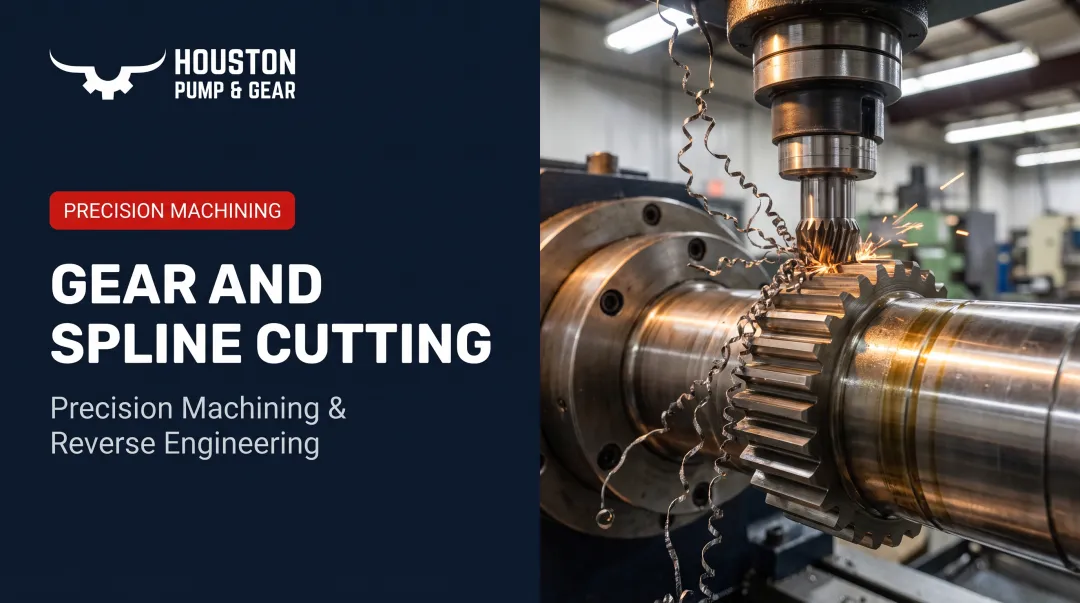
- Hobbing: the industry standard for external spur and helical gears. A rotating hob and synchronized blank generate accurate involute profiles continuously, making it efficient for medium-to-large production runs.
- Form milling: cuts one tooth space at a time using a shaped cutter. Slower, but flexible for low-volume runs, large modules, and custom geometries a hob can't easily produce.
- Broaching: pulls a toothed tool through the workpiece for high dimensional accuracy. Common for mass-producing large gears and internal cuts, though it's not cost-effective for small runs.
- Shaping: a reciprocating method well suited to internal ring gears and geometries where nearby obstructions block a hob's access.
- Power skiving: a newer, CNC-driven method that meshes like a pinion against the workpiece. It's faster than shaping for many internal and external jobs and reduces machine setups.

Specialized industrial gearboxes, including Lufkin-type units, often need custom machining knowledge to reproduce components correctly during a repair.
At Houston Pump & Gear, that means hobbers handling gears up to 20 feet in outside diameter (non-CNC) and 53 inches (CNC), plus five-axis machining centers, to reproduce parts no longer available from the original manufacturer.
Post-Processing, Heat Treatment, and Quality Standards
AGMA and DIN grading systems are the two primary references buyers and plant operators should ask about when sourcing or repairing a gear. Knowing the grade tells you what tolerance and surface finish to expect. Mismatched expectations here are a common source of comebacks.
Heat treatment hardens tooth surfaces and builds core strength, but it also introduces distortion. Controlled finishing after harden is what locks in the grade you specified.
Finishing techniques matter beyond just hitting a dimension:
- Grinding removes stock and restores precision after heat-treatment distortion
- Lapping produces mirror-smooth flanks on hardened steel
- Honing reduces operational noise and smooths transmission performance
Houston Pump & Gear's CNC form-grinding equipment is rated to AGMA Q15 quality, with capacity up to 4 meters in diameter on the larger units and 1.5 meters on the Gleason form grinder. That range is what it takes to return a worn gear to a tight tolerance instead of an approximate fit.

When heat treatment or finishing falls short, common failure modes show up fast in service:
- Pitting from surface contact fatigue
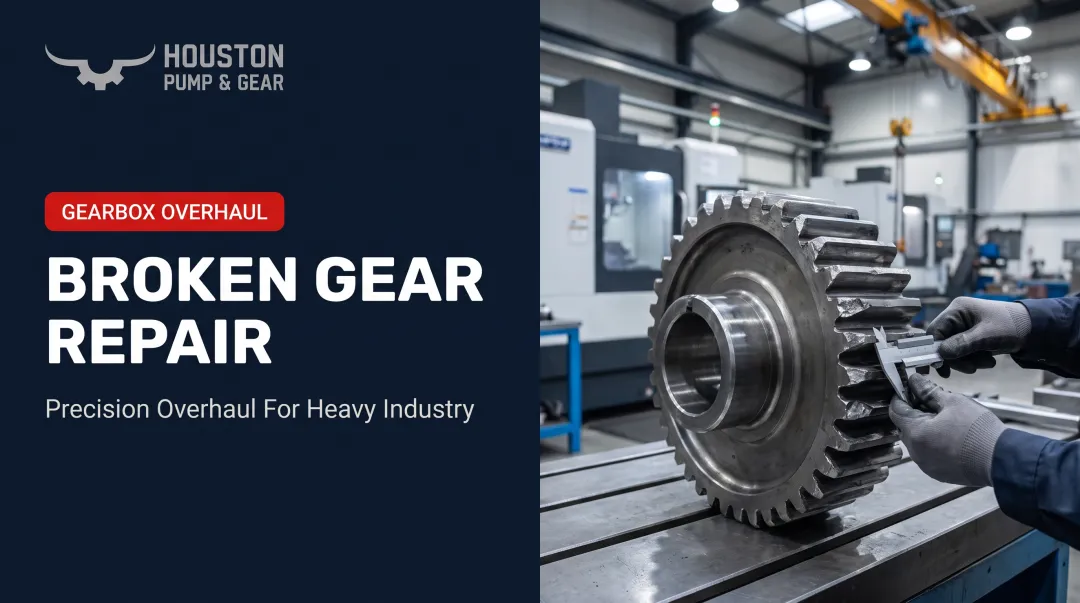
- Tooth breakage under shock loading
- Noise and vibration from poor tooth-surface finish or misalignment
Choosing the Right Process — And When Repair Beats Remanufacturing
Gear type, size, production volume, and required precision determine the ideal manufacturing route. For power plants and heavy industry facing an unexpected failure, full remanufacturing or a brand-new gearbox isn't always the answer.
Many failures are localized (a damaged tooth, worn bearing, or seal issue) and suit targeted repair over waiting on new manufacturing. The cost and downtime difference is substantial:
- Buying and installing a new gearbox can stop production for months
- Documented industrial gearbox repair often runs at least 40% cheaper than a new unit
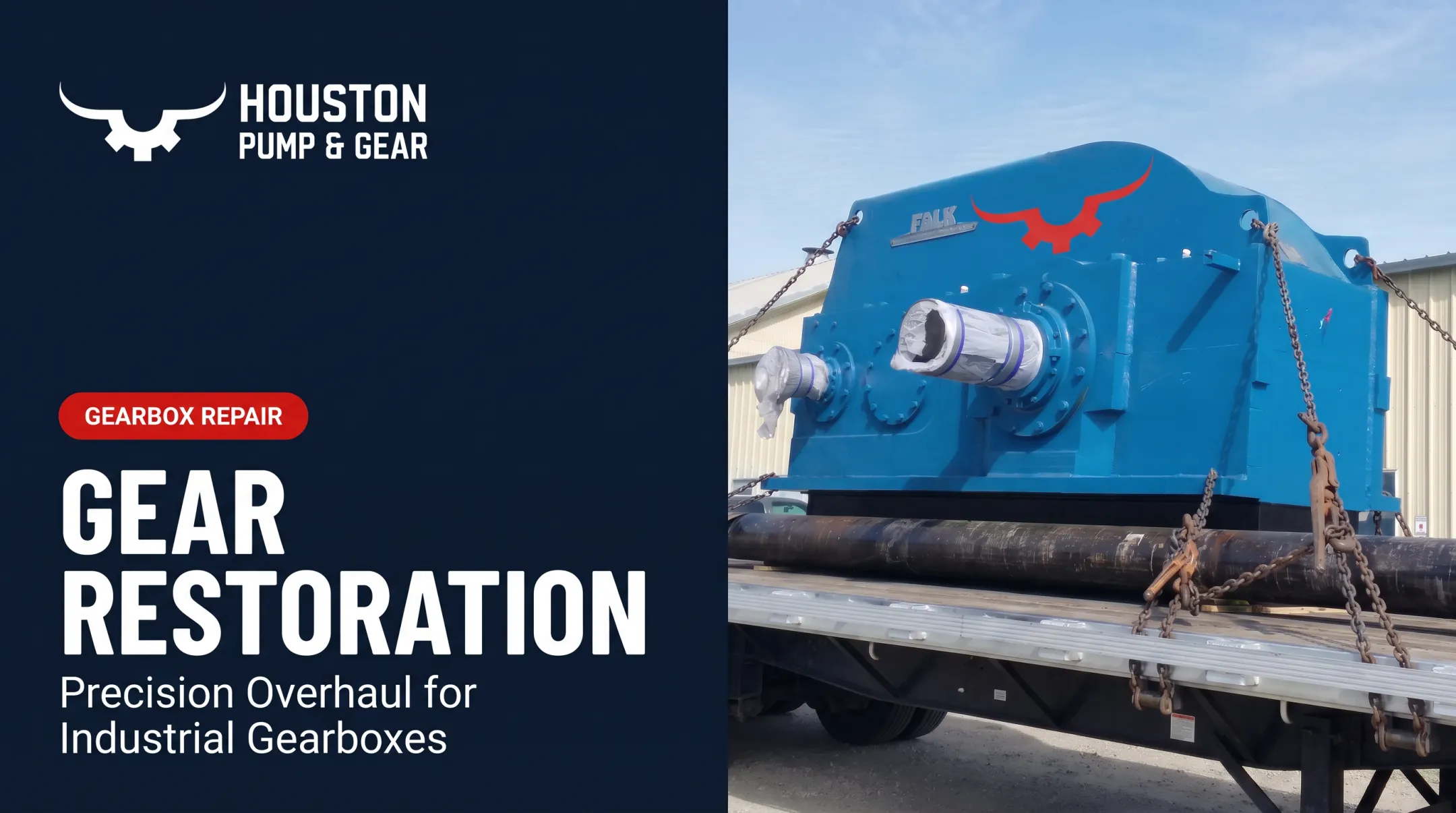
A real example: When a Lufkin S2212C gearbox failed at a power plant, Houston Pump & Gear had the unit back in service within 72 hours. According to customer Jerry Storm, the plant was running again just three days after the failure, a timeline impossible on new gear manufacturing lead times.

For facilities that can't afford extended downtime, mobile field response closes the gap. Dedicated trucks and pickup logistics mean a damaged unit can start repair the same day it fails, rather than sitting in a shipping queue.
Frequently Asked Questions
Where can I get custom gears made?
Custom gears typically come from specialized machine shops or gear manufacturers. For urgent industrial replacements, specialists like Houston Pump & Gear can often source, machine, or repair the part directly instead of waiting on a new order.
How are gears manufactured?
The process starts with blank preparation (forging, casting, or powder metallurgy), followed by tooth cutting (most commonly hobbing), then heat treatment for wear resistance, and finally finishing operations like grinding to hit final tolerances.
What is the strongest material for gears?
Alloy steel, particularly chrome-molybdenum or chrome-vanadium grades, is the strongest practical choice for high-load, high-cycle industrial applications when properly case hardened.
What causes gears to fail prematurely?
Common causes include tooth breakage from shock loading, surface pitting from contact fatigue, and noise or vibration stemming from machining errors or inadequate heat treatment. Poor lubrication and misalignment often compound these issues.
How do I know if my industrial gearbox needs repair or full replacement?
An emergency assessment by an experienced technician can usually determine whether repair restores the unit faster and cheaper than sourcing a new manufactured gear. In many cases, the housing and shafts remain sound even when the gearing has failed.