
For power plants and heavy industry, that shift matters. A gearbox failure doesn't just mean a repair bill. It means worker safety exposure, potential regulatory scrutiny, and the real risk of an emergency shutdown that ripples through production. Unusual noises like grinding, whining, or clunking often signal damaged gears, insufficient lubrication, or misalignment before those problems become catastrophic.
This article breaks down why gearboxes get noisy, how to diagnose the cause, and what actually works to bring the sound back under control.
Key Takeaways
- Gearbox noise typically traces back to gear mesh issues, bearing wear, misalignment, or degraded lubrication
- Whine, rumble, knock, and hiss each signal a different root cause
- Damping, precision components, and consistent maintenance are your main levers for noise control
- A full gearbox inspection covers gears, bearings, shafts, seals, and lubrication as one system
- Persistent or worsening noise means it's time for a professional inspection, not another workaround
Understanding Why Industrial Gearboxes Make Noise
Every gearbox produces sound through tooth impact and gear mesh vibration. As teeth pass through mesh, they generate a periodic signal called gear mesh frequency, and that frequency's harmonics show up in the noise profile of a healthy unit.
Housings can amplify this through resonance, which is why two identical gearboxes in different enclosures can sound noticeably different even when both are running fine, according to Bently Nevada's gearbox vibration analysis research.
The line between normal and abnormal isn't about volume alone. It's about change. A defect adds new components adjacent to, or aligned with, the shaft frequency, mesh frequency, or their harmonics. In practice, that means the noise pattern shifts, not just the loudness.
Common Noise Signatures and What They Indicate
Different sounds point to different problems:
- Whine: Usually gear mesh frequency issues or tooth surface wear
- Rumble or growl: Typically bearing damage or uneven load distribution
- Knock or clatter: Often excessive backlash or load reversal slamming teeth together
- Hiss: Commonly lubrication starvation or oil aeration
OEM guidance from Flender flags changed gear-unit noise as a sign of damaged teeth, excessive bearing play, or a defective bearing, and recommends checking for unusual noise daily.
Catching these signatures early limits repair scope. Gear wear also changes vibration behavior and can cut power transmission efficiency, so a noisier gearbox is often a less efficient one.

Root Causes Behind Excess Gearbox Noise
Noise diagnosis usually comes down to three categories: the gear teeth themselves, the bearings and alignment supporting them, or the lubricant that's supposed to protect everything.
Gear Mesh and Tooth Contact Problems
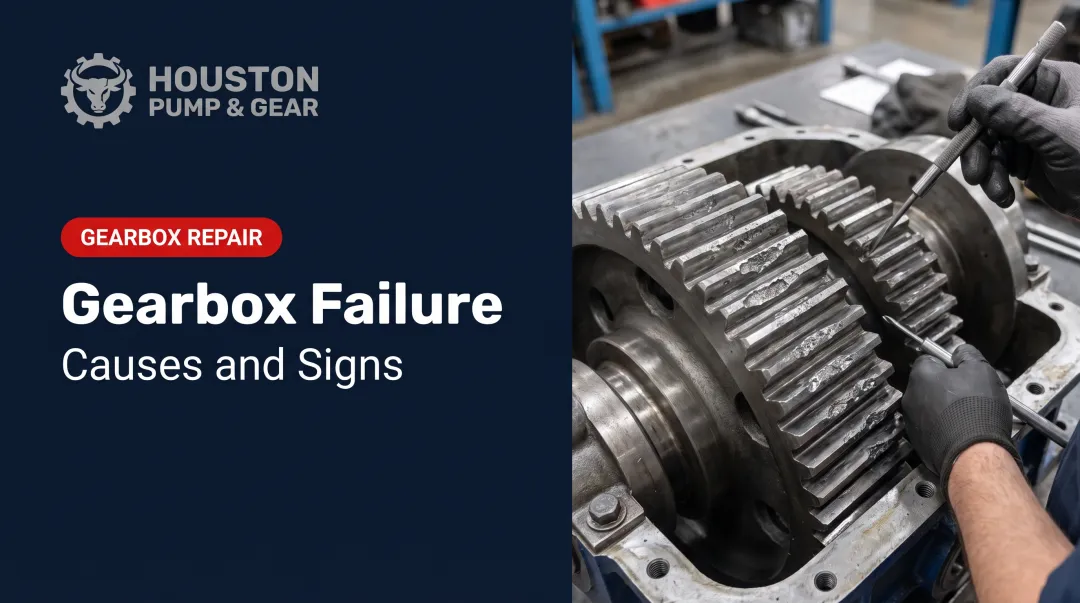
Profile or lead errors in the gear teeth create a tonal whine right at the mesh frequency. Backlash that's set too tight causes binding and heat; too loose, and you get chatter or knock as teeth slam together on load reversal. Left unaddressed, surface distress like micropitting or scuffing accelerates, turning a noise issue into a wear issue.
Bearing, Shaft, and Alignment Issues
Bearing spalling and brinelling (surface damage from shock loads or impacts) produce that characteristic rumble. Misalignment concentrates load on a smaller contact area, generating tonal noise that gets worse under load. Overhung or radial loads can also bend shafts slightly, creating cyclic vibration with every rotation.
Lubrication Breakdown and Contamination
Lubrication problems are sneaky because they often masquerade as mechanical faults:
- Wrong viscosity — fails to maintain the protective oil film between contact surfaces
- Underfilling or overfilling — causes boundary lubrication (metal-on-metal contact) or churning noise
- Contamination — water or particulate accelerates surface roughening and abrasive wear
AGMA sets a maximum water contamination limit of 300 ppm, and oxidation rates can double for every 10°C (18°F) rise in operating temperature. Once that oil is degraded, it stops protecting the gear set long before anyone notices a leak.

Practical Techniques to Reduce Gearbox Noise
Once you know the cause, fixes fall into five buckets:
- Add vibration damping. Rubber or polyurethane mounts, liners, or coatings absorb energy at the housing level before it radiates outward as noise.
- Install acoustic enclosures. Combine sound-absorbing panels around the unit with facility-level treatments for particularly loud installations.
- Correct backlash and alignment. Verify tooth contact patterns during scheduled service intervals rather than waiting for a failure.
- Restore proper lubrication. Use the correct viscosity grade (ISO VG, AGMA, or API) and keep fill levels precise. Matched higher-viscosity oils build a thicker film and improve scuff-load resistance.
- Upgrade gear design where feasible. Helical or precision gear sets with tighter tolerances run quieter than older or coarser designs, particularly in high-speed applications.

Proactive monitoring pays off financially, too. Predictive maintenance programs deliver an estimated 8-12% cost savings over preventive maintenance, and 12-18% savings over purely reactive maintenance, according to Pacific Northwest National Laboratory's operations and maintenance research. Waiting until a gearbox fails is consistently the most expensive path.
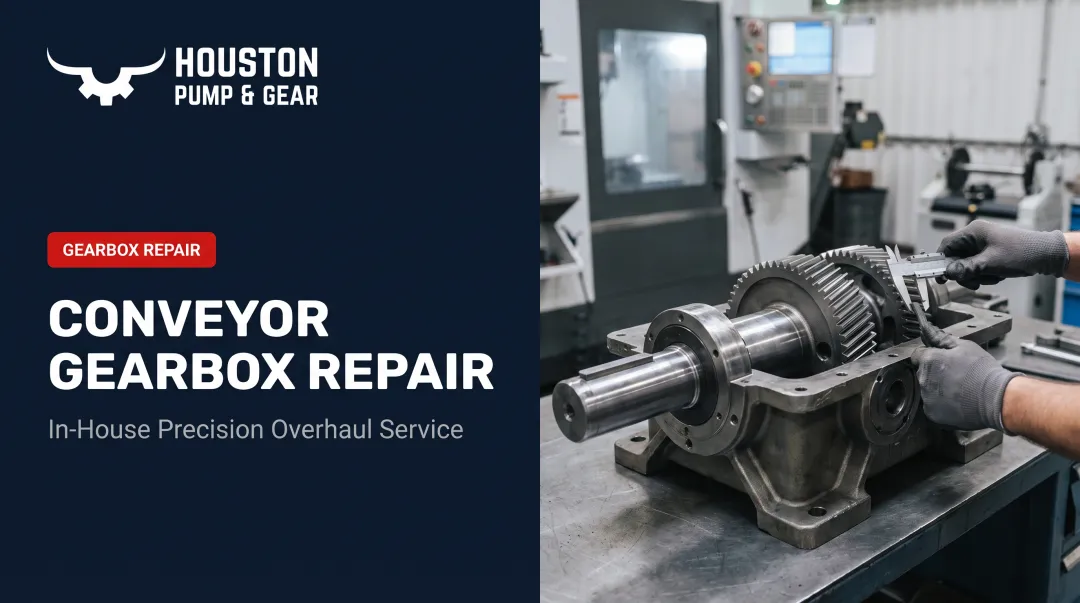
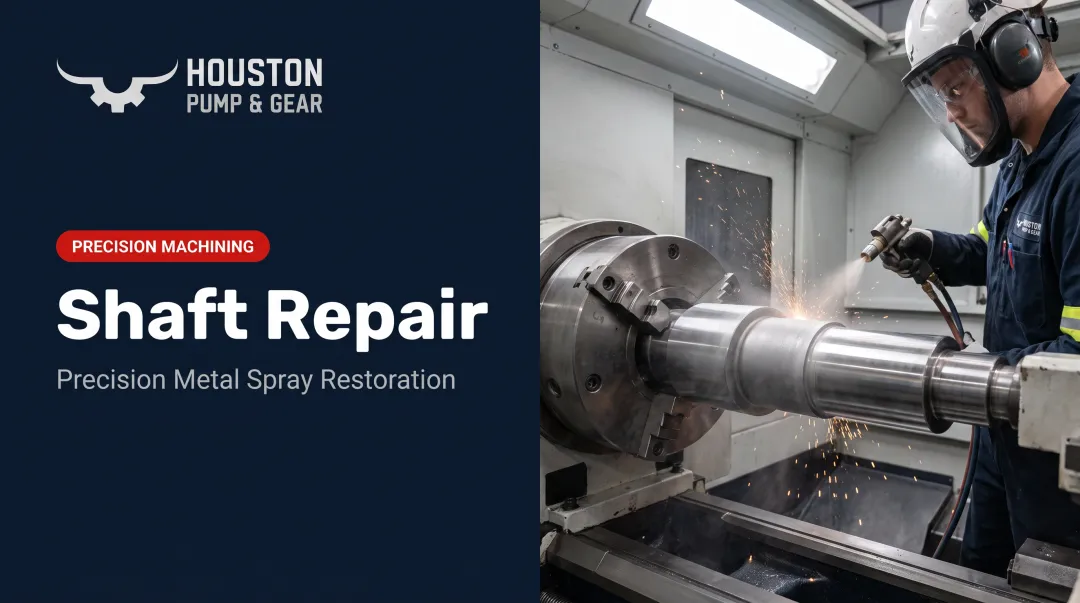
Houston Pump & Gear's overhaul process reflects this layered approach directly: full disassembly, bearing and shaft inspection, gear condition checks, and precision machining as needed to correct the root cause rather than just quieting the symptom.
Maintenance and Monitoring Strategies to Prevent Recurring Noise
Fixing noise once doesn't mean it stays fixed. Recurring noise usually means the underlying maintenance cadence isn't tight enough.
Recommended baseline:
- Quarterly visual inspections for wear, leaks, and obvious misalignment
- Annual thorough service, adjusted for load profile and duty cycle
- Vibration analysis and oil analysis as predictive tools, not just reactive checks
Oil analysis catches problems before they're audible. Viscosity changes can flag oxidation, thermal breakdown, or water contamination. Elemental analysis can catch abnormal wear metal levels that signal internal damage.
A full gearbox maintenance inspection should cover these systems together:
- Gears
- Bearings
- Shafts
- Seals
- Lubrication system
Checking any one in isolation misses how they interact.

One diagnostic trick worth remembering: track whether noise rises with speed or rises with load.
- Noise that scales with speed usually points to bearing issues
- Noise that scales with load usually points to alignment or gear mesh problems
This single distinction can save hours of unnecessary teardown time.
When to Call in Professional Gearbox Repair Services
If you've corrected backlash, verified alignment, and restored proper lubrication and the noise persists, that's usually a sign of internal wear that requires disassembly to diagnose properly. Attempting more fixes at that point often just delays an inevitable failure.
Delaying action carries real risk. One power plant operator, Jerry Storm, described exactly this scenario: a gearbox failure sent his facility into an emergency shutdown in 2014. Houston Pump & Gear's team responded, and the Lufkin S2212C unit was back in service within 72 hours.
That kind of turnaround isn't guaranteed with every repair shop. Houston Pump & Gear runs 24/7 emergency response with mobile field pickup across Texas and Louisiana, using dedicated drivers and logistics partners to get units off-site fast. Technicians experienced with complex models like the Lufkin S2212C can often restore a unit in days, not weeks.
Typical timelines:
- Minor repairs: a few days
- Full rebuilds or custom machining: one to two weeks
- Emergency jobs: often back in service within 72 hours when parts and transport align
If your gearbox is on its second or third repair for the same recurring noise, that's usually the signal to loop in a specialist rather than keep patching it.
Frequently Asked Questions
Can I keep running a noisy gearbox?
Short-term operation may be possible, but continuing to run a noisy gearbox risks accelerating wear on gears and bearings. That can lead to sudden, unplanned failure. A prompt inspection is the safer route.
What does a whining industrial gearbox usually mean?
Whine is typically tied to gear mesh frequency issues or tooth surface wear. It's one of the more common early-warning signs and shouldn't be ignored, even if it seems minor at first.
How often should industrial gearboxes be inspected for noise-related issues?
Quarterly visual inspections paired with annual thorough service are a reasonable baseline. High-duty applications benefit from adding vibration and oil analysis to catch developing issues sooner.
Can lubrication alone fix a noisy gearbox?
Lubrication helps resolve friction-related noise, like hiss from oil starvation, but it won't fix mechanical wear, misalignment, or already-damaged components. Those need physical correction or repair.
Is gearbox noise always a sign of a serious problem?
Not always. Some noise is completely normal in a healthy gearbox. Sudden changes, new tones, or intermittent knocking are the signals that usually indicate a developing issue worth investigating.
When should I replace vs. repair a noisy gearbox?
If the same noise issue keeps returning after repeated repairs, a full overhaul or replacement is often more cost-effective. Continuing to patch the same fault rarely pays off.