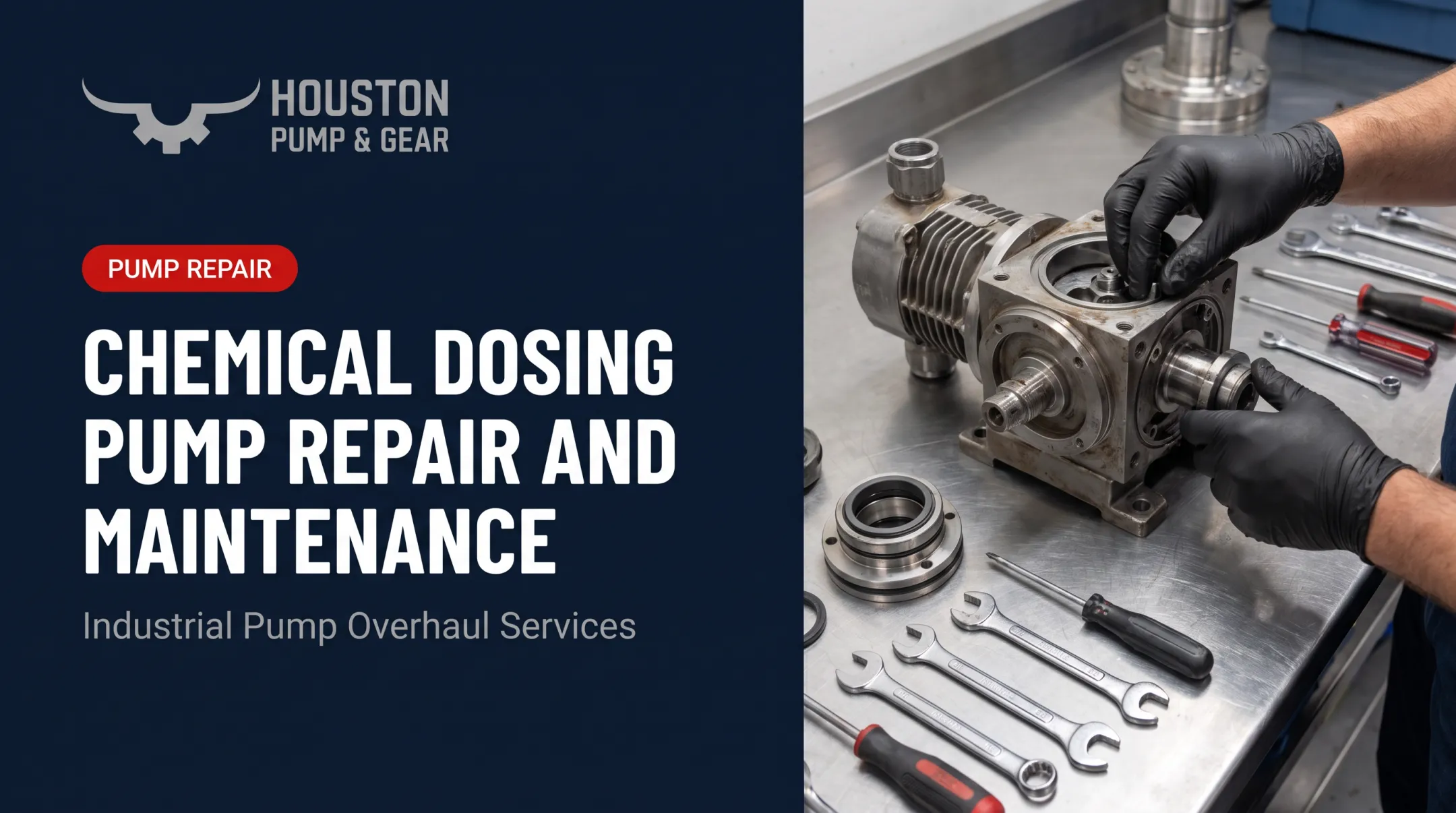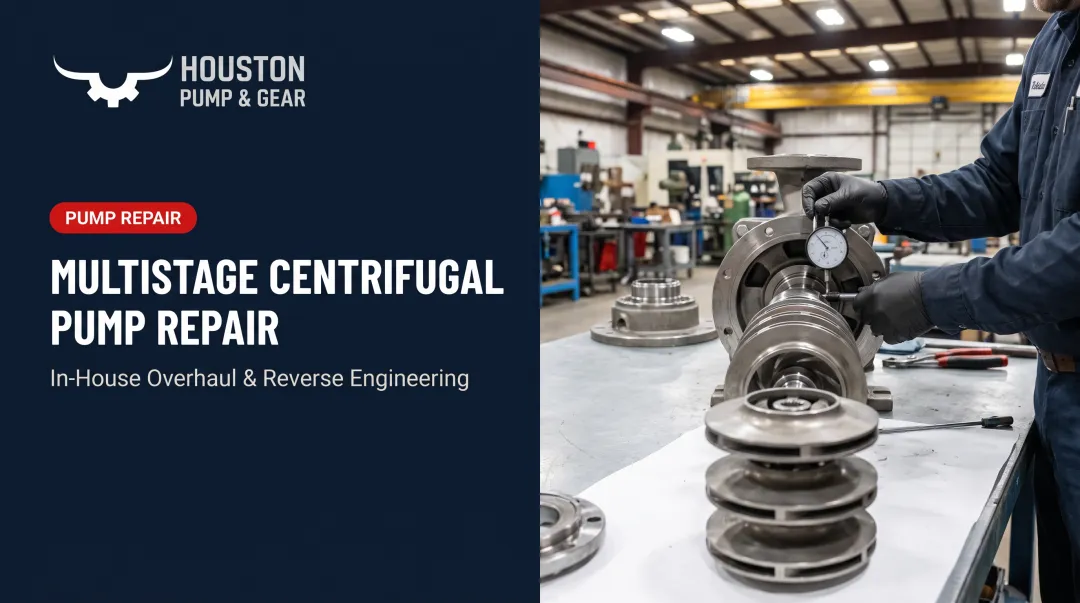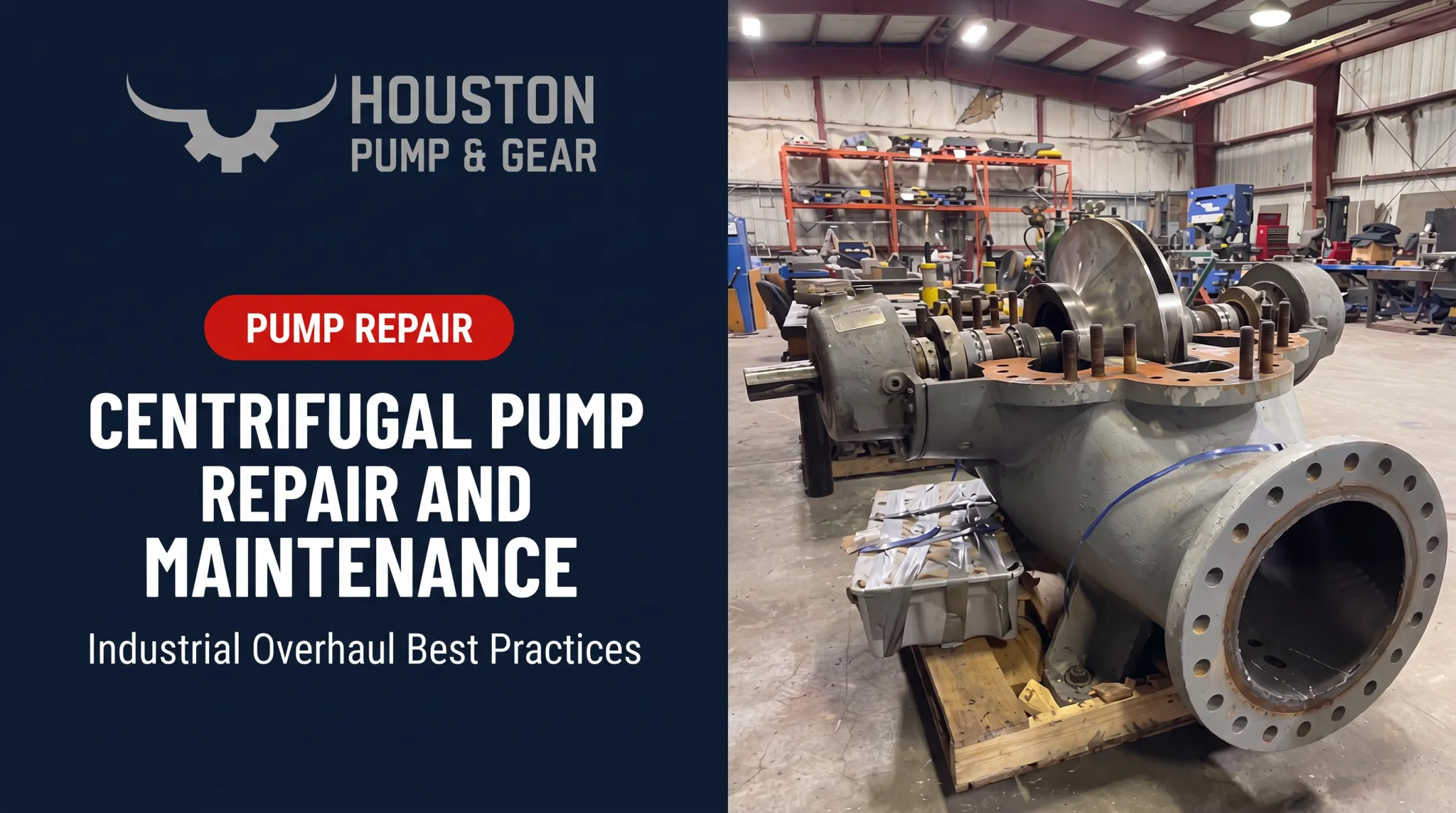

Pump failures always have traceable root causes. Identifying those causes early is what separates a five-minute fix from a multi-day outage.
This guide covers how self-priming pumps work, why they lose prime, and how a structured maintenance program prevents emergency failures. You'll also get a troubleshooting reference and guidance on when a professional industrial repair partner needs to step in.
Key Takeaways
- Fill the casing before startup — dry running wrecks seals and impellers in minutes
- Priming failures usually come from air leaks, debris, air-binding, plugged ports, or excess suction lift
- Inspect seals, bearings, and impeller clearance on condition to stop failures before shutdowns
- Sites without rebuild capacity should lock in a 24/7 repair partner before a failure hits
How a Self-Priming Pump Works
A self-priming pump is still a centrifugal pump — it moves liquid, not air. According to Gorman-Rupp's installation and maintenance manual, the priming sequence works like this:
- Fill the casing with clean liquid before startup. This retained liquid is what makes priming possible.
- Impeller rotation moves that initial liquid into the discharge chamber, separating air from fluid.
- Air vents through the discharge side, using a bypass line or automatic air-release valve so a closed check valve doesn't trap air inside.
- Recirculated fluid creates a low-pressure zone at the impeller eye, which draws fluid up the suction line and completes the prime.

Here's the part operators sometimes miss: these pumps can lift fluid from below, but they must never be started completely dry. Dry running can destroy seals and impellers within minutes, not hours.
When any step in this cycle breaks, priming fails — and most of the repair issues covered next start there.
Top Reasons Self-Priming Pumps Fail to Prime
In the field, the same root causes show up again and again. Check these five first.
Air Leak in the Suction Line
Any air leak in the pipework, fittings, or shaft seals prevents the low-pressure zone the impeller needs to draw fluid. Leaks can show up at primary or secondary seal locations, so air can enter even when one seal looks fine.
Quick checks:
- Inspect suction pipe joints and fittings for looseness or cracks
- Check shaft seals for visible wear, distortion, or misalignment
- Pressure-test the suction line if leaks aren't visually obvious
Debris Blocking the Impeller Eye
Clogged strainers and contaminated suction check valves are among the most commonly cited causes of priming failure in OEM service data. Debris reduces hydraulic capacity and can prevent the pump from generating suction at all.
Quick checks:
- Clear and inspect the suction strainer
- Verify the suction check valve seats cleanly and moves freely
- Check the impeller eye for packed solids after isolation and lockout
The Pump Is Air-Bound
Air-binding happens for three main reasons:
- Missing or blocked air release line leaves air with nowhere to escape during priming
- A pressurized discharge line (closed check valve) traps air under static head
- Excessive impeller-to-wear-plate clearance from wear or improper reassembly after a prior repair
Plugged Recirculation Port
The recirculation port keeps fluid moving through the priming chamber. If it's clogged, recirculation stops, and the impeller eye can't generate the suction needed to pull fluid up the line.
Undersized Pump or Excessive Suction Lift
Net Positive Suction Head (NPSH) Required is the minimum pressure needed to prevent cavitation. If speed or impeller diameter wasn't matched to system NPSH needs at selection, the pump may never prime reliably.
Maintenance won't correct a sizing mistake. Recheck design NPSH margin before you tear the unit down again.
These five issues cover most priming failures found on emergency calls. If you've ruled them out and the pump still won't prime, look next at deeper mechanical wear—bearing fit, impeller damage, and seal-face condition.

Preventive Maintenance Best Practices
A documented, condition-based maintenance program catches these failure modes before they cause an outage.
Routine Priming Verification
Install sight glasses or priming chambers so operators can visually confirm liquid levels before startup. Train staff to recognize dry-run sounds (a distinct rattling or cavitation noise) and shut down immediately if they hear it.
Scheduled Seal and Bearing Inspections
OEM guidance recommends the first wearing-parts inspection at 250 operating hours, with subsequent checks tied to runtime rather than the calendar. Critical applications warrant more frequent inspection. Watch for:
- Worn or dry seals
- Bearing contamination from metal shavings
- Shaft sleeve wear
Impeller and Wear-Plate Checks
Inspect clearances during scheduled shutdowns. Catching wear early prevents the air-binding condition described above, and it's far cheaper than an emergency teardown.
Monitoring Tools
- Vibration sensors flag early bearing or alignment problems
- Thermal monitors catch overheating before seal failure
- Pressure gauges reveal cavitation trends before they become audible
A practical field test: run the pump for a couple of hours, then measure vibration and temperature at multiple points with a vibration meter and infrared thermometer. Excessive heat, noise, or vibration signals it's time to call a technician.

Operator Training and SOPs
Documented startup and shutdown procedures, paired with logbooks, reduce human-error failures. Most priming complaints trace back to a step someone skipped, not a mechanical surprise.
Troubleshooting Common Self-Priming Pump Problems
Use this quick-reference table when pump performance drops.
| Symptom | Likely Cause | Remedy |
|---|---|---|
| No flow | Not enough casing liquid, air leak, or clogged strainer | Refill casing, check suction line, clean strainer |
| Low flow/pressure | Worn impeller clearance, partial air-binding | Check clearances, verify air-release path |
| Excessive noise/vibration | Cavitation, bearing wear, misalignment | Run vibration/temperature test, inspect bearings |
| Mechanical seal leakage | Worn or misaligned seal, damaged gasket | Inspect seal and gasket, replace as needed |
| Overheating | Bearing contamination, dry running, blocked recirculation | Clean bearings, verify recirculation port, check for dry-run history |
If these steps don't resolve a recurring issue, such as repeated air-binding or seal leaks that keep coming back, that's usually a sign of deeper mechanical wear. At that point, a full teardown inspection is the only way to see what's happening inside the casing—work industrial shops like Houston Pump & Gear handle during pump overhaul and mechanical seal service.
When to Call in Professional Pump Repair Services
Some failures go beyond routine maintenance. Cracked casings, severe impeller damage, motor winding faults, and repeated emergency shutdowns all require rebuild capability most in-house teams don't have on hand.
Houston Pump & Gear provides 24/7 emergency response and mobile field pickup for power plants and heavy industry across Texas and Louisiana. That includes:
- Disassembly and inspection to identify failed components
- Component repair or replacement using parts that meet or exceed OEM standards
- Precision machining, reassembly, and testing before the pump goes back into service
The same rapid-response model applies when critical rotating equipment fails—pumps included. One power plant client had a Lufkin gearbox go down in an emergency shutdown. Houston Pump & Gear sent a truck the same day and had the plant back online within 72 hours. That client has since had over 15 units serviced by the company.

The lesson: establish a relationship with a repair partner before you need one. When a pump fails at 2 a.m., you don't want to be searching for a vendor — you want to be making a call you've already made before.
Frequently Asked Questions
Can a self-priming pump run dry?
No. Self-priming pumps should never be started or run dry. Even brief dry running overheats and damages mechanical seals almost immediately, so the casing must retain enough liquid to re-establish prime after each stop.
How often should a self-priming pump be inspected?
Base inspection frequency on runtime hours, not the calendar — start with a 250-hour check on new installations. Continuous or heavy-duty industrial use warrants more frequent seal, impeller, and bearing checks.
What causes a self-priming pump to lose prime repeatedly?
Recurring suction-line air leaks, worn impeller clearances, and a degraded recirculation port are the most common repeat offenders. If basic fixes fail, internal wear is usually the root cause.
How long does a self-priming pump typically last before major repair is needed?
Service life depends heavily on duty cycle and fluid type. Consistent preventive maintenance can delay major repairs for years; neglect brings seal and impeller failure much sooner.
Is it cheaper to repair or replace a failed self-priming pump?
Repair is usually more cost-effective for casing, seal, or impeller issues. Replacement only makes sense when the motor or casing has sustained damage beyond economical repair.