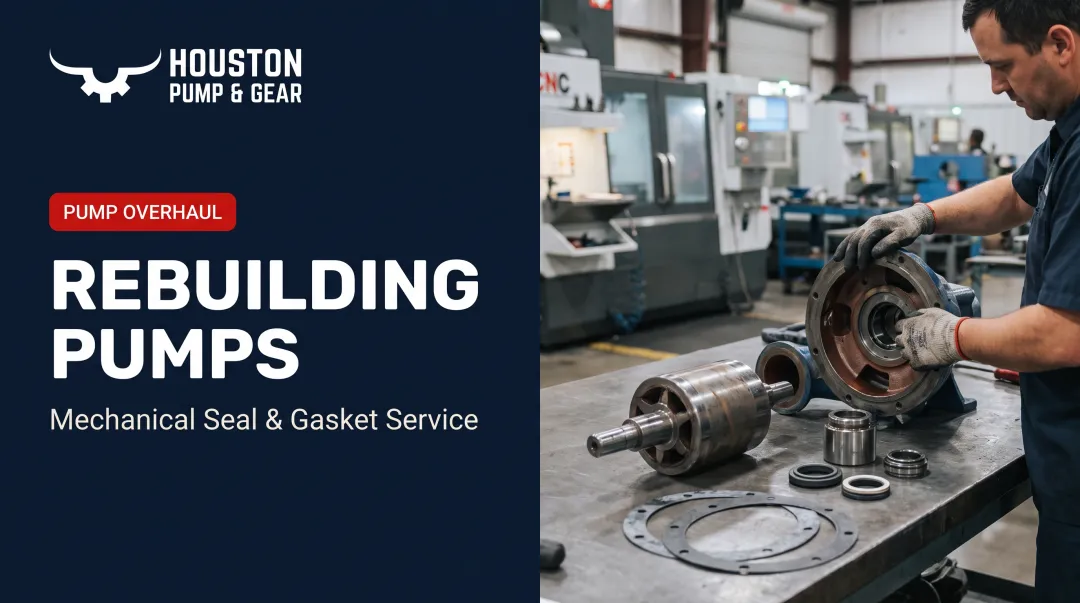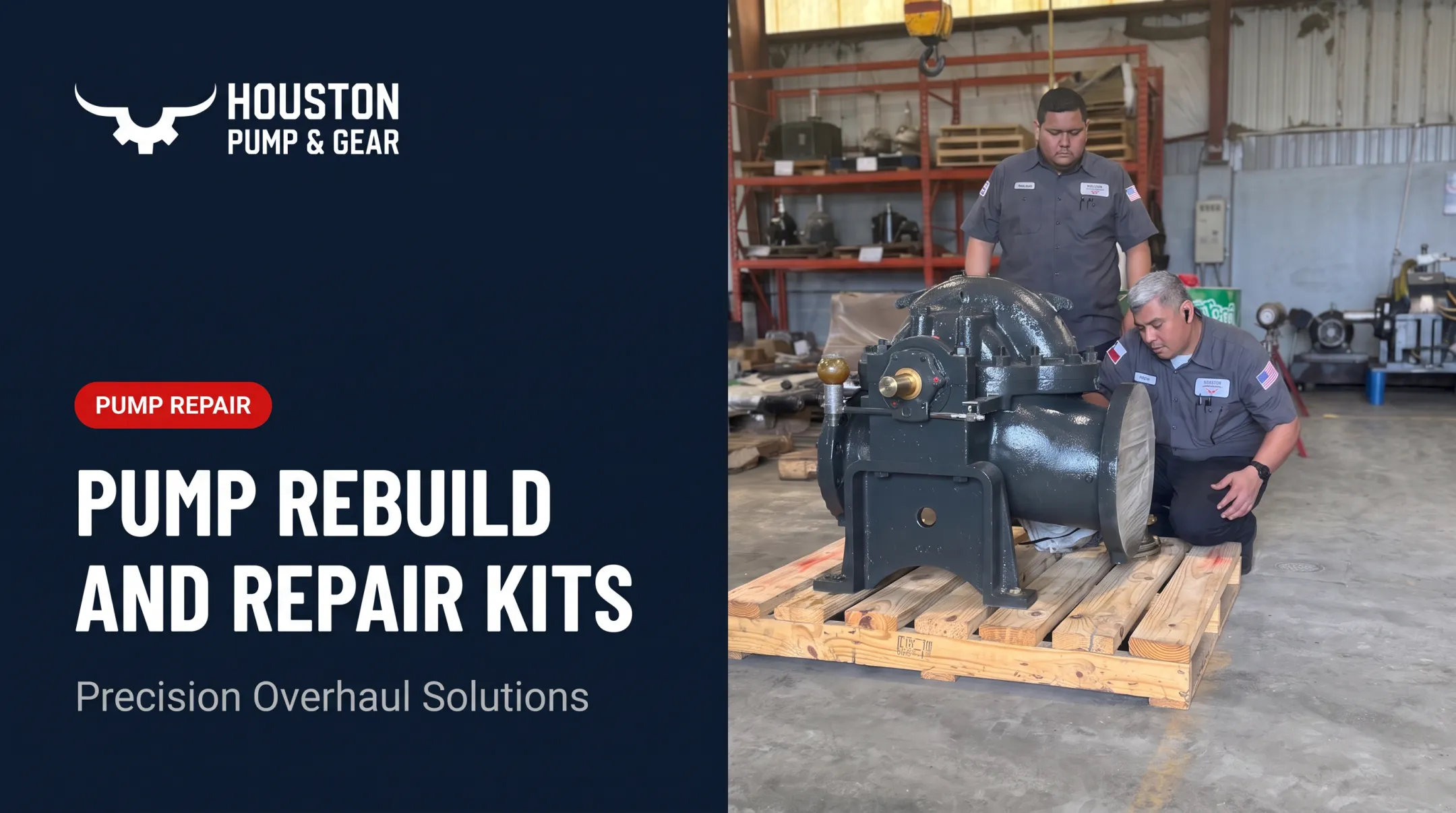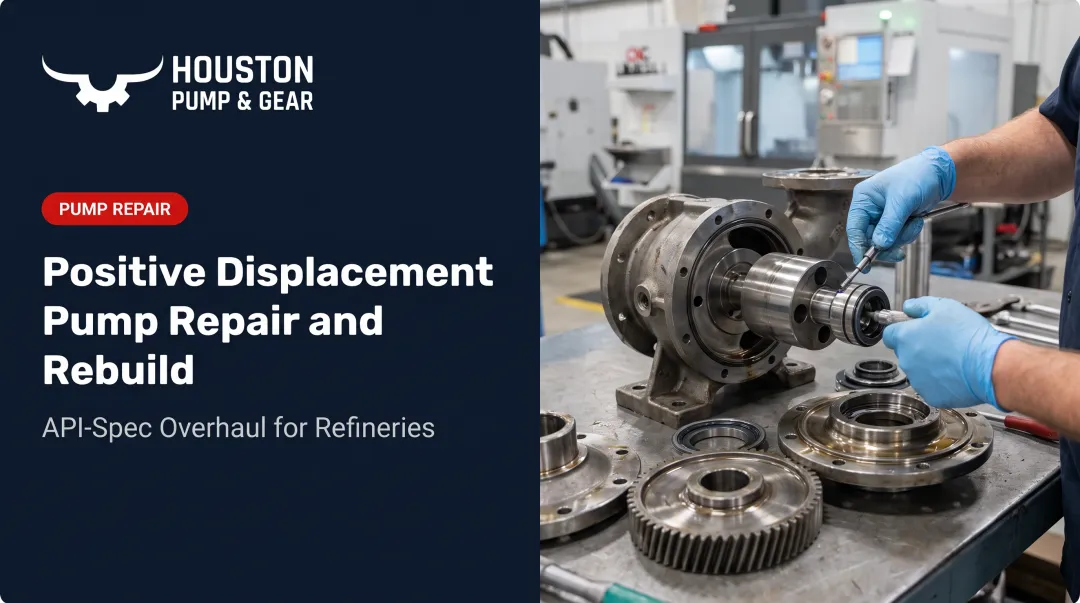

Rebuilding is often the fastest path back to full operation. When the pump housing is structurally sound, a rebuild restores OEM-level performance without the lead time and expense of a new unit. This guide walks through when to rebuild, the step-by-step process, what it costs, and when you need a professional shop instead of a weekend project.
Key Takeaways
- Rebuilding pays off when the housing and core structure are intact but internal wear parts have failed
- Rebuilds follow a clear path: diagnosis, disassembly, inspection, part replacement, reassembly, and pressure testing
- Pump type (gear, vane, or piston) drives rebuild complexity and cost
- Contamination causes 70–90% of hydraulic failures; skip inspection and failures repeat
- 24/7 emergency rebuild service cuts downtime from weeks to hours
When Should You Rebuild a Hydraulic Pump?
Not every symptom means a full rebuild, but certain signs point directly to worn internal components rather than a quick fix.
Watch for these warning signs:
- Pressure or flow loss from mechanical wear inside the pump or a faulty pressure-setting circuit
- High-pitched whining from cavitation, usually excessive suction lift or drive speed outpacing oil intake
- Knocking or a marble-like rattle, usually from aeration
- Shaft seal leaks tied to misalignment, radial loading, or inlet vacuum
- Overheating after oil level, suction lines, air bleeds, and cooler sizing check out
- Contamination around the seal area or unusual vibration, often early signs of mechanical seal or gasket failure
Catch these early and you can often rebuild before the pump fails in service.
Repair or Replace: How to Decide
The deciding factor isn't the symptom — it's the condition of the core. If the casing, shaft, and rotating element (impeller, gears, or vanes) can still be restored to spec, rebuilding almost always makes financial sense. Once the housing is cracked, warped, or worn beyond tolerance, replacement is the safer bet.
Pump type then shapes cost and complexity.
Pump Type Changes the Equation
- Gear pumps: straightforward to rebuild, though worn housing bores can make replacement cheaper than machining
- Vane pumps: rebuild-friendly thanks to modular cartridge designs
- Piston pumps: most complex; need precision measurement of pistons, valve plates, and swashplates
For power plants and other critical operations, an unplanned pump failure can force a full shutdown. Fast, accurate diagnosis — the kind Houston Pump & Gear runs around the clock — matters as much as the rebuild itself.
The Hydraulic Pump Rebuild Process, Step by Step
A proper rebuild follows a documented sequence. That discipline is what keeps new failure points from getting introduced mid-job.
- Diagnose and baseline-test. Before removal, establish current performance so you know exactly what "fixed" looks like.
- Clean and disassemble carefully. External cleaning first, then documented, indexed disassembly. Skipping this step is how contamination gets introduced mid-rebuild.
- Inspect and measure components. Valve plates, pistons, bores, and bearings get checked against OEM tolerances. Parker's own service manuals specify limits as tight as 0.002 inches on gear-hub and shaft wear.
- Classify each part. Reuse, recondition, or replace. Seals and O-rings are always replaced. Bearings usually are too, especially when paired with worn gears.
- Reassemble to spec. Correct torque, proper lubrication, and never mix new parts with worn mating components. Excess lubricant only generates more heat during operation.
- Bench test before return to service. Leak checks, no-load run-in, volumetric efficiency, and pressure hold. Houston Pump & Gear's process includes a full inspection report and final motor-strength and flow verification before any pump goes back into the field.
Scrap metal shavings found in bearings, seals, or couplings during inspection are a hard signal: those parts get replaced, no exceptions.

Rebuild Complexity by Pump Type
Not all hydraulic pumps are rebuilt the same way. Understanding the differences helps set expectations for timeline and cost.
Gear pumps are the simplest to service: matched gear sets and bearings, measurable wear limits, and straightforward disassembly. But if the housing bores are worn, machining a fix can cost more than a new unit.
Vane pumps use a modular cartridge design, so rebuilds typically involve replacing the cartridge, seals, and bearings. Alignment and rotation direction still matter. Reassembling a vane pump backward is a common and costly mistake.
Piston pumps are the most demanding. Service manuals for axial piston units cover spring-loaded rotating assemblies and lock-nut adjustments to remove axial float. After reassembly, calibrated zero-flow and pressure checks confirm the unit is back in spec. This is precision work that goes well beyond a generic seal kit.

How Much Does a Hydraulic Pump Rebuild Cost?
Pricing tracks how severe the wear is and which components need replacement or machining.
Key cost drivers:
- Pump type — piston pumps cost more to rebuild than gear or vane units
- Severity of wear — seal-only jobs cost far less than housing or shaft machining
- Whether precision components (valve plates, swashplates, bores) need replacement
- Special tooling required, such as pullers, presses, or extractors
Houston Pump & Gear bases repair-versus-replace recommendations on the actual condition of the seal, gasket, shaft sleeve, and housing — and provides a total cost estimate at no charge before work begins.
For power plants and heavy industry, downtime usually costs more than the rebuild invoice. A pump that takes three weeks through an OEM channel can erase far more in lost production than a faster turnaround at a premium price. Response time often matters more than the line-item cost difference.

DIY Rebuild vs. Professional Hydraulic Pump Rebuild Service
Choosing DIY or a professional rebuild comes down to damage scope, tools on hand, and whether you can verify the unit after assembly.
When DIY Makes Sense
A do-it-yourself rebuild is reasonable when:
- Wear is limited to seals and gaskets, not structural components
- Measured parts fall within OEM spec
- You have the right tools and mechanical experience on hand
With the proper tools, a seal replacement can be completed in an afternoon.
Red Flags That Call for a Professional Shop
Skip DIY and send the unit out when you see:
- Cracked or warped housings
- Pistons, valve plates, or swashplates worn beyond tolerance
- Repeated rebuild failures on the same unit
- No access to a proper test bench for post-rebuild verification
Damage at this level needs a professional shop. Otherwise you risk another failure weeks later.
Houston Pump & Gear runs a 24/7 emergency rebuild service for industrial pumps and gearboxes, with mobile field response and dedicated transport trucks for equipment pickup. When a client's Lufkin S2212C gearbox failed, the team sent a truck the same day, finished the rebuild, and had the plant running again within 72 hours, a turnaround OEM channels often can't match. That same rapid-response model applies when a hydraulic pump takes a critical line down.

Frequently Asked Questions
Can a hydraulic pump be rebuilt?
Yes, in most cases, as long as the housing and core structure are intact. Rebuilding replaces or reconditions worn internal parts to restore OEM-equivalent performance.
How much does it cost to have a hydraulic pump rebuilt?
Cost depends on pump type and severity of wear: seal-only jobs run far less than rebuilds requiring precision machining. Professional shops typically provide a free estimate before work starts.
How long does a hydraulic pump rebuild take?
Standard rebuilds vary by pump type and damage extent, but emergency services can compress timelines fast. Houston Pump & Gear has completed critical industrial rebuilds, including gearboxes, in as little as 72 hours.
What's the difference between rebuilding and replacing a hydraulic pump?
Rebuilding reuses the housing and replaces worn internal components; replacement means installing an entirely new unit. Rebuild when the core structure is sound; replace when it isn't.
How do I know if my hydraulic pump needs a rebuild instead of just a repair?
Persistent pressure loss, unusual noise, and ongoing leaks point to internal wear that a quick fix won't resolve. These symptoms typically mean components have degraded beyond a simple patch.
Is it better to use OEM or aftermarket parts in a hydraulic pump rebuild?
OEM or OEM-equivalent parts ensure tolerance and material compatibility, reducing the risk of premature failure after the rebuild.