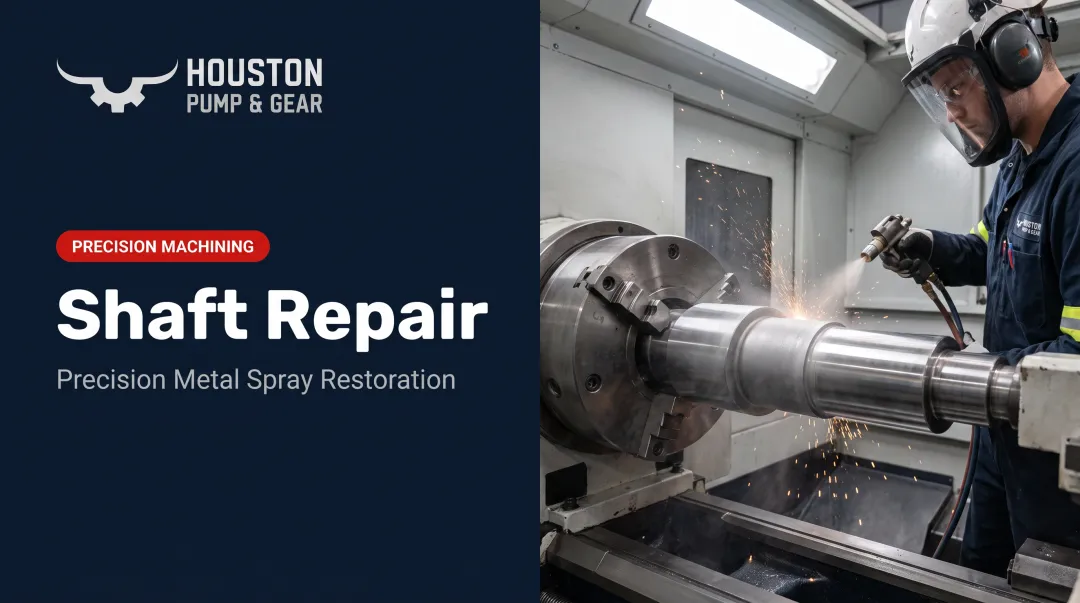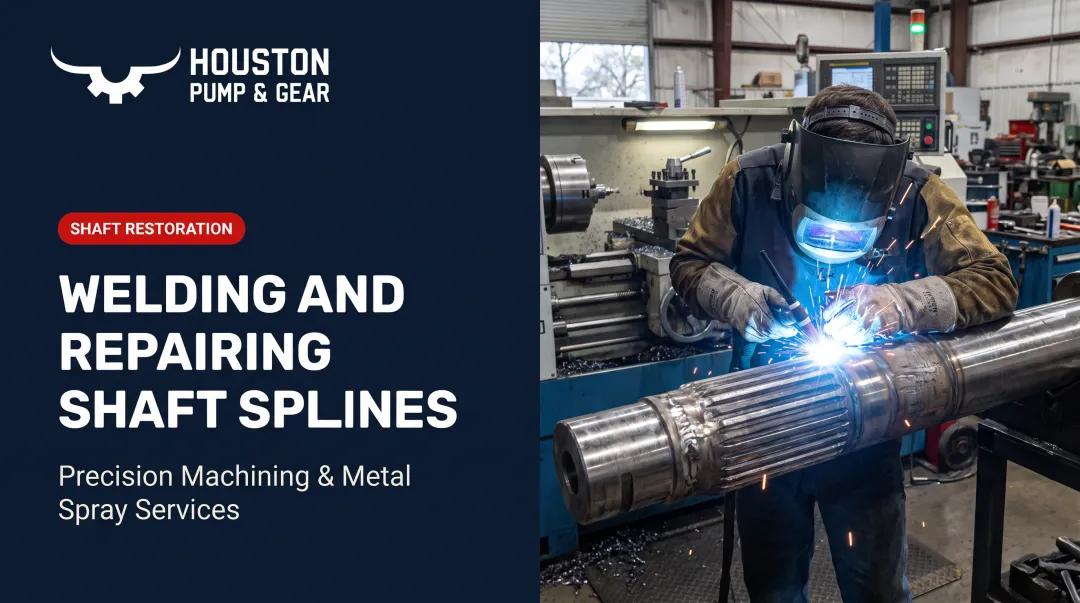

High-torque equipment like gearboxes, pumps, and PTO drives sees this constantly. Load cycling, misalignment, and lubrication gaps chew away at spline teeth over time. This article walks through the common failure patterns, a step-by-step repair process, and how to decide whether to fix or replace.
TL;DR
- Common problems: worn or rounded teeth, fretting corrosion, sheared teeth, and uneven wear from misalignment
- Repairable? Minor to moderate wear can be restored; sheared or cracked teeth usually need replacement
- Repair path: diagnose damage, fix the root cause, machine or weld-build and remachine, then load-test
- When downtime isn't an option: contact a 24/7 repair partner such as Houston Pump & Gear for rapid turnaround
What Are Splines on a Shaft?
Splines are ridges or teeth machined onto a shaft that interlock with matching grooves inside a hub, gear, or coupling. That interlocking geometry transmits torque around the full circumference of the shaft, and in flexible couplings, it can also permit a small amount of axial or angular movement.
Unlike a keyway:
- A keyway relies on a single inserted key to carry the entire load
- Splines distribute stress across multiple teeth around the shaft
- That multi-tooth path is why splines are the standard for high-torque, dynamic industrial connections
Splines are precision-fit components. The tolerance between the male shaft teeth and the female internal spline determines how well torque transfers. Once that fit degrades, backlash, vibration, and failure follow. Inspect and repair early, before minor wear becomes an emergency shutdown.

Common Problems With Splines on a Shaft
Spline failures follow predictable patterns tied to load, alignment, and lubrication. Here's what to look for.
Tooth Wear and Rounding
- Symptoms: backlash, clunking noise, loss of clean drive engagement
- Likely cause: inadequate lubrication or prolonged operation under sustained load
Fretting Corrosion
- Symptoms: reddish-brown debris around the coupling, pitting on the spline flanks
- Likely cause: micro-movement between mating splines without adequate lubrication
Tooth Shearing or Stripping
- Symptoms: sudden and complete loss of torque transmission
- Likely cause: overload, shock loading, or a pre-existing fatigue crack that propagated to failure
Misalignment-Induced Uneven Wear
- Symptoms: wear concentrated on one side of the spline profile instead of evenly distributed
- Likely cause: improper installation, a bent shaft, or coupling misalignment

Why Splines Fail (Root Causes)
Most spline failures trace back to a handful of operating conditions.
- Operational stress from cyclic or shock torque loads, common in large industrial gearboxes like the Lufkin S2212C when abrupt starts or load spikes crack teeth
- Environmental exposure to moisture, dust, or contaminants that degrade the lubricant film
- Improper installation, including forced fits or misaligned couplings that overload the pump and motor drivetrain
- Lack of preventive maintenance, so early wear goes unnoticed until damage compounds
Left unaddressed, these conditions lead to:
- Reduced torque transfer efficiency
- Vibration that damages bearings and seals downstream
- Safety risks from a sudden, uncontrolled coupling failure
- Unplanned downtime that costs far more than a scheduled repair
How to Fix Splines on a Shaft (Step-by-Step)
Fixing a spline without confirming the exact wear pattern and its cause almost guarantees a repeat failure. Here's the process that actually holds up.
Step 1: Identify the Exact Spline Problem
- Inspect visually for rounded teeth, cracks, discoloration, or metal debris
- Measure wear with go/no-go gauges or micrometers against OEM tolerances
- Check for backlash or play when rotating the mating component
- Document whether wear occurred during normal load, startup, or peak torque
Step 2: Confirm the Root Cause Category
Determine whether the failure stems from mechanical wear, fatigue cracking, or an installation/alignment error. Rule out coupling misalignment and the wrong lubricant before touching the spline itself. Skipping this step is how shops end up repairing the same shaft twice.
Step 3: Repair Based on the Diagnosed Issue
The right fix depends entirely on how bad the damage is and where it's located.
If wear is minor (surface wear or light fretting):
- Re-machine or grind the profile back to tolerance if enough material remains
- Apply proper lubrication and re-check the fit before reassembly
- Verify remaining material thickness meets the minimum design spec
If damage is moderate (tooth rounding or localized pitting):
- Use weld build-up or metal-filled epoxy to restore the worn profile, then re-cut to spec
- Specialized shops use precision broaching or hobbing to re-cut splines to OEM dimensions
- Evaluate whether in-house re-machining can restore the shaft before committing to full replacement
If damage is severe (sheared teeth, cracking, or misalignment damage):
- Replace or fully remanufacture the shaft when teeth are sheared or fatigue cracks are present
- Consider engineered sleeving for extensively damaged sections when full replacement is not required
Step 4: Test and Validate the Repair
- Check fit and engagement with the mating hub or coupling
- Run the assembly under load to confirm there's no abnormal vibration or noise
- Re-measure tolerances after machining to confirm compliance with OEM specs
- Monitor performance during an initial run-in period for signs of recurring wear

That same inspect-then-decide discipline scales to full gearbox work. At Houston Pump & Gear, overhaul starts with disassembly, cleaning, and inspection, then mag particle dye check and, when needed, x-ray or magnaflux on gears and shafts before choosing repair versus rebuild.
When Should You Fix vs Replace Splines on a Shaft?
The right call depends on how critical the shaft is, how much material remains, and how much downtime you can absorb.
| Scenario | Fix | Replace |
|---|---|---|
| Light surface wear, non-critical shaft | Re-machine and lubricate | Only if the shaft is near end of service life |
| Moderate wear on a critical gearbox shaft | Weld build-up and re-cut by a specialized shop | If remachining would drop below minimum material specs |
| Sheared or cracked teeth | Rarely viable — high risk of recurring failure | Replace — especially when safety or continuous operation is at stake |
| Emergency shutdown | Temporary repair only if downtime is intolerable and OEM parts aren't available | Full replacement via rapid-turnaround emergency service |
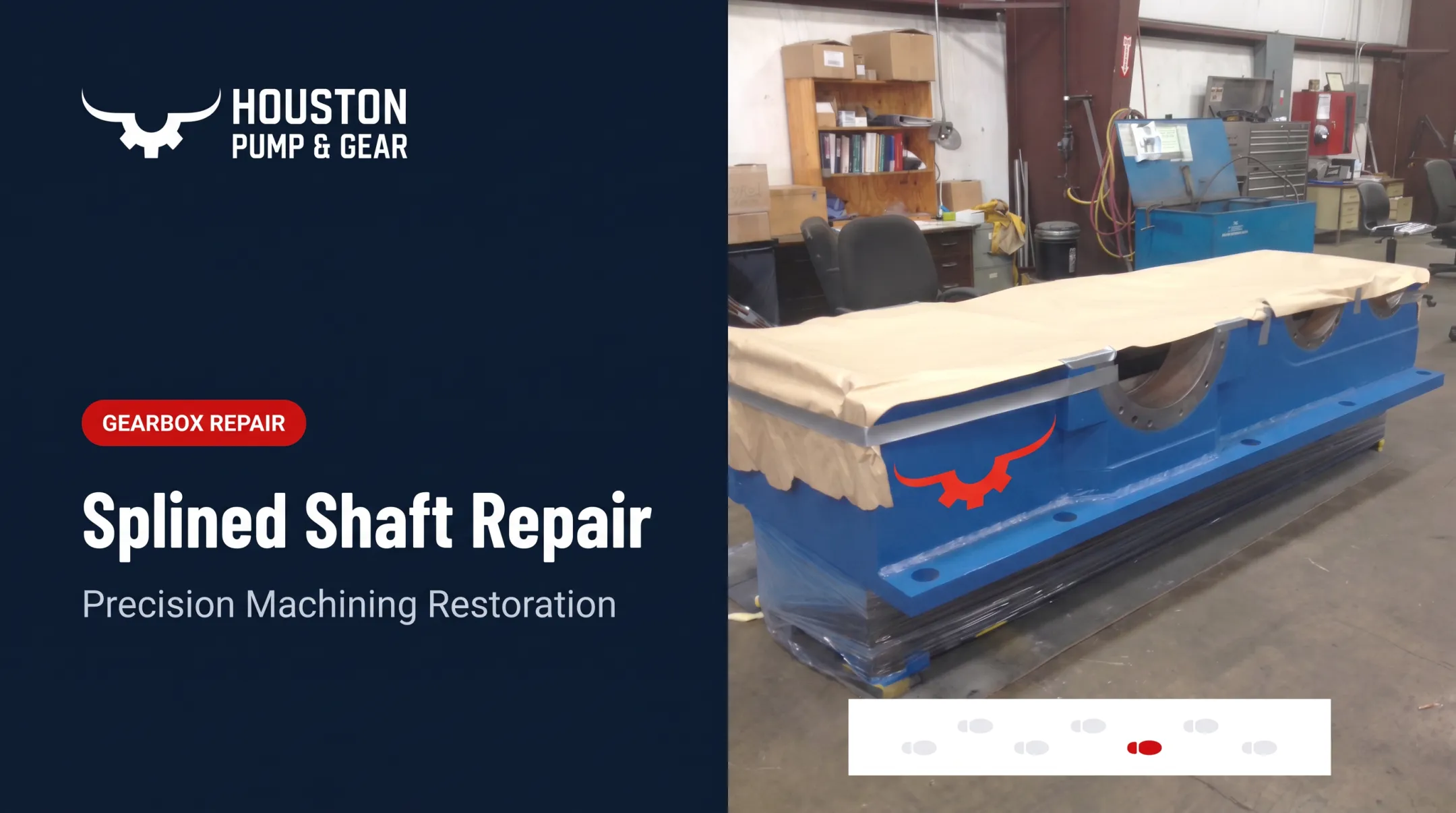
That last row isn't theoretical. Houston Pump & Gear picked up a failed Lufkin S2212C gearbox from a power plant the same day it went down and had the unit back in service within 72 hours. That kind of turnaround keeps a plant from bleeding money during an unplanned outage.

Common Mistakes and Preventive Measures for Spline Repair
Most spline repair failures come from skipped checks, not from the cutting method itself. Catch these mistakes before they send a shaft back out of service.
Mistakes to avoid:
- Re-cutting splines without confirming remaining material thickness
- Skipping load testing after the repair is complete
- Using mismatched or non-OEM-spec replacement components
- Ignoring lockout/tagout and safety procedures during shaft removal
Preventive measures:
- Schedule spline and coupling inspections during planned maintenance windows
- Maintain lubrication schedules specific to the application and load type
- Ensure correct shaft-hub alignment during every installation
- Train maintenance staff to recognize early wear signs and log inspection history
Conclusion
Most spline problems are fixable if you catch them early and diagnose the actual root cause instead of guessing. Accurate diagnosis determines whether repair or replacement delivers better long-term value.
For critical industrial equipment, partnering with an experienced provider offering 24/7 response minimizes both downtime and the odds of a repeat failure. Houston Pump & Gear's precision machining and shaft restoration services, backed by 20+ years servicing gearbox brands like Falk, Flender, and Lufkin, focus on durable first-time repairs that hold up under industrial load.
Frequently Asked Questions
Can splines on a shaft be repaired?
Minor to moderate wear can often be repaired via re-machining, weld build-up, or re-cutting. Severely sheared or cracked splines typically require replacement.
How expensive is it to repair a drive shaft?
Cost varies widely based on damage severity, shaft size, and repair method. A shop assessment gives a far more accurate quote than any generic range.
What is a female spline called?
The female spline is the internal spline, typically machined inside a hub, gear, or coupling that receives the male (external) splined shaft.
How do you know if a spline is too worn to repair?
Gauge remaining tooth thickness against OEM minimum tolerances. Material below spec usually means replacement is the only safe option.
Can a worn spline shaft cause equipment damage if not repaired?
Yes. Unaddressed spline wear increases backlash and vibration, which damages bearings, seals, and couplings over time.
How quickly can a damaged gearbox spline shaft be repaired?
Turnaround depends on damage severity and part availability. Experienced emergency shops can finish critical repairs in days. Houston Pump & Gear restored a power plant gearbox to service within 72 hours of an emergency shutdown.