
Power transmission gearboxes are the unsung workhorses inside power plants, refineries, and heavy industrial equipment. They quietly control speed and torque around the clock, until something goes wrong.
This guide covers what a gearbox actually is, the main types you'll find on a plant floor, why they fail, and how facilities across Texas and Louisiana get back online fast when the worst happens.
Key Takeaways
- Gearboxes control speed, torque, and direction between shafts in power generation, oil & gas, and manufacturing.
- Lubrication breakdown, misalignment, overloading, and contamination cause the majority of preventable gearbox failures.
- Whining, grinding, or metal shavings in the oil are early warning signs that shouldn't be ignored.
- Complex models like a Lufkin S2212C can return to service in as little as 72 hours with the right repair partner.
- True 24/7 availability and heavy-duty model experience matter more than price alone when choosing a repair partner.
What Is a Power Transmission Gearbox?
A power transmission gearbox is a mechanical device that uses a set of gears to change the speed, torque, or direction of rotational force moving between an input shaft and an output shaft. Instead of a motor driving equipment directly at one fixed speed and torque, the gearbox translates that power into whatever the driven machine actually needs.
The Parts That Do the Work
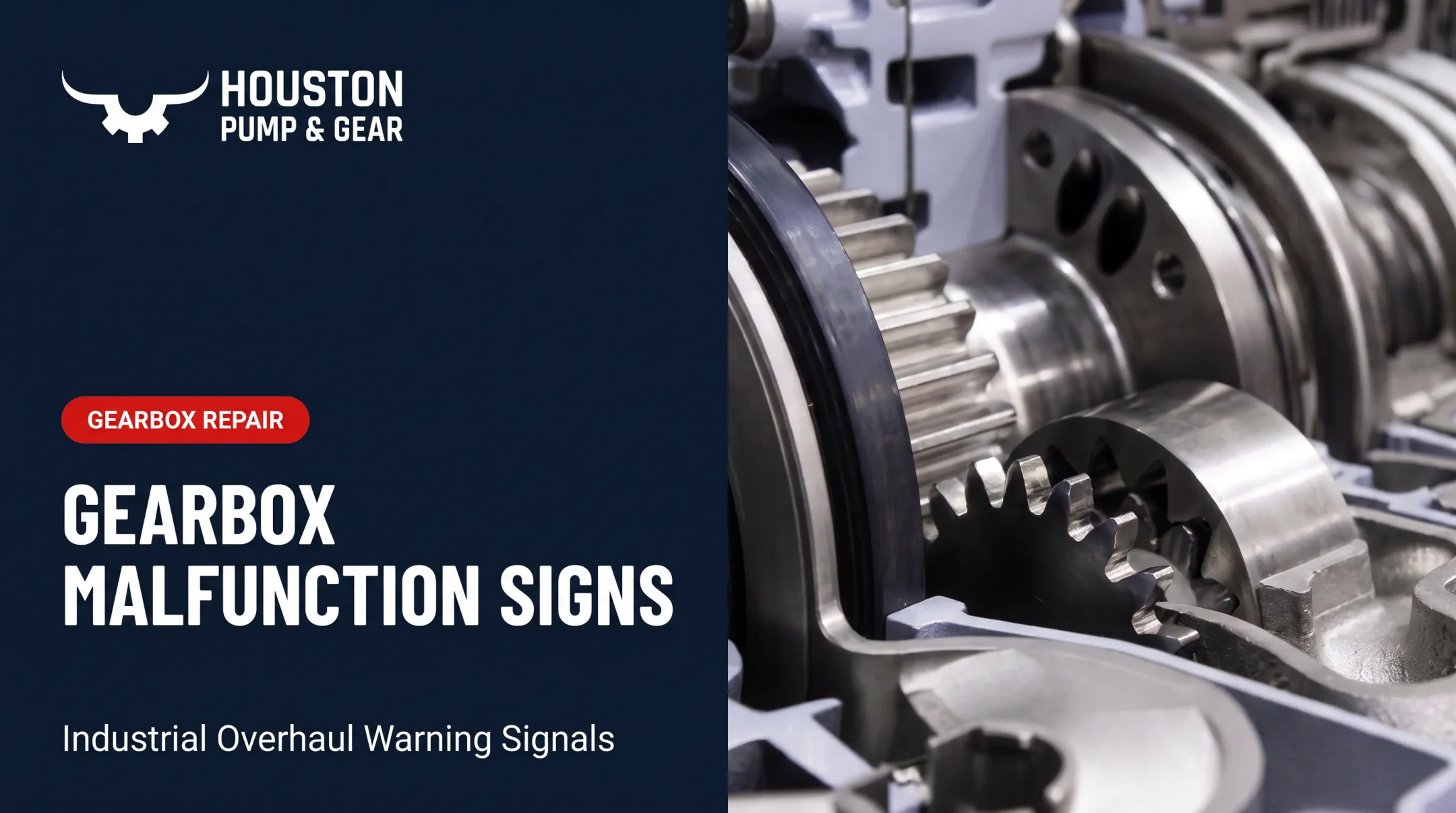
Every industrial gearbox relies on a handful of core components working in sync:
- Gears – mesh to multiply torque, change speed, or reverse rotation direction
- Input shaft – receives rotational power from the motor or prime mover
- Countershaft(s) – intermediate shafts that carry gear sets between input and output
- Main/output shaft – delivers the final adjusted speed and torque to the driven equipment
- Bearings – support the shafts, absorb radial and thrust loads, and keep everything aligned

What a Gearbox Actually Does
Functionally, gearboxes handle three jobs: increasing or decreasing rotational speed, multiplying or reducing torque, and changing the direction power flows between shafts. A cooling tower fan, a conveyor drive, and a turbine speed increaser all rely on this same basic principle, just tuned to very different ratios and loads.
Gearboxes show up everywhere in heavy industry, not just vehicles. Power generation, oil & gas processing, mining, and steel manufacturing all depend on them—often under continuous, high-load conditions where service life matters.
There's no single universal "design life" number that applies to every industrial gearbox. But a well-maintained unit can run for decades.
Sumitomo Drive Technologies documented a retractable-roof gearbox with more than 24 years of service whose reduction and bevel components were still reusable after only routine bearing and seal replacement. That longevity depends heavily on lubrication, load conditions, and maintenance history.
Even a well-engineered gearbox eventually needs professional inspection, repair, or rebuild to keep its designed reliability. Skipping that step is how a minor wear issue turns into a 2 a.m. emergency.
Common Types of Industrial Power Transmission Gearboxes
Not every gearbox is built the same way, and the right type depends entirely on the application's speed, load, and noise requirements.
Spur Gearboxes
Straight-cut teeth make these the simplest and most efficient design, with reported efficiency ranging from 98% to 99.5% per gear stage. They work well at moderate speeds but tend to run louder than other designs because the teeth engage all at once.
Helical Gearboxes
Angled teeth engage gradually instead of all at once, which means smoother operation, greater load capacity, and higher tolerance for speed. That's why helical designs are common in heavy-duty industrial drives where noise and vibration matter.
Bevel Gearboxes
Conical gears transmit motion between intersecting shafts, often at a 90-degree angle. These are the standard choice whenever a system needs to physically change the direction of power flow.
Worm Gearboxes
A screw-and-wheel design delivers high reduction ratios in a single stage and offers self-locking capability, meaning the output can't backdrive the input. That makes worm gearboxes ideal for conveyors, elevators, and lift applications where holding position matters.
Planetary (Epicyclic) Gearboxes
Sun, planet, and ring gears share the load across multiple paths, packing high torque capacity into a compact footprint. Power generation equipment and heavy machinery favor this design when space is tight but torque demands are high.

Model complexity varies widely across brands and configurations. Houston Pump & Gear's team has direct, hands-on experience servicing complex industrial models like the Lufkin S2212C, where specialized repair skill matters more than a generic parts swap.
Why Do Power Transmission Gearboxes Fail?
Most gearbox failures trace back to a small set of root causes, and nearly all of them are preventable with the right monitoring.
- Lubrication breakdown: Insufficient or degraded lubricant accelerates wear on gear teeth and bearings. SKF reports that poor lubrication accounts for more than 36% of premature bearing failures, a top driver of unplanned downtime.
- Misalignment: Shaft or coupling misalignment creates uneven load distribution across the gear face, generating vibration and premature tooth or bearing wear.
- Overloading and shock loads: Running beyond rated torque, or a sudden load spike during a power plant startup or shutdown cycle, stresses gear teeth and shafts well past their design margin.
- Contamination: Dirt, moisture, or metal debris entering the housing accelerates pitting, scuffing, and micro-pitting on gear surfaces.
- Normal fatigue and wear: Even a properly maintained gearbox eventually experiences tooth fatigue fracture and bearing wear simply from cumulative operating hours.
In a power plant or heavy industry setting, an unplanned gearbox failure doesn't just take one machine offline. It can trigger a full emergency shutdown across connected systems. When something sounds off, rapid diagnosis and repair limit how far that shutdown spreads.
Warning Signs Your Gearbox Needs Professional Attention
Catching these signals early is almost always cheaper than an emergency teardown.
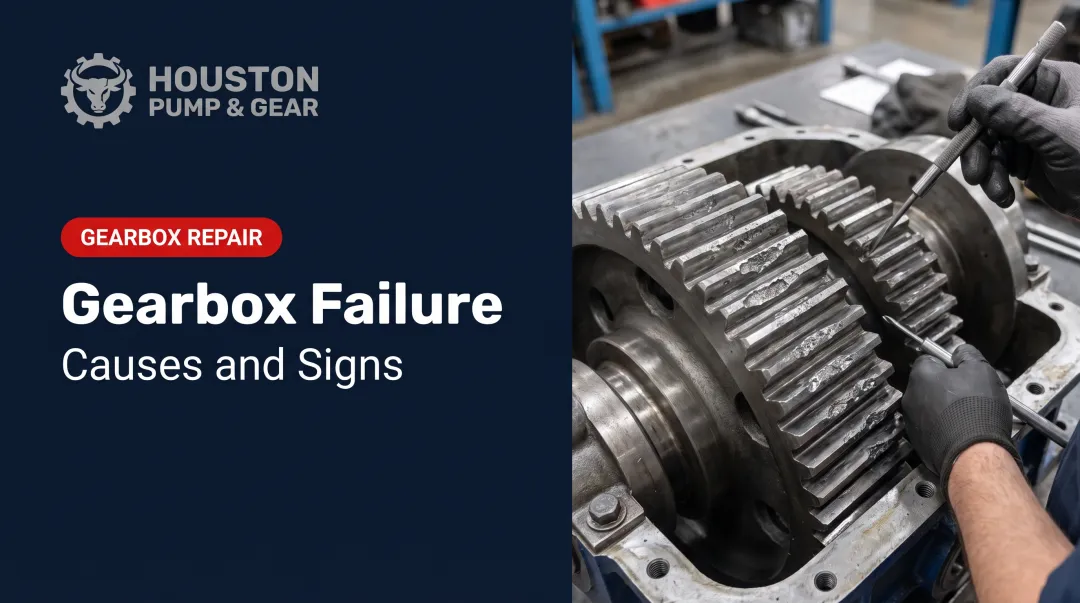
- Unusual noise or vibration: Whining, grinding, or knocking sounds often signal gear tooth damage or bearing wear well before catastrophic failure occurs.
- Oil leaks, discoloration, or metal shavings: Contaminated or dark lubricant, or visible metal shavings, indicate internal wear or seal failure that warrants immediate inspection.
- Overheating or inconsistent output: Heat above normal operating range, or inconsistent speed and torque, usually points to component wear or misalignment.
None of these signs mean the unit is beyond saving. They mean it's time to bring in a repair specialist before a small problem becomes a plant-wide shutdown.
Emergency Gearbox Repair in Action: A Real-World Case Study
In 2014, Vince Parker, a Project Manager at Houston Pump & Gear, met a power plant operations contact at an industrial convention. They covered Houston Pump & Gear's 24/7 emergency capabilities—details that would matter sooner than either expected.
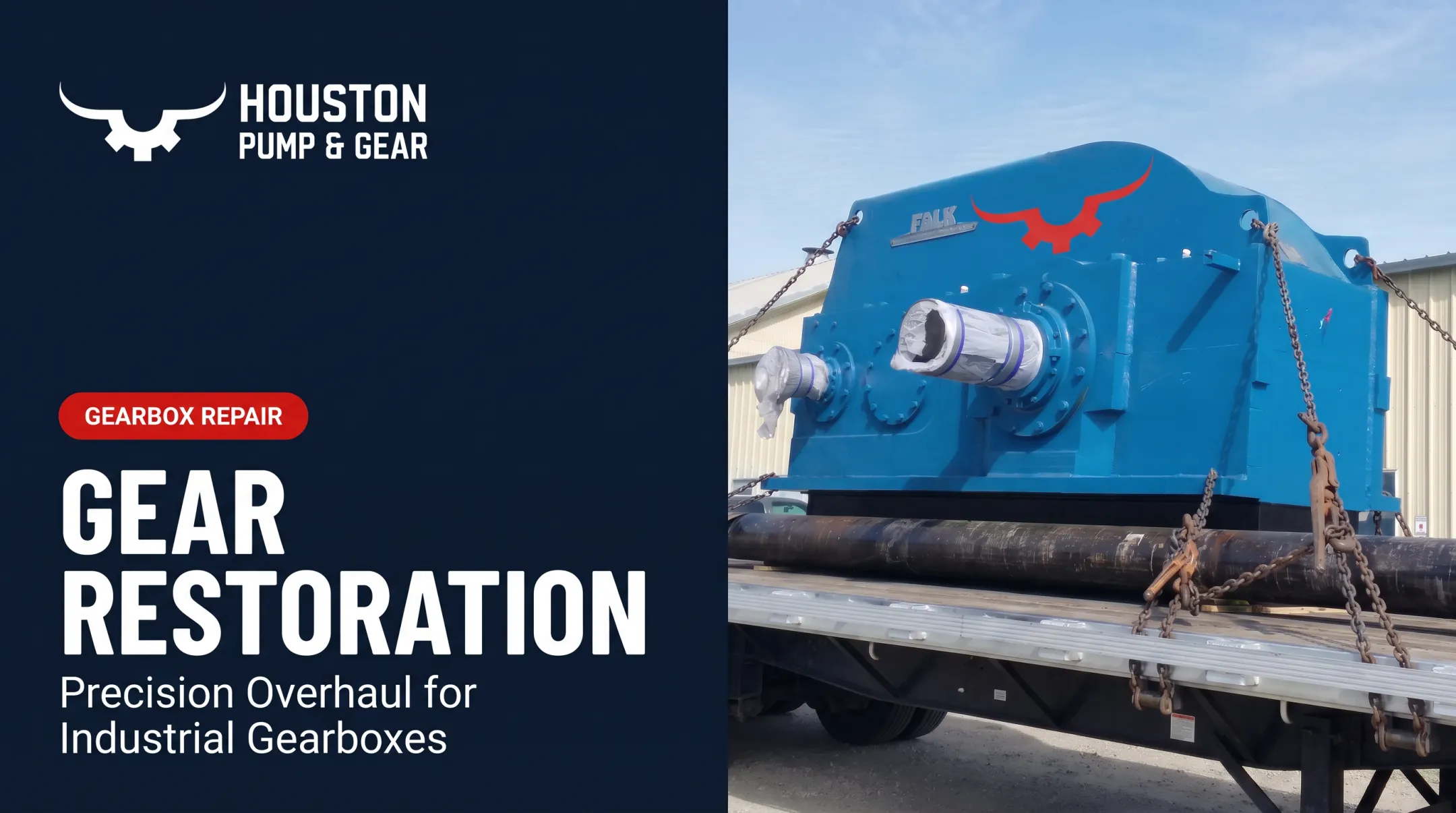
Later that year, the plant's Lufkin S2212C gearbox failed, triggering an emergency shutdown. Remembering the conversation with Vince, the plant's team called Houston Pump & Gear the same day.
Here's what happened next:
- A dedicated transport truck was dispatched the same day the call came in.
- The failed Lufkin S2212C was picked up and transported to Houston Pump & Gear's facility.
- Technicians inspected, repaired, and tested the unit at the Houston facility.
- The gearbox was returned and the plant was back up and running 72 hours after the initial failure.

That single emergency response turned into a long-term relationship. Vince remained the primary point of contact, and the plant has since had more than 15 units serviced by Houston Pump & Gear.
This kind of turnaround isn't possible without dedicated transport capability and genuine round-the-clock availability across Texas and Louisiana. When a plant is down, "we'll get to it Monday" isn't an answer heavy industry can accept.
Choosing the Right Partner for Industrial Gearbox Repair
Not every repair shop can handle complex, heavy-duty industrial gearboxes. Picking the wrong one can turn a short outage into a much longer shutdown.
When evaluating partners, focus on three practical factors:
- Proven experience with specialized units like the Lufkin S2212C, not just generic gearmotors — that familiarity speeds diagnosis and repair accuracy
- True 24/7 emergency availability with mobile field response, since failures rarely hit during business hours and next-day pickup adds costly downtime
- Long-term reliability and clear communication, verified through repeat customers and actual turnaround track records rather than marketing claims
Houston Pump & Gear's 4.5-star rating and repeat power plant clients reflect that consistency. For emergency or scheduled gearbox service across Texas and Louisiana, contact the team at +1 832-603-9663.
Frequently Asked Questions
What is a transmission gearbox?
A transmission gearbox is a mechanical device that uses gears to change the speed, torque, or direction of rotational power between an input and output shaft. In industrial settings, it drives equipment such as pumps, fans, conveyors, and process machinery.
What are three types of gearboxes?
Helical gearboxes handle high-speed, noise-sensitive industrial drives. Bevel gearboxes change direction between intersecting shafts, often at 90 degrees. Worm gearboxes deliver high reduction ratios with self-locking capability for conveyors and lifts.
How long does an industrial gearbox repair typically take?
Timelines vary based on damage severity and model complexity. Minor repairs may take a few days, while full rebuilds requiring custom machining can take 1-2 weeks. Emergency repairs on critical equipment have been completed in as little as 72 hours.
How often should an industrial gearbox be serviced or lubricated?
Follow manufacturer-specified lubrication intervals as a baseline, then adjust based on duty cycle, load, and operating environment. Periodic oil analysis helps establish the right inspection frequency for your specific equipment.
What causes most power transmission gearbox failures?
Lubrication breakdown, misalignment, overloading, and contamination account for the majority of failures. Normal fatigue from cumulative operating hours also plays a role, even on well-maintained units.
Can a damaged industrial gearbox be repaired, or does it need full replacement?
Most gearboxes can be rebuilt or repaired cost-effectively by experienced technicians, often at 40-50% of the cost of new equipment. Full replacement is typically only necessary when casing or shaft damage is severe.