
Wear, poor installation, harsh operating conditions, and skipped maintenance all cause predictable failures over time. The good news: most problems follow patterns you can diagnose and fix. This guide covers the common failure modes, a step-by-step troubleshooting process, when to repair versus replace, and when to call a 24/7 specialist like Houston Pump & Gear.
TL;DR
- Seal/packing leaks, cavitation, pressure loss, and bearing or motor failure cause most high-pressure pump downtime
- Repair vs. replace: most mechanical and seal issues are fixable when the housing and shaft stay intact
- Work the sequence: diagnose symptoms, isolate the root cause, apply the fix, then test under load
- Call a specialist when troubleshooting stalls, downtime risk is high, or the unit supports critical operations
What Is a High Pressure Pump?
A high pressure pump moves liquids at elevated pressures for demanding industrial work. Common applications include boiler feed water, cooling systems, and refinery process lines.
These pumps generate force through one of two designs:
- Reciprocating (piston/plunger) pumps: Use plunger or piston strokes for positive displacement. Common in hydraulic pressure testing and sprinkler systems.
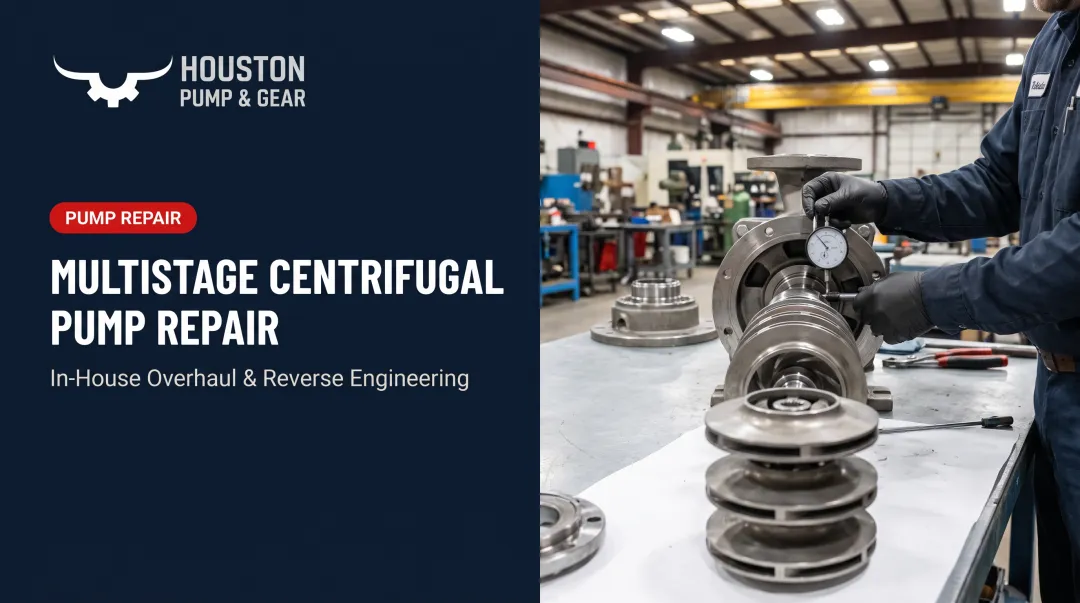
- Multistage centrifugal pumps: Stack multiple impeller stages in series to build pressure incrementally. Widely used to supply high-pressure water to power plant boilers.
Both designs are precision systems. They degrade under continuous stress and need scheduled maintenance to stay at spec. Skip that maintenance, and failure is inevitable.

Common Problems With High Pressure Pumps
Most high pressure pump failures trace back to a handful of predictable patterns tied to seals, pressure, and drivetrain components.
Loss of Pressure or Output
Symptoms: inconsistent flow, reduced discharge pressure, gauge fluctuations Likely cause: worn impeller or plunger, internal leakage, or clogged strainers. Blocked suction strainers and plugged breathers are documented cavitation triggers, and cavitation itself often starts as an unassuming pressure problem before it escalates.
Seal and Packing Leaks
Symptoms: visible fluid leakage, dripping at the pump housing Likely cause: worn mechanical seals, misalignment, or excessive vibration. Bearings and mechanical seals are the two primary failure modes in centrifugal pumps. One industrial case attributed 45% of pump failures to mechanical seal leaks alone, according to Reliabilityweb's pump reliability research. Packing joints should sit at a 90-degree angle to the preceding joint to help prevent this kind of leakage.
Excessive Noise or Vibration
Symptoms: grinding, knocking, or whining sounds during operation Likely cause: cavitation, bearing wear, or shaft misalignment. Higher-than-normal operating temperature paired with unusual noise is an early cavitation signal worth acting on immediately.
Overheating or Motor/Gearbox Failure
Symptoms: hot casing, tripped breakers, unusual smells Likely cause: lubrication breakdown, electrical faults, or gearbox wear. Drivetrain issues in units like Lufkin gearboxes compound quickly if left unchecked.

Why High Pressure Pumps Fail (Root Causes)
Failures rarely come out of nowhere. They stem from real-world conditions stacking up over time:
- Operational stress from continuous high-load cycles in power generation
- Environmental exposure to heat, chemicals, or corrosive fluids
- Improper installation or misalignment during setup, including brief coupling misalignment
- Lack of preventive maintenance and inspection schedules
Left unaddressed, these conditions compound into larger problems:
- Reduced efficiency and higher energy costs
- Downstream quality or process issues
- Safety or regulatory compliance risks at industrial sites
- Costly unplanned downtime
Production losses alone can run $1,000 per hour, and replacing or overhauling a single failed pump can cost upwards of $25,000.
One manufacturing client that committed to regular maintenance cut unplanned pump services by 40% and repair costs by 25%, while trimming energy consumption by 15%. Preventive care costs far less than emergency repairs and full overhauls.

How to Fix a High Pressure Pump (Step-by-Step)
Attempting repairs without diagnosing the actual problem wastes time and risks recurring failures. This process identifies the real issue, isolates the root cause, and applies the right fix so the failure does not return.
Step 1: Identify the Exact Problem
- Observe visible symptoms: leaks, noise, vibration, overheating, output loss
- Note performance deviations from baseline operating data
- Check alarms, gauges, or control system indicators
- Document when the issue occurs — at startup, under load, or during continuous run
Step 2: Confirm the Root Cause Category
Determine whether the issue is mechanical, electrical, control-related, or environmental/operational. Rule out external factors like power supply problems or fluid contamination before touching a wrench.
Why this matters: Replacing parts before confirming the cause wastes money and invites repeat failures.
Step 3: Fix the Pump Based on the Identified Problem
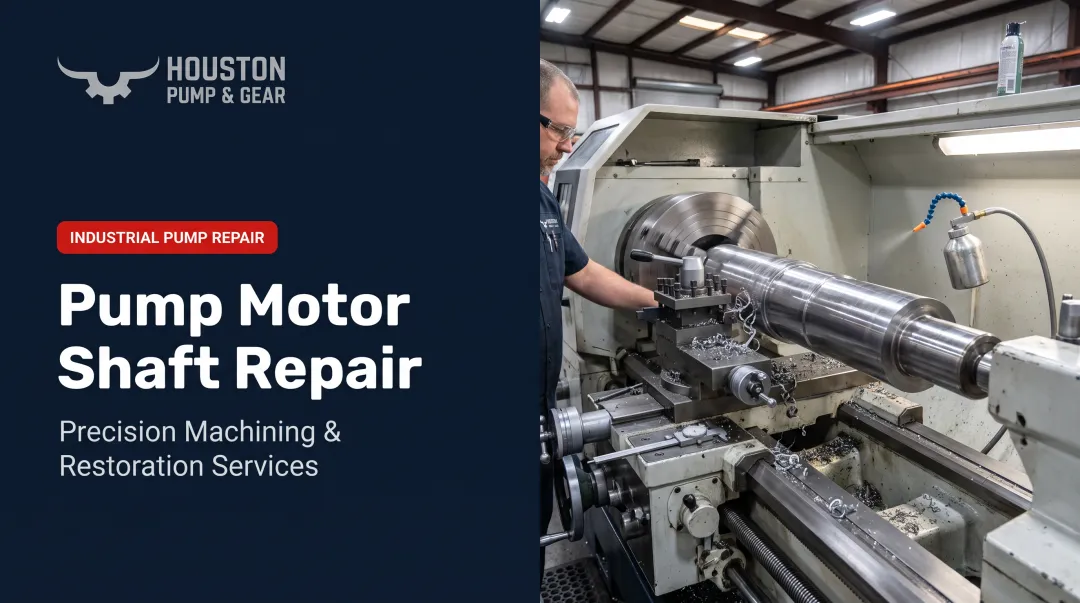
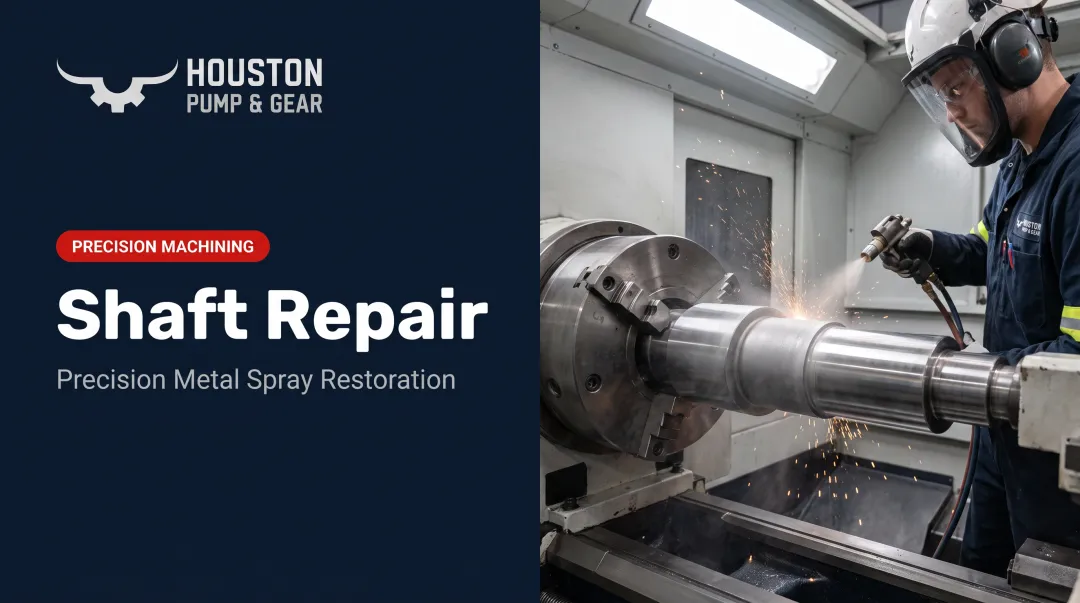
Mechanical issues (worn seals, damaged impellers, misaligned shafts):
- Replace seals or bearings, realign the shaft, restore lubrication
- Check torque specs and clearances before reassembly
Electrical issues (motor windings, sensors, wiring):
- Inspect and repair failure points
- Reset or recalibrate systems after the repair
Control or configuration issues (erratic pressure readings, sensor mismatch):
- Reset or reconfigure settings
- Avoid overwriting correct operating parameters in the process
Environmental or operational factors (overheating, poor fluid quality, overload):
- Clean components, improve cooling, adjust load
- Make lasting changes so the same conditions don't recur
Step 4: Test and Validate the Fix
- Run the pump under normal and peak load conditions
- Monitor pressure output, vibration, and temperature at multiple points against manual specs
- Confirm performance matches OEM benchmarks

For critical industrial units, rapid mobile response and pickup compress this timeline significantly. Houston Pump & Gear completed a 72-hour emergency turnaround on a Lufkin S2212C gearbox, restoring a power plant from full shutdown. The same 24/7 pickup and repair model applies when a high-pressure pump fails.
When Should You Fix vs Replace a High Pressure Pump?
Weigh repair cost, downtime risk, and long-term performance before deciding.
| Issue | Fix if... | Replace if... |
|---|---|---|
| Minor seal/gasket wear | Housing and shaft are intact | Leakage caused extensive internal corrosion |
| Cavitation/impeller damage | Casing is undamaged | Cavitation has pitted the casing extensively |
| Motor/gearbox failure | Core components are salvageable | Rebuild costs approach new-unit pricing |
| Aging/obsolete equipment | OEM parts remain available | Model is discontinued or repeatedly failing |
Practical notes:
- A failure can sit deeper in the pump even when the visible seal looks fine—not all seals are easily accessible
- Damaged impellers almost always need replacement; cavitation damage around the impeller rarely responds to patching
- When OEM parts aren't available, reverse engineering can restore obsolete pumps without a full replacement, often at a fraction of new-unit cost
Common Mistakes to Avoid When Fixing a High Pressure Pump
Downtime pressure pushes crews to cut corners. These mistakes turn a straightforward repair into a repeat failure:
- Treating symptoms, not causes: tightening a leaking fitting instead of diagnosing why it leaks
- Skipping post-repair testing under actual load: a pump that looks fine at idle can fail the moment it hits peak demand
- Using incompatible or non-OEM parts: seal and pump materials must match; the wrong flushing fluid can ruin an otherwise sound seal
- Ignoring lockout/tagout and pressure-release procedures: verify isolation and deenergization before work begins, per OSHA's hazardous energy control standard
Preventive Measures to Avoid Future Issues
Preventive maintenance costs less than emergency repair, every time. Build these habits into your operation:
- Regular inspections: After any repair, run the pump a few hours, then check vibration and temperature against the manual baseline
- Scheduled maintenance aligned with manufacturer guidelines, not just reactive fixes
- Proper operating conditions: Stay inside the pump’s intended range; overloading, dry running, or incompatible fluids often cause irreversible damage
- Staff training and documentation so operators catch early warning signs before failure
- A 24/7 repair partner for scheduled service and emergency backup when issues escalate
Update the maintenance plan after every repair. Interval checks keep small issues from becoming five-figure emergencies.
Conclusion
Most high pressure pump issues are fixable if caught early and diagnosed accurately. Accurate root-cause diagnosis—not parts swapping—is what makes a repair last.
Knowing when to fix versus replace protects both uptime and budget. When a pump fails without warning, a partner that can mobilize fast and restore equipment often separates a short disruption from a six-figure shutdown.
Houston Pump & Gear provides 24/7 industrial pump repair with rapid pickup and turnaround for power plants and heavy industry facilities that need units back online quickly.
Frequently Asked Questions
What causes a high pressure pump to go bad?
Continuous operation wears down seals, bearings, and impellers over time. Cavitation, misalignment, and skipped preventive maintenance accelerate the process significantly.
How can I tell if a high pressure pump is bad?
Watch for pressure loss, unusual noise or vibration, visible leaks, and overheating. Any combination of these signs points to a developing failure worth investigating right away.
How expensive is it to replace a high pressure pump?
Repair usually costs less than full replacement when the core housing and shaft are intact. Final price still depends on pump size, application, and industry.
Can a high pressure pump be repaired instead of replaced?
Yes. Most mechanical and seal-related issues are repairable if the core housing is intact. Even obsolete pumps can often be restored through reverse engineering when OEM parts are unavailable.
How often should high pressure pumps be inspected?
Follow manufacturer-recommended inspection schedules, and add continuous monitoring for critical units. Facilities that maintain regular inspection cycles see fewer unplanned failures and lower repair costs.
Do emergency pump repair services operate 24/7?
Yes. Houston Pump & Gear provides 24/7 emergency response with mobile same-day pickup for power plants and heavy industry across Texas and Louisiana, plus rapid turnaround on critical equipment.