
Splined shafts fail because of cyclic loading, misalignment, poor lubrication, or installation errors. This guide covers the common failure symptoms, a step-by-step troubleshooting and repair process, how to decide between fixing and replacing, and when to bring in a professional repair shop.
TL;DR
- Failure signs: tooth wear, fretting corrosion, cracking, and misalignment-induced wear
- Repair vs. replace: surface wear is often repairable; cracked or fatigued shafts usually require replacement
- Repair path: diagnose root cause, machine/weld/recoat, then load-test before return to service
- Shop support: complex or emergency jobs need an experienced machine shop with fast turnaround
What Is a Splined Shaft?
A splined shaft has external or internal ridges — splines — that interlock with a mating gear, hub, or coupling. This interlock transmits torque while sometimes allowing axial sliding movement, which is essential in gearboxes, couplings, and PTO drives throughout industrial machinery.
Spline geometry is standardized under specifications like ISO 4156-1 for involute splines and AGMA 945 for both straight-sided and involute forms. The takeaway for maintenance teams: splined shafts are wear components, not "install and forget" parts. They need periodic inspection just like bearings or seals.
Common Problems With Splined Shafts
Most spline failures follow predictable wear patterns tied to load and lubrication. Catching them early is the difference between a machining job and a full shaft replacement.
Tooth or Spline Wear
- Symptoms: play between mating splines, backlash, rattling noise under load
- Likely cause: inadequate lubrication or prolonged high-load operation
Fretting Corrosion
- Symptoms: reddish-brown debris (oxidized wear particles), pitting on spline surfaces
- Likely cause: micro-movement between mating splines without adequate lubrication
Cracking or Tooth Breakage
- Symptoms: sudden loss of torque transmission, visible fracture lines
- Likely cause: metal fatigue, overload, or shock loading
Misalignment-Induced Wear
- Symptoms: uneven wear pattern across spline teeth, vibration during operation
- Likely cause: improper installation or shaft-to-hub misalignment
Surface wear and fretting usually still leave enough material for a machining repair. Cracked or broken teeth, or severe misalignment damage, more often mean a full shaft replacement.

Why Splined Shafts Fail (Root Causes)
These symptoms usually trace back to a few recurring operational conditions:
- Continuous high-torque cycling that stresses the spline interface over time
- Environmental exposure — moisture and contaminants entering gearbox housings
- Improper installation or incorrect fit tolerance during assembly
- Lack of preventive maintenance, especially missed lubrication schedules
When torque exceeds rated capacity—through abrupt starts or an undersized machine—gears can crack and shafts take the hit. Wrong oil type or too little lubricant then accelerates friction and wear right at the spline interface.
Ignoring these issues has a compounding cost. Reduced gearbox efficiency spreads damage to bearings, gears, and housings downstream. In power plant settings, that's also a safety issue.
The cost shows up fast: a 2023 ABB survey of over 3,200 plant maintenance decision-makers found that unplanned downtime costs a typical industrial business roughly $125,000 per hour. One neglected spline can trigger a shutdown that costs far more than a scheduled repair ever would.

How to Fix a Splined Shaft (Step-by-Step)
Repairing a splined shaft without pinpointing the exact failure mode almost guarantees repeat failure. Skipping diagnosis to save time usually costs more time later.
Step 1: Identify the Exact Problem
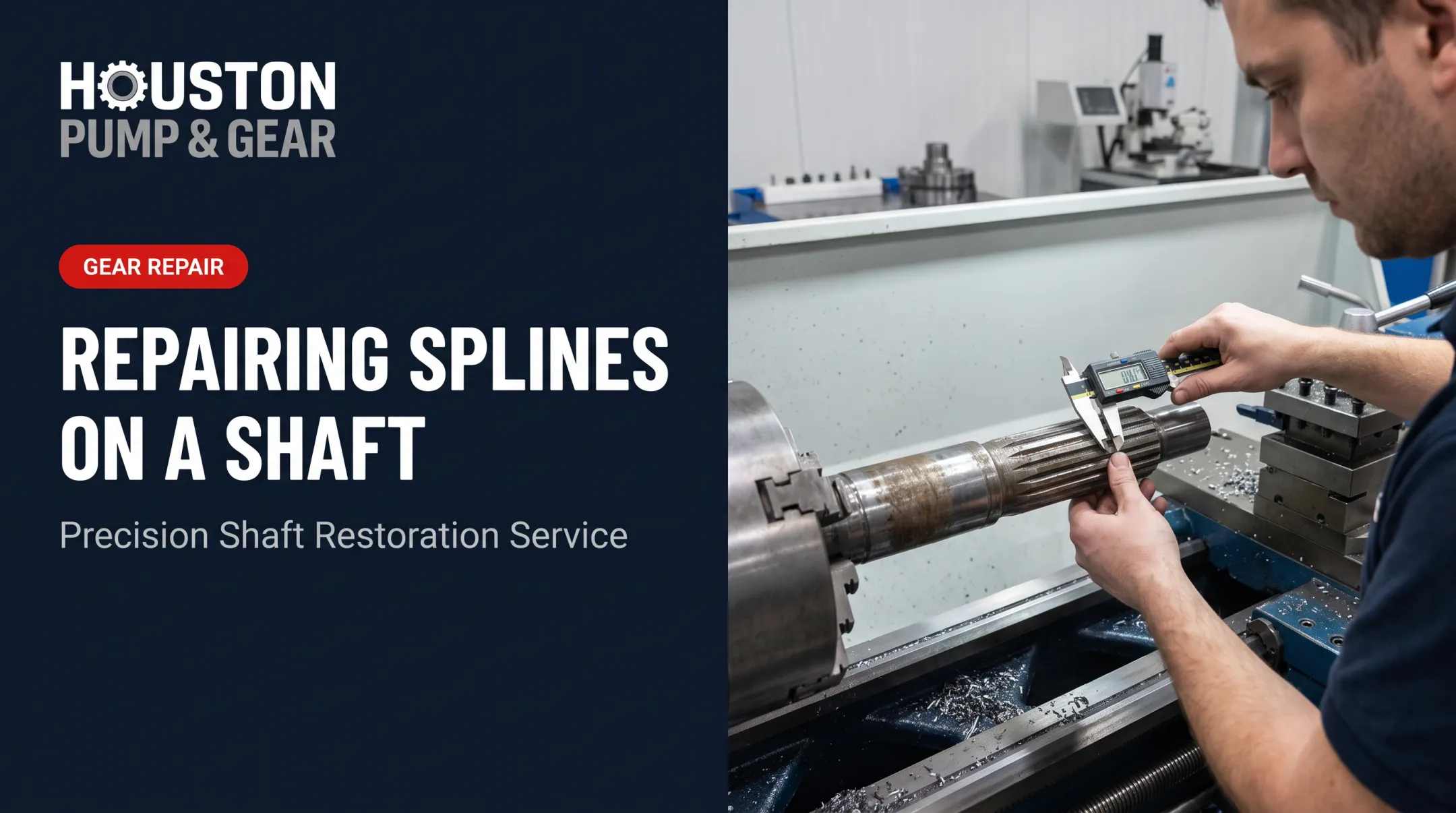
- Inspect for visible wear, cracking, discoloration, or play between mating splines
- Note vibration, noise, or torque slippage during operation
- Document when the issue occurs (startup, under load, or continuous run) to help pinpoint the cause
Step 2: Confirm the Root Cause
Determine whether the issue is wear-related, fatigue/crack-related, or alignment-related. Rule out external factors first—coupling misalignment, contamination, or improper mounting—before you machine or replace parts.
Step 3: Repair Based on the Identified Problem
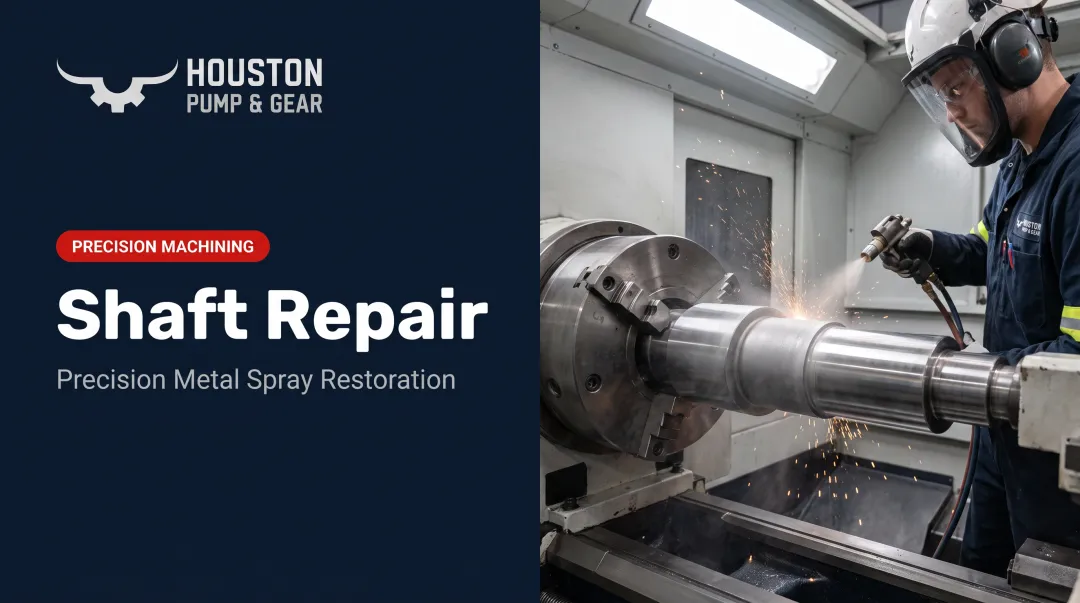
If the shaft has surface wear or fretting: Machine down the damaged area and rebuild it with weld build-up or metal spray, then re-cut splines to original tolerance. Check hardness and surface finish before reassembly.
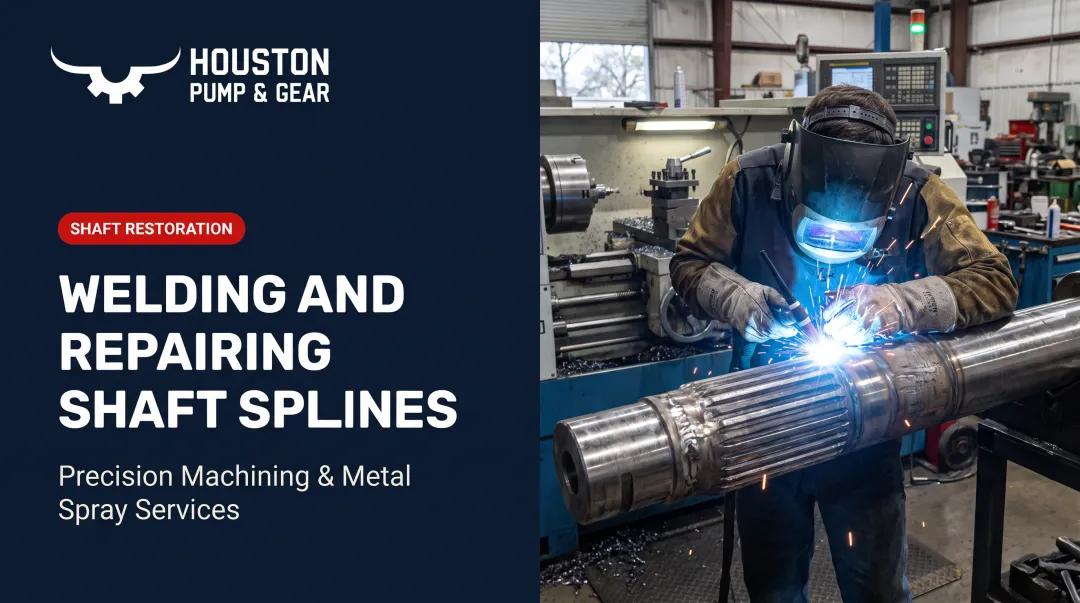
If the shaft has cracks or broken teeth: Assess whether crack depth allows weld repair or demands full replacement. Welding can soften the material and distort the shaft, so run post-weld stress relief and inspection (dye penetrant or ultrasonic testing) before the part returns to service.
If the shaft shows misalignment-related wear: Correct hub or coupling alignment using dial indicators or laser alignment tools. If the wear pattern is uneven, re-machine the spline profile and verify fit tolerance afterward.
Step 4: Test and Validate the Repair
- Reinstall and run the shaft under normal load, then peak load conditions
- Monitor for vibration, noise, and heat during test runs
- Confirm the repaired shaft meets original torque and tolerance specifications
Do not return a gearbox to service until the repair passes those checks.

Houston Pump & Gear follows this sequence on emergency restorations: disassemble, clean, inspect, and measure every shaft and gear before scoping the repair, then QC the reassembled unit before it goes back online.
When Should You Fix vs Replace a Splined Shaft?
The right call depends on repair cost, safety risk, and long-term reliability — not just which option looks cheaper on paper.
| Scenario | Fix | Replace |
|---|---|---|
| Minor surface wear, spare shaft | Cost-effective if within tolerance after machining | If future failure downtime cost outweighs repair savings |
| Cracked shaft, critical gearbox | Only if crack is superficial and inspection-verified | Recommended when structural integrity is in question |
| Obsolete or hard-to-source shaft | Repair keeps aging equipment running | Custom remanufacture if repair can't restore full load capacity |
| Emergency shutdown | Rapid repair and return to service | Only if a spare is available faster than repair time |
A real example: In 2014, a gearbox failure sent a power plant into emergency shutdown. Houston Pump & Gear picked up the failed Lufkin S2212C gearbox the same day and had the plant back online 72 hours later. That kind of turnaround only works when a shop has the in-house machining, reverse engineering, and testing capability to move fast without cutting corners on inspection.
For obsolete equipment where OEM parts simply don't exist anymore, reverse engineering, measuring the original shaft and recreating it to spec, often beats waiting months for a custom order.

Common Mistakes to Avoid When Fixing a Splined Shaft
Downtime pressure pushes teams to cut corners on splined shaft work. These mistakes turn a recoverable repair into a repeat failure—or a safety incident.
- Treating symptoms, not causes: Fixing surface wear without inspecting for cracks, fatigue, or alignment issues underneath
- Skipping load testing: Returning a welded or machined shaft to service without proving it under real operating loads
- Using mismatched materials: Rebuilding with spline profiles or base metals that don't match the original spec
- Ignoring lockout/tagout: Removing a shaft in a live power plant environment without isolating energy sources first
Preventive Measures to Avoid Future Issues
Preventive maintenance is cheaper than emergency repair, every time.
- Schedule regular spline inspections and lubrication checks: quarterly visual inspections, annual thorough service at minimum
- Follow OEM-recommended maintenance intervals for gearboxes and PTO shafts
- Ensure proper alignment and mounting during every installation or reinstallation, not just the first one
- Train maintenance staff and keep documented service records to track wear trends over time
Even with a solid maintenance program, failures happen. A 24/7 emergency-ready shop like Houston Pump & Gear gives operations teams a reliable backup when prevention alone misses a failure.
Conclusion
Most splined shaft problems are fixable when caught early and diagnosed correctly. Whether the root cause is wear, fatigue, or misalignment determines if repair or full replacement is the right call. Getting that wrong wastes money either way.
Fast, reliable repair partners matter most when a facility is staring down unplanned downtime. Houston Pump & Gear provides that support for power plants and heavy industry operations across Texas and Louisiana.
Frequently Asked Questions
How do you repair a splined shaft?
Repair starts with diagnosing wear or cracks, then machining or weld build-up to restore the profile. Technicians re-cut splines to tolerance and load-test the shaft before reinstallation.
What does splined shaft mean?
A splined shaft has ridges (splines) that mesh with a mating hub or gear to transmit torque, sometimes while allowing axial sliding movement.
What is the best lubricant for splines?
A high-load, high-temperature grease with extreme-pressure additives is standard for spline applications. Industrial couplings typically use NLGI #2 grease, though the right choice depends on speed, load, and OEM specification.
Can a splined shaft be repaired or does it need replacement?
It depends on damage severity. Surface wear is often repairable through machining or metal spray, but cracked or fatigued shafts usually require replacement for safety.
How long does an emergency splined shaft or gearbox repair take?
Turnaround depends on damage severity. Houston Pump & Gear restored a power plant's Lufkin S2212C gearbox and had it back online within 72 hours of pickup.
What causes premature splined shaft failure?
Inadequate lubrication, misalignment, overloading, and lack of preventive maintenance are the leading causes.